Mountain Bikers Riding Bikes Talking Trails
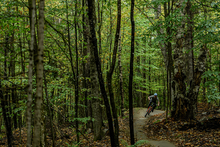
The red rock landscape of Sedona, Arizona, is a mountain biker's paradise, known for its stunning vistas and challenging trails.
Image
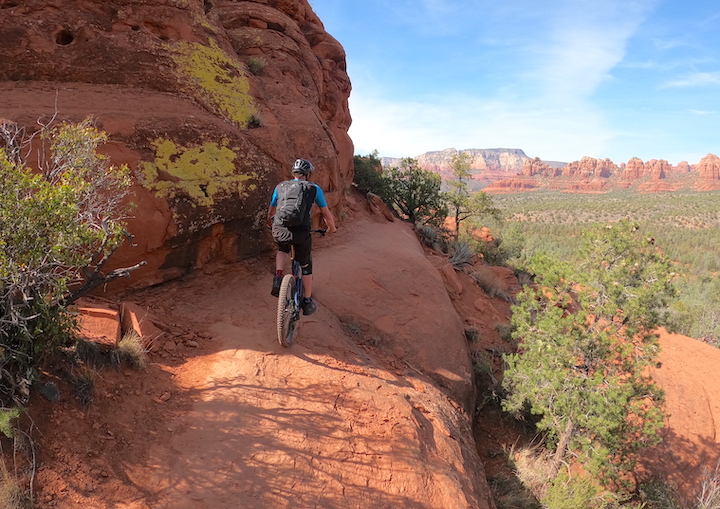
But the very features that make it beautiful—steep slopes and erosive soils—also present significant challenges for trail sustainability. Over a decade ago, a collaborative effort on the "High on the Hog" trail demonstrated a solution that's not just holding up, but thriving.
Rewind to around 2014. Sedona's reputation as a mountain biking hotspot was rapidly growing. As IMBA Trail Solutions' Joey Klein recalls, the area was aspiring to be "the next Moab," with riders seeking increasingly adventurous and difficult trails. With its unmatched terrain, rider-centric trail design and deep-rooted stewardship culture, Sedona has become one of the premier destinations for technical, scenic singletrack.
This rapid rise, however, wasn’t without growing pains. The trail boom led to issues with illegal trail building and a need for better cohesion between land managers, the local bike club (Verde Valley Cyclists Coalition), and other users.
Image

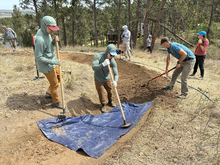
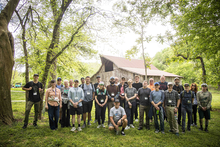
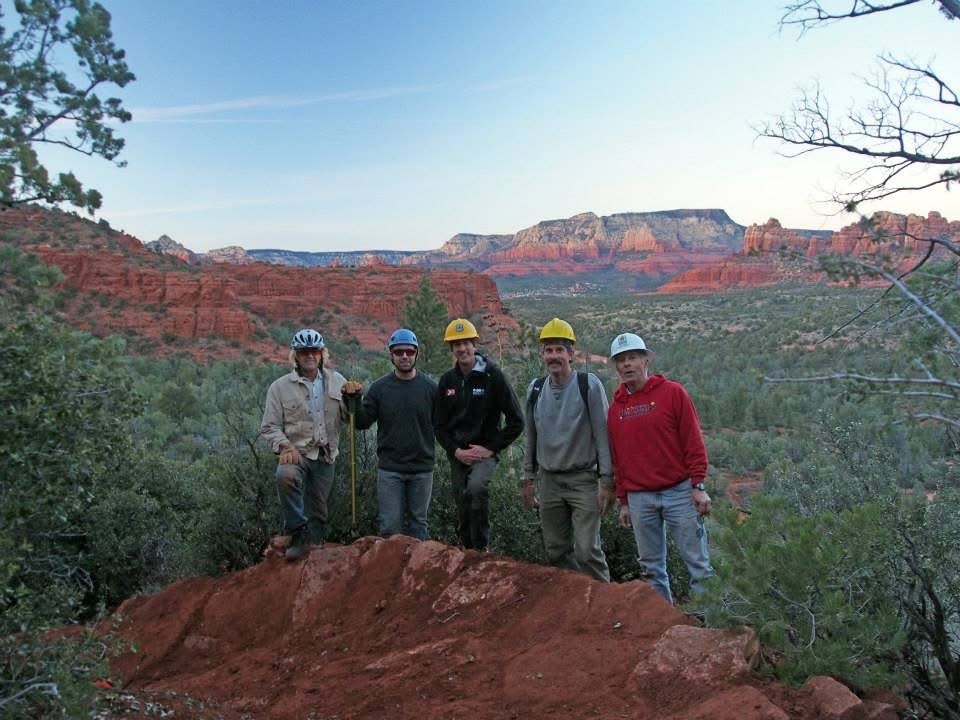
Enter a pivotal moment: IMBA was invited to teach an advanced rock armoring and stonework class. The determined focus centered around a particularly "steep and eroded" turn on the "High on the Hog.” Lars Romig, then president of the Verde Valley Cyclists Coalition and still a key figure in their trail efforts, along with U.S. Forest Service representatives and local builders, participated in what Joey describes as a three to four-day endeavor.
Image
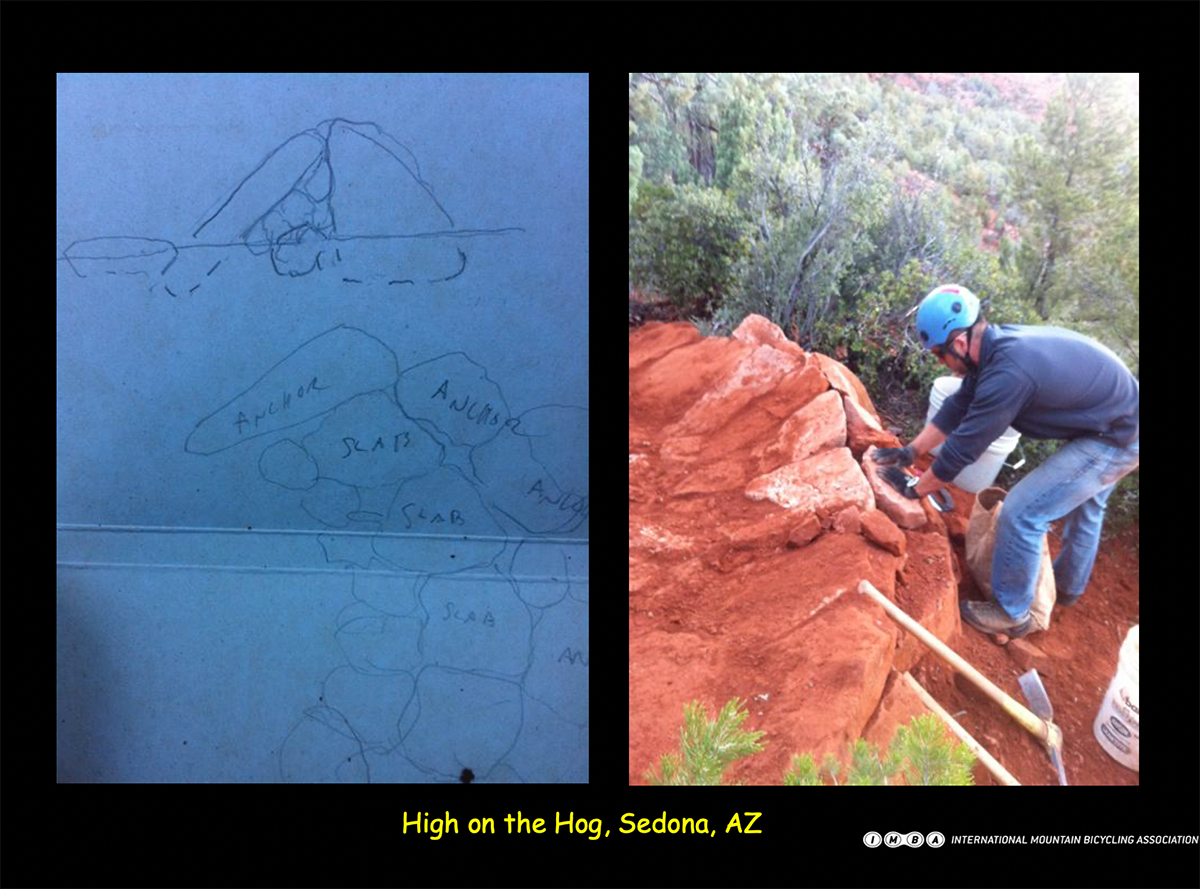
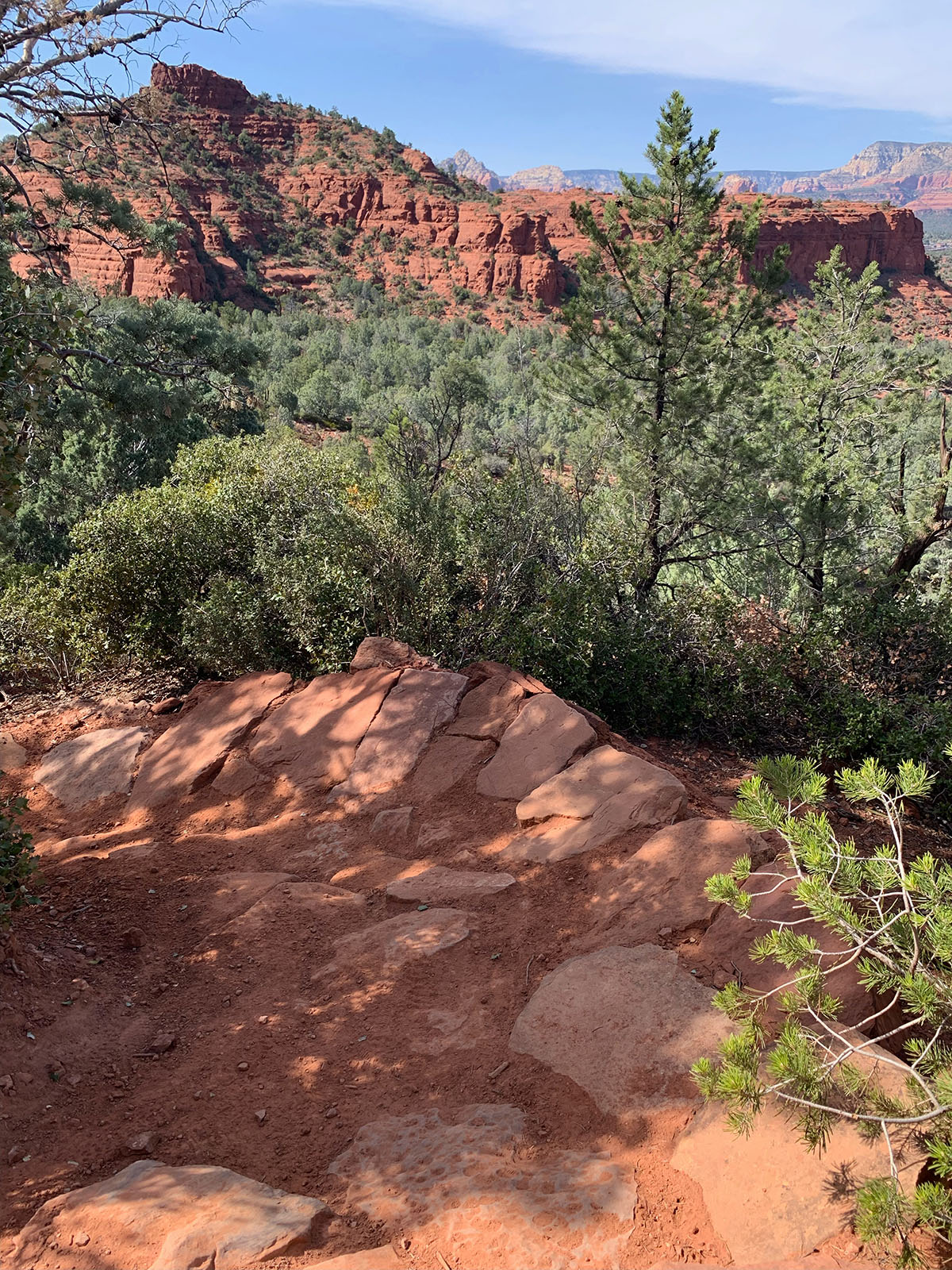
After scouting and an indoor session on techniques gleaned from stonework in wet climates like Scotland and Wales—adapted for Sedona's dry, erosive conditions—the real work began. "It was mostly just gathering stone and then placing the bigger stones the size of microwaves and small refrigerators on the backside and then filling out with smaller rocks and cobble," Klein remembers. The result was a robust, armored rock berm.
Image
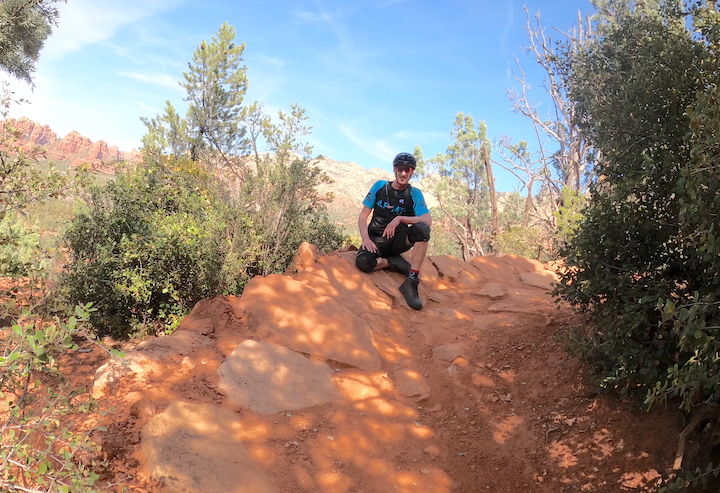
Fast forward to a recent visit by Joey, his first in about 11 years: "It’s held up perfectly," he exclaimed, noting the feature looked as good as new.
Image
Image
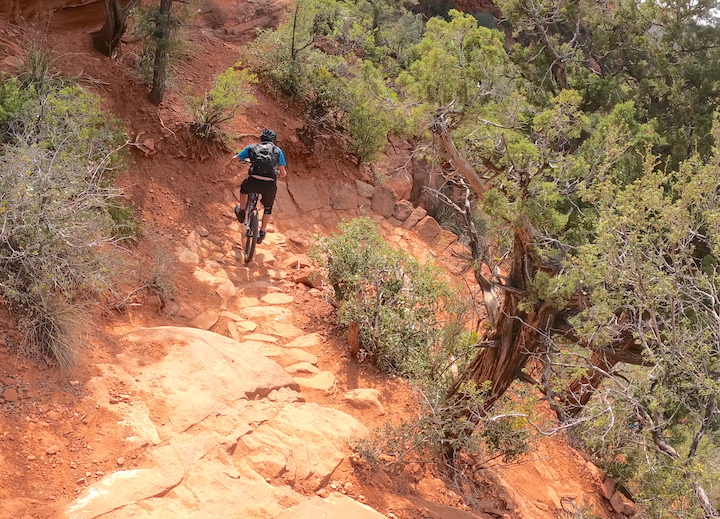
Lars explained that while armoring wasn't new to Sedona, the IMBA Trail Care Crew's 2014 visit helped refine their techniques and incorporate more bike optimized type features. The "High on the Hog" rock berm was a prime example, and its success normalized such construction. "We've subsequently done a lot more of that type of technique," Lars stated. This approach considers the unique forces exerted by bicycles, shifting from traditional outslope designs, which can lead to erosion from shear forces, to insloped turns, sometimes armored, that promote compaction. "If you don't do it, it's then it just gonna turn into problems for maintenance down the road," Lars emphasized, highlighting Sedona's erosive soils.
Despite the area's popularity with nearly 3 million users each year, these hand-built features endure. And most all trail work continues to be done by hand, as machinery access is often too destructive or impractical in the sensitive, technical terrain.
Listen to this recent Trail EAffect podcast episode with Lars talking about the trails in Sedona: Lars Romig on Trail EAffect
The legacy of that 2014 project extends beyond a single turn. It fostered a deeper understanding of sustainable, bike-specific trail design that the Verde Valley Cyclists Coalition and the U.S. Forest Service have since applied throughout the region. As Joey observed, "that stonework class we did on High on the Hog…it’s everlasting and it really helped kind of change the course of things." He even noted seeing hikers enjoying the same system, underscoring the project's success in creating shared, durable trails.
Image
Today, Lars serves as the lead of the VVCC's Mountain Bike Advocacy Committee, where he spearheads trail planning and maintenance alongside the U.S. Forest Service Wilderness Trails and OHV Coordinator Kevin Kuhl with a core team of local volunteers and advocates. Their work is set to grow substantially as the Coconino National Forest moves forward with the Red Rock Trails Access Plan (RTAP) Phase 2.
This next phase includes more than 35 miles of new and adopted multi-use trails in the Turkey Creek area, many of which will be bike-optimized and sustainability focused – drawing directly from the principles refined during the "High on the Hog" effort. To support these initiatives, the VVCC has launched the Turkey Creek Raffle, with proceeds funding trail construction, maintenance, and signage.
The "High on the Hog" berm stands as a testament to thoughtful design, collaborative effort, and the enduring power of well-executed stonework against the forces of nature and heavy ridership. These sustainable solutions are the legacy of IMBA’s Trail Care Crew and our continued dedication through our Trail Care Schools & educational programs.
Interesting in learning from our team? IMBA Education