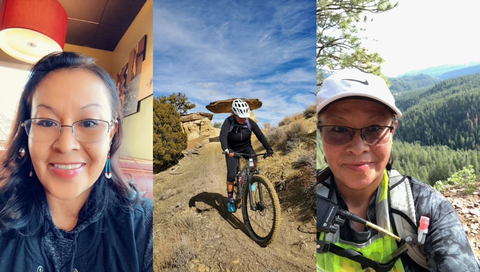
IMBA’s Roxanne Marianito Selected for Outdoor Alliance’s Third Cohort of Grasstops Collective Advocates
At IMBA, we see outdoor recreation as a driver of conservation by deepening people’s connection to land and motivating stewardship.
The International Mountain Bicycling Association (IMBA) recently submitted comments to the Bureau of Land Management (BLM) regarding the proposed rescission of the 2024 Conservation and Landscape Health Rule (also referred to as the “Public Lands Rule”), finalized on May 9, 2024. Read IMBA’s full comments to the BLM.
The proposed rescission was put forward by the Bureau of Land Management (BLM), under the direction of the U.S. Department of the Interior (DOI). The official notice of proposed rulemaking was published in the Federal Register on September 11, 2025.
IMBA’s comments to the Bureau of Land Management (BLM) on the proposed rescission of the Conservation and Landscape Health Rule call for consistent recreation prioritization, streamlined processes, stronger staffing, and better partner coordination while reinforcing that outdoor recreation and conservation are complementary, not competing, goals.
A Balanced Approach to Public Lands Policy
As the BLM reconsiders its approach to conservation, restoration, and public use of America’s public lands, IMBA continues to champion policies that ensure mountain bikers and trail-based recreation remain part of the multiple-use mission that defines these landscapes.
IMBA, a 501(c)(3) nonprofit, and since 1988 has worked to create, enhance, and protect great places to ride mountain bikes. Through programs like Connecting with Communities and resources such as the Guide to Quality Trail Experiences (GQTE), IMBA collaborates directly with the BLM to implement sustainable trail systems that benefit riders, land health, and local economies.
With our Without the Rule
When the 2024 Conservation and Landscape Health Rule was released, IMBA and the mountain biking community viewed it with both optimism and caution.
IMBA strongly supports the integration of outdoor recreation as a tool for conservation and landscape health. Trail-based recreation provides tangible economic, social, and environmental benefits while connecting millions of Americans to public lands.
However, IMBA also recognized potential challenges in how the Rule defined “protection” as a land “use” under the Federal Land Policy and Management Act (FLPMA). This framing risked creating unintended restrictions on recreation access, particularly through conservation leases or in Areas of Critical Environmental Concern (ACECs).
IMBA urged the BLM to demonstrate why existing authorities were insufficient and to strengthen staffing and implementation within current regulations rather than adding new bureaucratic layers.
Because the Rule was never formally implemented, rescinding it would not immediately alter management on the ground. IMBA’s comments therefore focus on constructive, forward-looking recommendations for how the BLM can more effectively integrate recreation into its management framework moving forward.
Four Challenges and Four Opportunities
Through surveys, feedback, and meetings, we have learned that IMBA’s Local Member Organizations consistently identify four main challenges facing recreation management on BLM lands:
- Insufficient staffing and resources. The BLM lacks adequate recreation planners and maintenance staff to meet growing demand. As participation in outdoor recreation rises, federal staffing and funding must keep pace.
- Inconsistent prioritization across field offices. Some BLM field offices embrace mountain biking partnerships and accomplish transformative work, while others treat recreation as secondary to extractive uses. Given the proven economic and community benefits of trails, recreation deserves a more balanced and consistent approach nationwide.
- Slow, bureaucratic processes. Trail projects often face long delays due to cumbersome compliance and planning requirements. IMBA supports efficient, transparent National Environmental Policy Act (NEPA) reviews, but urges reforms to improve timeliness and predictability for recreation initiatives.
- Limited coordination with partners. In projects related to fuels reduction, restoration, or resource extraction, recreation assets are often overlooked. IMBA encourages early engagement with recreation partners to identify high-use trails and protect them during project design and implementation.
Tell Your Lawmakers to Prioritize Recreation on Public Lands by November 10, 2025
Recreation as a Cornerstone of Public Lands
The BLM manages roughly 245 million acres, one-tenth of the U.S. land base, and hosts some of the nation’s best mountain biking opportunities, from Virginia to Colorado, Utah, Oregon, and California.
Outdoor recreation is not a peripheral benefit: it’s now a defining feature of how Americans experience and value public lands. According to the Outdoor Recreation Roundtable, the sector generated $1.2 trillion in economic output in 2023, supporting 5 million jobs. Trail systems on BLM lands directly fuel local economies and improve community well-being.
IMBA’s comments highlight how investments in trail access, stewardship, and recreation infrastructure produce durable, long-term returns for both landscapes and the people who enjoy them.
Partnerships and Progress
IMBA’s recommendations align closely with Secretary of the Interior Doug Burgum’s EXPLORE Act directives and the BLM’s Connecting with Communities strategy, both of which emphasize modernizing recreation infrastructure and expanding access. IMBA was at the forefront with the passage of the EXPLORE Act, with nationwide leadership resulting in the Biking on Long Distance Trails Act (BOLT) inclusion.
Secretary Burgum recently stated, “Outdoor recreation is part of our national heritage,” and that investments in trails “connect communities and expand access while protecting landscapes.” IMBA agrees and stands ready, as it has for more than 35 years, to help achieve that vision.
Looking Ahead
With the proposed rescission of the Conservation and Landscape Health Rule, the conversation shifts from regulation to implementation. IMBA’s comments reaffirm that outdoor recreation, public access, and community vitality are central to the BLM’s mission.
From rural trail towns to backcountry destinations, mountain bikers experience the BLM’s multiple-use mandate firsthand. IMBA remains committed to working with the agency and partners to ensure America’s public lands remain open, resilient, and rideable for generations to come. The future of America’s public lands depends on thoughtful, balanced management, and trails are part of that solution.