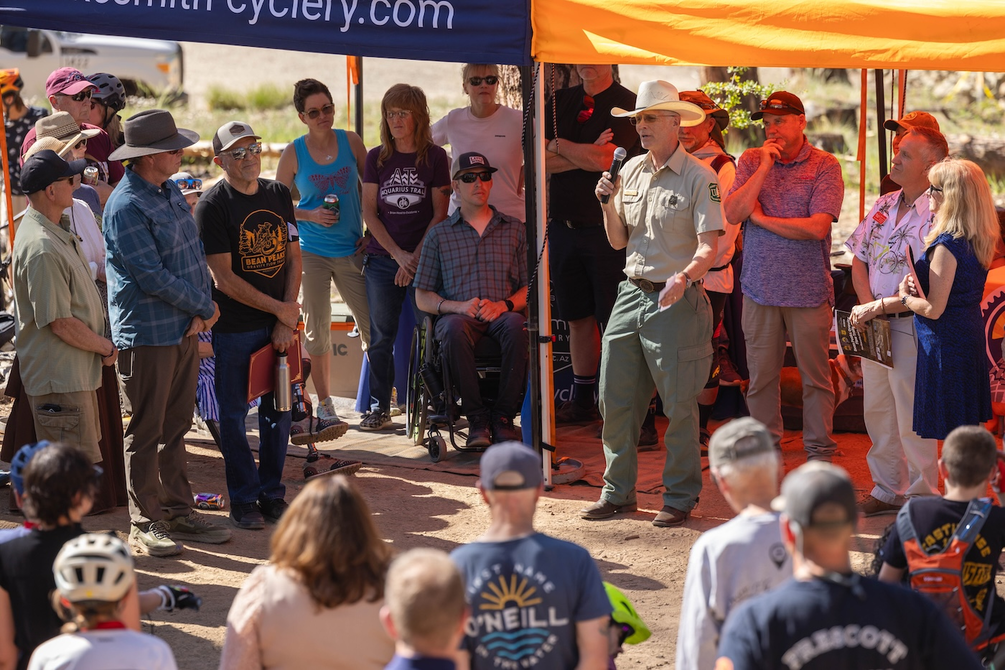
The Community Assessment assessment is a tool designed to provide an overview of how a community performs in eight different categories relating to natural surface trail development. Understanding where you have community gaps in the process can help identify opportunities for improvement, which will inform your engagement with land managers, elected officials, stakeholders and funders.
Categories include:
- Access Existing Trails and Infrastructure
- Community Engagement & Advocacy
- Assessment
- Funding
- Trail Planning
- Stewardship
- Community Vision
The assessment is a tool for any community to better understand our areas of strengths and improvements. Communities applying for an IMBA Trail Accelerator Grant are required to take the assessment. Score well and your community will be eligible to apply for the IMBA Trail Town Designation.
Take the Community Assessment
Ready to see how your community measures up?
This comprehensive tool analyzes your trails and bike infrastructure through a broad lens of community development. After completion, you will receive an immediate score and a suite of recommendations to help your community prepare for the designation. If your community score indicates you are eligible for an IMBA Trail Town designation your community will receive more information about that process.
Quick Details on the Community Assessment:
- Get Prepared: Download the community assessment preview as a guide.
- Saving Progress: Answers cannot be saved. Review/print the assessment preview before starting.
- Time to Complete: About 30 minutes if you are familiar with local trails; 30–60 minutes if you need to gather information.
- Group vs. Individual: Individuals can complete the survey, but stakeholder groups get the most value.
- Choosing a Center Point: Select the core of your community (downtown, city hall, or main gathering place).
- Calculating Mileage: Use drive times to trailheads within 30 minutes of the center point. Include all mileage starting from those trailheads. TrailForks is a useful tool.
- Uncertain Answers: Choose the response that best reflects the majority of your trails or the most typical scenario.
- More Mileage than Required? Communities with 60+ miles and supporting infrastructure should also consider applying for Ride Center designation.
- Bike-Only Trails & Other Users: Single-use trails are increasingly common to reduce conflicts and improve experiences. Communities often balance bike-only with foot- or horse-only trails.
Before you begin, we recommend reviewing the Frequently Asked Questions and Preview the Community Assessment for guidance on who to involve and how to prepare.
Community Assessment FAQ
Review the FAQ
Preview the Community Assessment
Preview the Community Assessment
Take the Community Assessment
Take the Community Assessment
IMBA developed the Community Assessment in 2023 (formerly the Trail Friendly Community self-assessment) in partnership with West Virginia University's Smith Outdoor Economic Development Collaborative and Extension Service, with the goal of creating a comprehensive assessment that analyzes trails and bike infrastructure through a broad lens of community development. IMBA thanks West Virginia University for making an investment that will support communities across the country.

