IMBA - International Mountain Bicycling Association
What would we do without trails?
IMBA Freeriding Resources
Drop in diagram side view
Drop in diagram top view
Drop in diagram

Dropping-In to More Technical Challenge

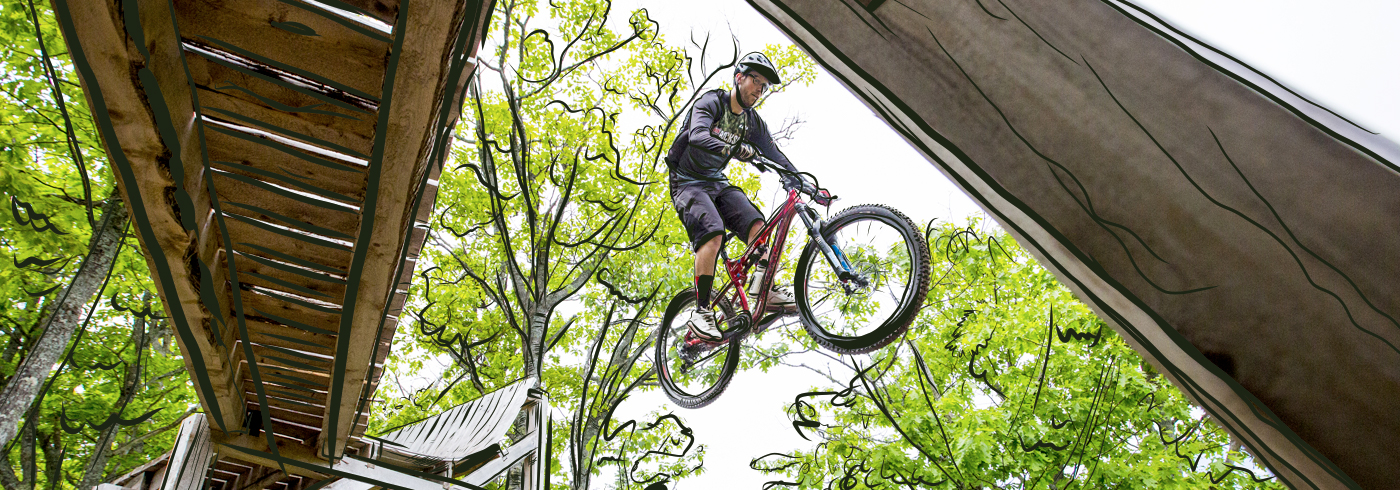
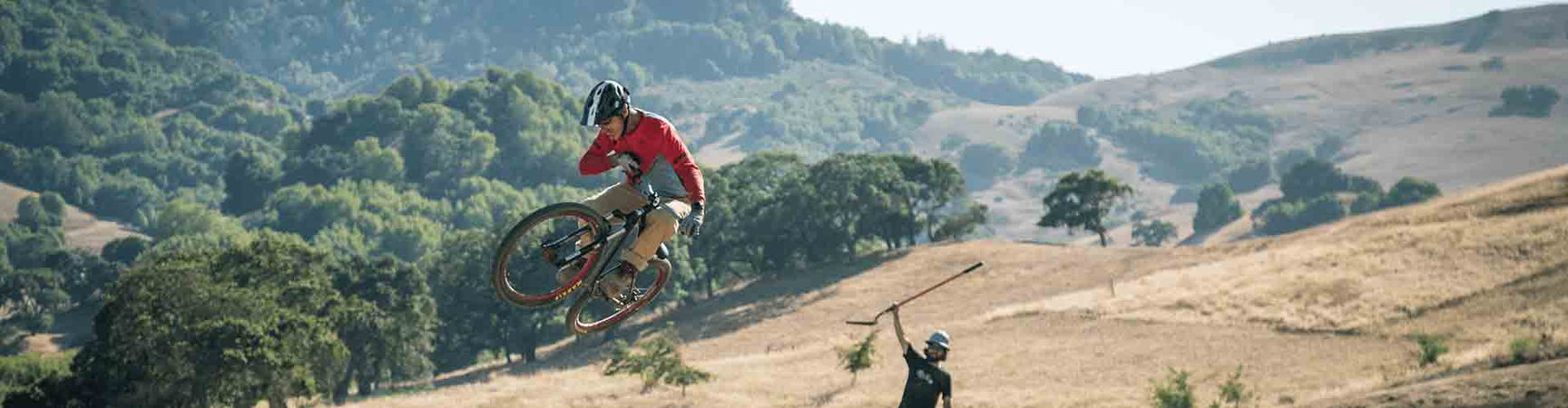
Looking for a way to add technical challenge to a trail? Try adding a drop-off.

Sustainability is the key to all trails we build and is especially important when it comes to constructed features. "Build it right, ride it forever" is IMBA's motto. Work hard to ensure that the drop-off you build today will be in the same condition five years from now. Careful design and quality construction can increase safety and reduce legal liability, too.

If you've never built a drop-off before, it's a good idea to start small and work your way up. Regardless of the size of the drop, be it six inches or four feet, several key ingredients should be incorporated into all designs.

First, make sure the drop-off is appropriate for the trail's style. Technical trail features must blend with the trail flow, level of difficulty, and mix of users. As always, be sure to get land manager permission before doing any trailwork.

Start with a grade reversal - a brief change in the trail grade that helps divert water off the trail. We recommend building subtle dips - or rises - before and after the obstacle. This will prevent water from damaging the trail and feature. Frequent grade reversals or rolls keep the trail dry and are fun to ride. An added benefit is that they help curb the speed of the rider, so that by the time they reach the drop-off, they're in control and prepared for the challenge.

Following the grade reversal, you'll want to include some type of choke - a narrowing or corral that forms a gateway to your drop-off. Rocks, logs, trees or other obstacles staggered on either side of the trail serve as physical and visual cues to slow down and alert the rider to more technical features ahead. Make sure the narrowing flows naturally with the trail - otherwise people will find it annoying instead of interesting, and may create a new route around it.

The set up zone is a straight piece of trail, one to two bike-lengths long, with no obstructions and good sight lines. This section should be relatively flat, so riders can see the feature and prepare.

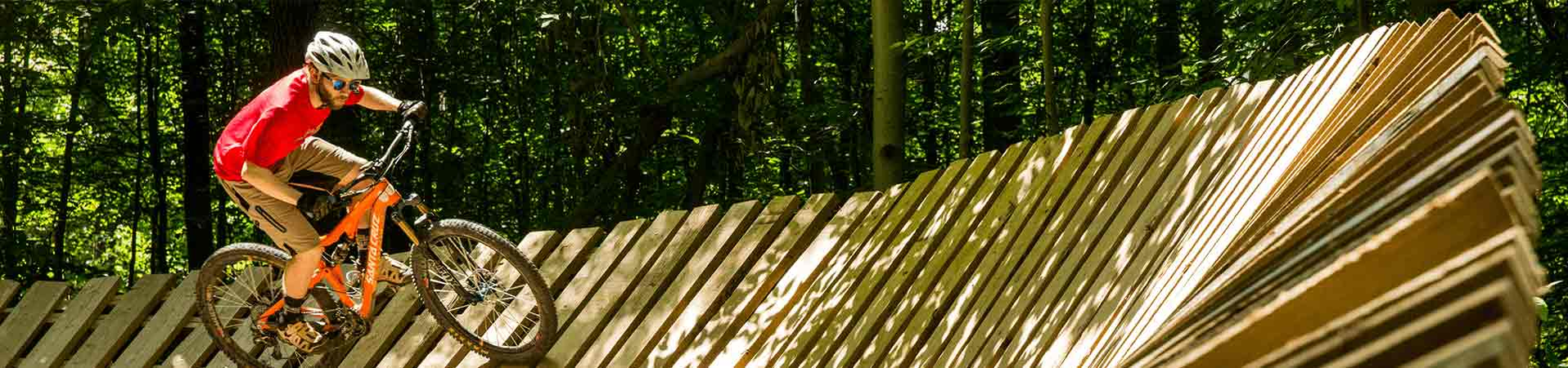
The drop itself can be made of rock or wood. Incorporating existing natural features like large tree roots and rock outcrops are excellent ways to use the terrain, but take care to protect roots by covering them with dirt, or armoring with rocks. Make sure rocks and logs are securely anchored and that wooden structures are solidly built.

Be sure to design the drop-off as the most convenient route and the obvious line - otherwise trail users may create a new path around it leading to trail-widening or a second trail. A solution is to include an easier line within the tread by burying a chock stone to form a ramp. Also, make sure you frame or corral the drop-off with trees, bushes, rocks, or logs to keep users on trail.

Special attention must be given to the landing zone or fall zone. This is an area one to two bikes long, and almost as wide, that slopes downward from the drop-off anywhere from five to 15 percent. Be sure to clear all obstacles from the tread, remove sharp rocks and root wads, and cut back any branches that are in the trail corridor. The corridor and ceiling should be cleared to a greater width and height than the rest of the trail in order to provide a clear view of the landing area and allow for various drop distances. By adding a challenge to the trail, we are increasing the chances of a fall, so it is important to build safety into the design.

To help the landing zone stand up to repeated drops, scrape off all organic material (vegetative matter, roots, leaves, etc.) from the surface of the trail tread, and expose the good hard mineral soil. If you're building a particularly high drop-off, or one that's going to receive a lot of use, you may need to armor the landing with flat-sided rocks.

The end of the landing zone is another good place to put a grade reversal. It will help to shed any water that collects after the drop, and will check the speed of the rider before they hit the rest of the trail.

The entire drop-off zone should be anywhere from 30 to 50 feet long depending on the size of the drop. It is very important that this whole section has good sight lines, for both the dropper's benefit, and for the trail users approaching from the other direction. It's hard to slow down when your wheels are off the ground, so make sure that riders coming off the drop have a clear view of what (and who) is below. We want to create more fun, not more conflict.

Because a drop is a constructed feature, it is likely to require more maintenance than a simple trailbed. However, a little bit of maintenance is a small price to pay for a lot more fun. Clearing the corridor and keeping sight lines open, removing any dangerous roots or rocks from the tread, and fortifying the drop and landing zone may be necessary once in a while.

Once you're comfortable with the basics, it may be time to go big. Increasing the size of the drop by using larger rocks or constructing a platform will add greater technical challenge. Just remember the core elements, make sure the trail is appropriate and make safety a priority.

Email this page Printable Version


Help | Site Map | Copyright
IMBA Homepage Join IMBA Now!