IMBA - International Mountain Bicycling Association
What would we do without trails?

Mountain Biking on the North Country Trail: IMBA's Perspective

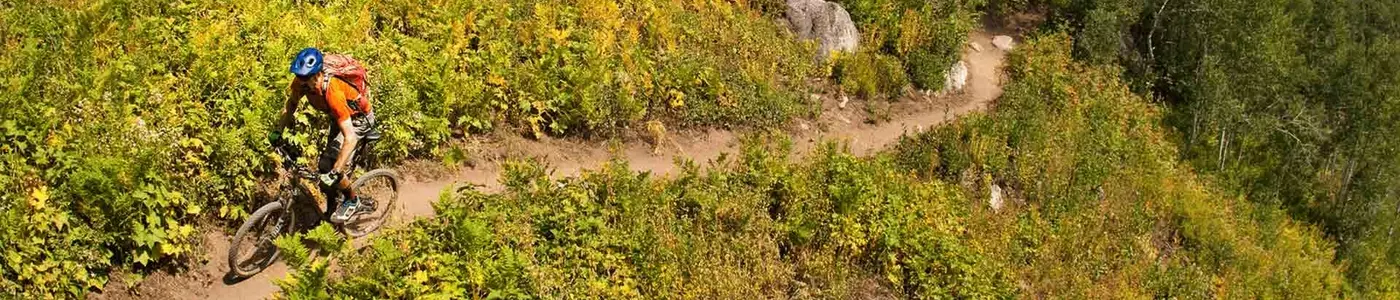
Mountain biking is currently popular on sections of the seven-state North Country National Scenic Trail. Mountain bike clubs have performed regular volunteer maintenance on sections of the trail.

The National Park Service, in conjunction with the North Country Trail Association, is working to restrict the trail to foot travel only, and ban mountain biking and horse use from most of the 4,000-mile path. This process may be many years in the making, but it is based in the concept of achieving "a desired future condition" that bans from soft-surface sections virtually all uses except foot travel.

IMBA, the International Mountain Bicycling Association, believes that bicycle use should continue on portions of the North Country Trail. Bicycling is a quiet, human-powered sport with impacts to trails and ecosystems that are similar to the impacts of hiking. Social conflicts between bicyclists and other trail users occur, but a proactive management approach can reduce such problems. This is especially true on lightly used trails such as the NCT. Examples abound of cyclists and hikers successfully sharing trails.

IMBA believes that organized bicycle clubs can play an important role in developing and maintaining the NCT, which at this time is less than half-complete.

Mountain bicyclists can help by...

  1. Supporting funding for the acquisition of NCT right-of-ways, including those on private property (that are currently prohibited by law from being acquired by public funding);

  2. Supporting a change in federal law to authorize acquisition of trail corridor lands by the National Park Service and USDA Forest Service.

  3. Supporting federal and state funding for the construction and maintenance of the trail;

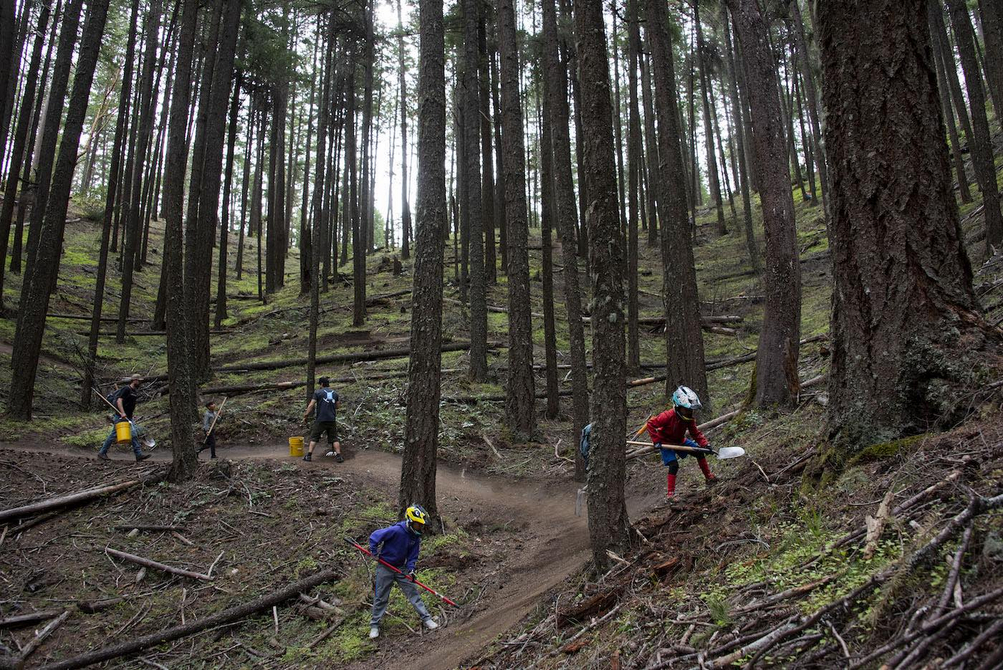
  4. Volunteering to help build and maintain the trail.

IMBA believes that bicyclists can use the North Country Trail without adding significantly to the physical impact on the trail. Proper trail design and maintenance are crucial to prevent erosion, regardless of the mix of visitors who travel the route.

IMBA respects the desire of hikers to walk alone in silence. This is why we can support designating sections of the NCT for foot travel only. But generally speaking, the trail should be open to muscle-powered visitors. The trail needs this broad-based community support to endure and thrive.

Some hikers and land managers contend that it was the intent of Congress to make this trail hiking-only, or "primarily" for hiking. But the Congress has designated eight national scenic trails and has specified only one, the Appalachian Trail, designated in 1968, as "primarily for hiking."(†) In 1983 amendments to the National Trails Act, the Congress made it clear that national trails are meant for diverse, non-motorized users. The law specifically includes bicycling, "trail biking," and "equestrian activities" as reasonable, possible uses.( *)

In the seven NCT states, hikers enjoy significant trail opportunities, including many paths that are exclusively for their use. This includes 1.15 million acres in 27 federal Wilderness areas, and many state parks where trail bicycling is prohibited. Meanwhile mountain bikers in this region struggle to find soft-surface trails open to cycling.

A shared-use approach to management of the NCNST will benefit the trail and build the trails community. The current adversarial approach that seeks to exclude major, muscle-powered trail groups is likely to weaken the trails community and reduce opportunities for collaborative actions that would benefit the North Country Trail.

IMBA believes that the decision to work toward a "desired future condition" of foot-travel-only was made without giving the public an appropriate opportunity to comment. This is why we filed a Freedom of Information request -- a routine administrative process -- with the National Park Service and USDA Forest Service to release background information and internal correspondence regarding mountain biking on the North Country Trail. The Forest Service quickly provided the information we requested.

Our decision to work toward the continuation of shared use on sections of the North Country Trail does not affect our outlook on the management of other National Scenic Trails. For example, we continue to support the hiking-only management of the Appalachian Trail. We also support the shared use philosophy of the Continental Divide National Scenic Trail.

We also continue to believe in the importance of ongoing dialogue among all parties: the National Park Seg a FOIA request should not be interpreted as an attempt by IMBA to gain mountain bike access to the entire North Country Trail. It is not an attack on the management principles that guide access to other national scenic trails. IMBA is concerned about the process that established a foot-only goal for the NCT, and we believe that eliminating all soft-surface bicycle access on the NCT is neither necessary nor in the public interest.

Gary Sprung
IMBA, Senior National Policy Advisor

Footnotes:

† Several national scenic trails have been administratively designated for hiking and equestrian use only.

* "16U.S.C.1246 Sec.(j): Types of trail use allowed: Potential trail uses allowed on designated components of the national trails system may include, but are not limited to, the following: bicycling, cross-country skiing, day hiking, equestrian activities, jogging or similar fitness activities, trail biking, overnight and long-distance backpacking, snowmobiling, and surface water and underwater activities."

Email this page Printable Version


Help | Site Map | Copyright
IMBA Homepage Join IMBA Now!