Whitehorse, Yukon Reveals Massive Potential
![]() Riding under a midnight sun along the Yukon River Trail. |
|---|
![]() A road to nowhere. Heading into the Yukon backcountry. |
![]() Mining relics from the Klondike gold rush. |
![]() The midnight sun guides the way deep in arctic north. |
![]() Caribou antlers next to a trail in the Yukon Rocky Mountains. |
Moab. Durango. Whistler. Fruita. Whitehorse?
The first four are established mountain biking destinations. The last entry - the imposter - Whitehorse, may have more diverse and abundant riding options than any of these "meccas."
Whitehorse is the capital city of the Yukon Territory, which sits way up north in Canada. To most lower 48 folks, the Yukon's claim to fame is a couple of books written by Jack London, Call of the Wild and White Fang, about sled dogs, wolves and the Klondike gold rush. London certainly made no mention of mountain biking when scribing Yukon adventures.
Unbeknownst to most fat tire enthusiasts is that the Yukon has one of the most amazing mountain biking trail systems anywhere in the world.
"The Yukon offers great riding for every level," said IMBA Yukon representative Derek Endress. "We're spoiled here because trail access is literally out the door of our homes."
Thousands of miles of mining roads from the gold rush days starburst out of this city of approximately 23,000 residents. Even more striking is the sheer quantity of singletrack trails that leave directly from town. There's a nordic ski center that offers close-in, rolling, intermediate terrain. This area is used to host mountain biking races and festivals.
The resident cycling club, Velo North, started hosting a 24 hour race at the nordic center in 2001 with a unique flare. The race, called the 24 Hours of Light, is held on the summer solstice. Since Whitehorse sits near the Arctic Circle and the sun doesn't set in the summer, lights are unnecessary (and in fact prohibited). It's a throwback race to the early, renegade days of mountain bike racing, where participants dress up in costumes and racers get extra credit for riding loops naked. The event has more than 150 participants each year - significant by Yukon standards.
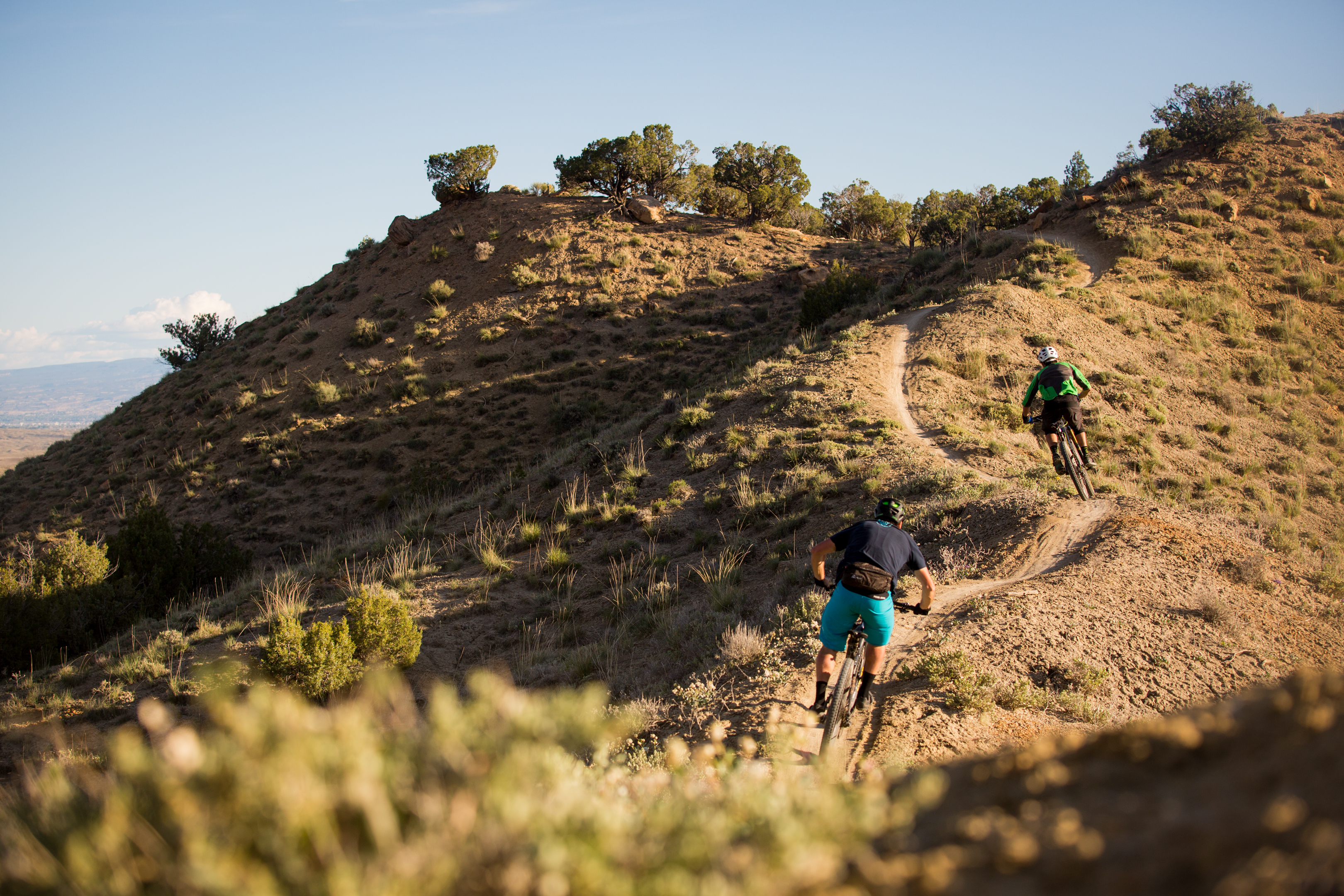
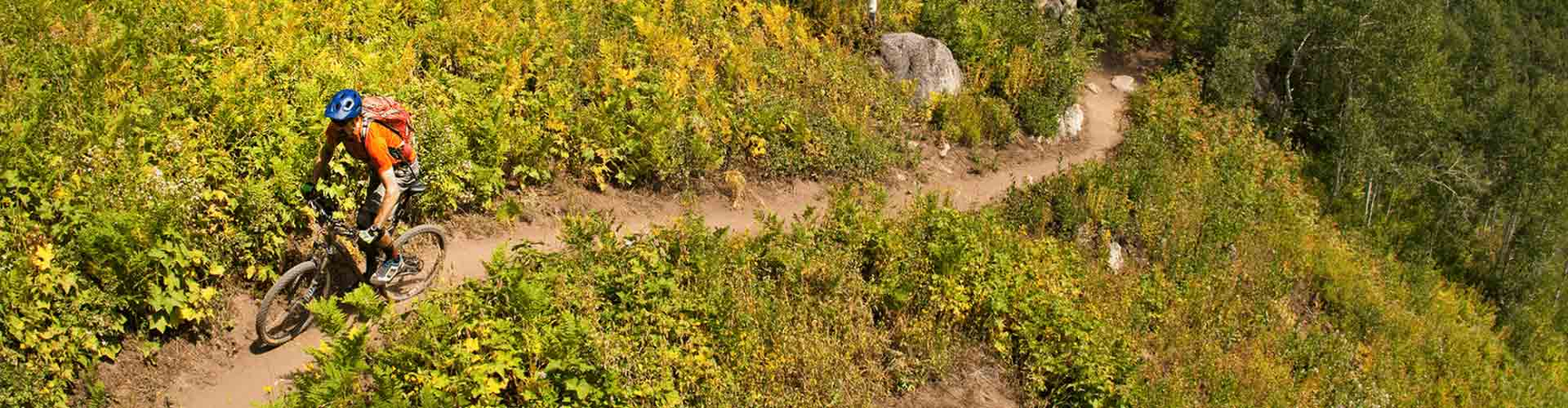
Besides the nordic area, trails spew off in all directions and can take riders as far into the backcountry as their fortitude will allow them to go. The Yukon River Trail is the crown jewel of this network, a serpentine singletrack traversing high above the banks of the 21st longest river in the world. It's a bit like the Kokopelli Trail in Fruita without the red rocked desert.
Farther outside Whitehorse are yet more trails that take riders to some of the most isolated terrain on the planet. These routes traverse high into the Rocky Mountains, along arctic tundra and past ancient skeletal relics from the gold rush 100 years ago. Trails so remote, that they are used more by caribou, wolves and grizzly bears than humans.
"Remoteness is one of the most appealing aspects of riding in the Yukon," said IMBA advocacy manager Dan Vardamis who visited the area in 2002 and 2004. "In places like Moab or Durango, quasi-civilization looms around every corner. Not so in the Yukon. To the north and east sits untracked wilderness that doesn't stop until the continents edge. The western edge of the Yukon is bordered by knife-edge 16,000-foot mountains. There's also a certain awe in riding in a place where humans are not at the top of the food chain - it brings about a respect and awareness that is nearly impossible to find in the lower 48."
Remoteness is the main reason the Yukon is not a well known mountain biking destination. It's very difficult to get here. It's a 1,500-mile drive from Seattle to Whitehorse over exceptionally windy, hilly and slow-going roads. Much more practical is flying to Whitehorse, but only a few airlines make the trip. Direct flights from major U.S. cities to Whitehorse simply don't exist at this time.
While travel time and distance is an obstacle, it isn't insurmountable. Mountain bikers are willing to travel long distance to ride if the trail experience is exceptional - and there is little doubt the Whitehorse trail system meets this standard.
Local mountain bikers are working to enhance the Whitehorse trail network and promote the area. The local mountain biking club received sponsorship to have IMBA advocacy manager Dan Vardamis visit in June 2004.
The visit had a number of goals. First, to sample the local trail system, check out the 24 Hours of Light and get an overall feel for the area.
"It's one of the most amazing trail systems anywhere," said Vardamis. "You can easily ride singletrack directly from town without ever having to go into a car. The area pretty much has everything a mountain biker could want: long climbs, awesome descents, rolling terrain, ancient mining artifacts, ghost towns, views, tundra and wildlife."
The next objective for the trip was to build community support for mountain biking. Visiting mountain bikers can help boost an area's economy, but creating the infrastructure requires broad based community support. This can only be achieved with a plan that benefits everybody and improves the quality of life in an area.
"An area can't succeed as a mountain biking destination unless the community is 100 percent behind it," said Vardamis. "We want to promote the area, but we also want to help Whitehorse become a more enjoyable place for people who live there."
Local mountain bikers worked to identify what resources are needed to compliment the areas existing trail network. Priorities include maps, signage, a beginner riding area and a freeride park. By creating these resources, residents of Whitehorse will eventually have a more accessible and diverse trail system.
"Maps and signs are definitely key," said Vardamis. "There's a lot to ride, but it's sometimes confusing, or even downright impossible to figure out what's where."
The final goal of the visit was to convince tourism officials that mountain biking is worth promoting, and that mountain bikers will travel long distances for world class riding. Vardamis and Yukon advocate Derek Crowe gave a presentation to Yukon Tourism officials, which helped secure funding to keep the project moving forward.
"It's important that we develop government and municipal partnerships," said Endress. "They hold the money and personnel necessary to create infrastructure like trail maps and better flight arrangements. We need to convince local riders that if we work together we can put Yukon and Whitehorse mountain biking on the global map. Folks from outside only need to ride here once to know how amazing it really is!"
"The Yukon may have more potential for mountain biking than anywhere else I've ever seen," said Vardamis. "It already has a lot going for it: abundant, excellent trails, committed advocates and a mystique that naturally draws people to the Yukon. It's important now that cyclists get more organized to take things to the next level."
If you are interested in seeing what mountain biking in the Yukon is like, check out the 2005 IMBA Calendar. In a testament to how good the riding is there, two of the twelve photos from this year's calendar were shot in the Yukon.
IMBA would like to thank Air North for sponsoring the trip to the Yukon. Thanks also to IMBA Yukon rep Derek Endress, and Whitehorse advocates Chris Milner and Derek Crowe for helping coordinate the visit. For more information on mountain biking in Whitehorse and the Yukon email Derek Endress at or visit the Velo North Cycling Club at www.velonorth.ca