IMBA - International Mountain Bicycling Association
What would we do without trails?

The Economic Benefits Of Mountain Biking At One Of Its Meccas:
An Application of the Travel Cost Method to Mountain Biking in Moab, Utah

Peter Fix And John Loomis
Colorado State University

Economic Benefits of Mountain Biking

The authors are: research associate, Department of Agricultural and Resource Economics, Colorado State University, Fort Collins, Colorado 80523; Professor, Department of Agricultural and Resource Economics, Colorado State university; respectively. Partial support provided by W-133 Agricultural Experiment Station Regional Research project.

Please address correspondence to John Loomis at the above address. Fax: (970)491-2067; Phone: (970)491-2485.

Acknowledgments: Jerry Vaske and Richard Walsh, both of CSU assisted in survey design. In addition Dirk Draper, formerly of the National Biological Services, and Russ Von Koch, of the BLM, Moab, Utah, provided helpful input to the questions included in the survey.

Abstract

This paper estimates the value of a relatively new form of recreation: mountain biking. Its popularity has resulted in many documented conflicts, and its value must be estimated so an informed decision regarding trail allocation can be made. A travel cost model (TCM) is used to estimate the economic benefits, measured by consumer surplus, to the users of mountain bike trails near Moab, Utah. The TCM estimated accounts for several issues including substitutes and endogenous stratification. An individual per-trip value and an annual value of a trail were estimated, with the estimates ranging from $197 to $205 and $8,422,800 to $8,770,300, respectively, depending on the model specification.

KEYWORDS: Mountain Biking, Willingness to Pay, Travel Cost Model.

Statement of Problem

Mountain biking is a relatively new form of recreation compared to activities such as hiking, fishing, and snow-skiing. While these other activities have been studied and their economic benefits to the users estimated (Walsh, Johnson, & McKean, 1992), the authors are not aware of any published studies which have estimated the economic benefits of mountain biking.

It is essential to estimate the economic benefits of mountain biking for several reasons. First, mountain biking has the potential to conflict with other forms of recreation such as hiking and horseback riding, as these activities often use the same trails and these conflicts may increase due to mountain biking's popularity. Mountain biking can also impose special costs on a park such as repairing damaged trails and marking trails. It is essential to estimate the economic benefits of mountain biking to assist in trail allocation and for use in benefit cost analysis of mountain biking specific projects.

This paper uses an individual travel cost model (TCM) to estimate the economic benefits of mountain biking on the trails near Moab, Utah. There are two approaches to the travel cost method: the zonal and individual. The zonal TCM dates back to Clawson and Knetsch (1966). The zonal can be performed without extensive surveying of the visitors, all that is required is origin of visitors and annual number of trips taken. The individual TCM acknowledges that each visitor will have different trip costs, travel time, demographics, etc. and gathers information on each visitor in the sample via a survey. The individual TCM was first proposed by Brown and Nawas (1973).

The TCM is a revealed preference model, meaning it uses actual expenditures by the visitors to estimate a demand curve from which to estimate the benefits. The dollar value which is estimated is not paid by the visitor, but rather it is a dollar value which is retained by the visitor. The economic benefits will be measured in terms of consumer surplus, which can be defined as user willingness-to-pay over and above the actual travel expenditures (Siderelis & Moore, 1995, p.345).

Research Methods

The basis of the TCM is that visitors will choose the annual number of trips to a recreation site based on the cost, both monetary and time, of traveling to the site. The number of trips will be inversely related to the travel cost (Loomis and Walsh, 1997). This idea is of great importance because with careful surveying of the travel costs and number of trips taken a demand curve can be estimated. Once the demand curve is estimated, calculating the net willingness to pay or consumer surplus simply entails adding up the areas below the demand curve and above the price for the various users of the site (Rosenthal, Loomis, & Peterson, 1984).

Several assumptions must hold for travel costs to be a proxy for price in the TCM (Freeman, 1993). The first of these is that the visitor is on a single-destination trip, meaning the travel costs were incurred to reach only the site in question. Mendelsohn, Hof, Peterson, and Johnson (1992) have proposed a method for including multiple destination trips in the TCM, however it was for a zonal, linear application. For this paper, this assumption will be addressed through the survey design. Another assumption is that there is no net utility derived from the travel time. By adding a variable on travel time, this can be tested. If the coefficient on travel time is not positive, this assumption appears satisfied. While it is possible that the last part of travel, which was in the Moab area, does provide utility, overall it is felt this assumption will hold due to the long distance traveled (average was 525 miles for the entire sample). Another assumption that is sometimes alleged for the TCM requires consumers to respond to fees in a manner equivalent to travel costs; Bowes and Loomis (1980, p.467) demonstrate this is not necessarily required.

Survey Design

For this study, a visitor survey was designed and a pretest was conducted with people who were known to have visited the Moab area to mountain bike in the recent past. The pretest resulted in refinements to survey questions in order to make the wording more clear, but no questions were added or deleted. In order to meet the assumptions of the TCM several questions were included in the survey to allow screening of the sample to those visitors on single-destination, single-purpose trips. The first relevant question for this purpose asked the respondent the nature of their trip destination and a second asked the purpose of the trip.

The question which solicited information for the independent variable asked the respondent to recall the number of trips made to Moab in the past twelve months. There may be some concern over how accurately the respondent can recall information, however, in this study it is not believed to be a problem. First, the average number of trips is not that great, 2.58 for the full sample, second the respondent is not likely to forget a trip to Moab. In addition, Champ and Bishop (1996) found recall of expenditures to be accurate. If respondents can accurately recall expenditures, they should also be able to recall annual trips.

Of course, questions regarding travel costs and travel time were asked to measure the price variables. Only the variable costs required to make the trip were included. The costs were divided into two categories: costs incurred traveling to Moab and costs incurred while in Moab. The costs incurred "traveling to Moab" section included: gas, lodging, airfare, car rental, and miscellaneous. The costs incurred "while staying in Moab" section included: lodging, camp fees, entrance fees, bike rental, guide fees, and miscellaneous. Categories for food were purposely left out, along with specific instructions not to report it in the miscellaneous category, as it was felt that food is not a variable expense of the trip. Likewise, there were specific instructions not to report expenditures on items such as bike repairs in the miscellaneous category as this item would be depreciated over a longer period of time than the stay in Moab.

Study Site and Data Gathering

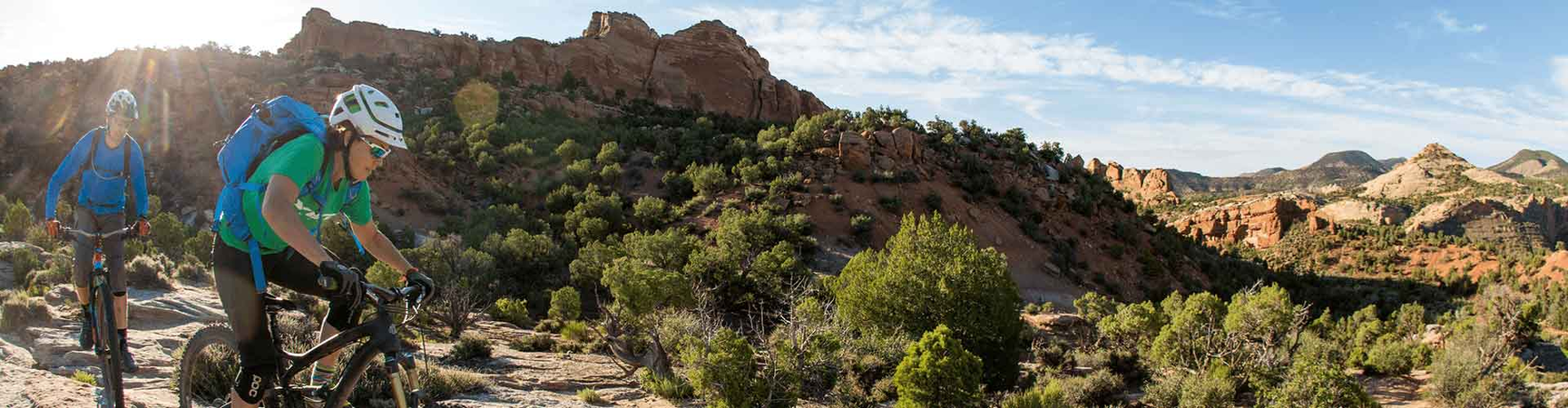
Moab, Utah was chosen as the area for which to estimate the economic benefits of mountain biking. Moab has over twenty trails in which to ride, offering spectacular views of unique rock formations and the snow-capped La-Sal mountains, and has become one of the best known areas to ride in the country. This area was picked because it was felt that there would be many single-destination, single-purpose trips, which is a necessary assumption of the TCM (Freeman, 1993). It was also felt that due to Moab's popularity throughout the country there would be sufficient variation in travel distance, time, and trip cost. The reader should be cautioned that due to the notoriety of Moab, these results should not be generalized to other mountain biking areas.

An on-site sample was conducted the week of March 9th to the 16th, 1996.1 The sampling station was set up at the Slickrock trailhead, one of the more popular trails in the Moab area, and every fifth visitor completing their ride was asked to fill out a survey. During this week 345 people were asked to fill out a survey, of which 35 refused leaving a sample size of 310 resulting in a response rate of 90%.

To meet the assumptions of the TCM, it was necessary to screen the sample to include only those who were on single- destination, single-purpose trips. This was done by using the previously mentioned questions which were included in the survey. Of the 310 responses, 8 did not fill out the relevant question and 64 stated they were on a multi-destination trip, leaving a single-destination sample of 238. The next step was to screen the single-destination sample for multi-purpose visits. Those on multi-purpose trips (e.g. multiple activities such as hiking and biking) would also lead to a problem of allocation of travel cost between activities. Of the single-destination sample, 26 stated they were on a multi-purpose trip leaving a single-destination, single-purpose sample of 212. Outliers, based on gas cost (those reporting gas costs so high as to imply less than 8 miles per gallon), were eliminated resulting in a final sample size of 194.

General descriptive statistics of the respondents are listed in Table 1.

Model Specification

The first issue addressed is specification of the price variable. As is well known (Cesario, 1976; McConnell & Strand, 1981), travel time as well as travel cost must be included in a TCM. Since individual data was used there was sufficient independent variation to include travel time as its own variable in the model. This eliminates the concern over what dollar value (as a percentage of the respondents wage rate) should be used as the opportunity cost of time.

The second issue addressed through model specification is that of substitute sites. Prices of substitutes were taken into account, as their exclusion may overstate the estimates of consumer surplus (Rosenthal, 1987). The substitute prices which were taken into account are the prices, measured in miles, of traveling to alternative sites to mountain bike. Two measures of substitute prices were created, one using sites with weather conditions similar to Moab and the other using sites with desert conditions similar to Moab.

The weather substitute site is appropriate because many of the respondents could not bike near their home at this time of year, due to weather conditions (e.g. snow), and must travel to another site, Moab or elsewhere, to bike. In addition, Moab is located in the desert country of southeastern Utah and many people travel to Moab to experience riding in these conditions. The desert substitute price represents the cost of obtaining a riding experience similar to that of Moab.

These substitutes are only one of several possible for the Moab site. However, the survey did not ask the respondent about the other sites they might have visited at this time of year if mountain biking was not an option or too expensive.

Since the surveying was done on-site and the dependent variable in the TCM is the number of trips a respondent has taken in the past twelve months, statistical efficiency is improved by using a count data estimator since the number of trips taken is a non-negative integer, rather than a continuous variable as assumed in the normal distribution. Count data estimators restrict positive probability assignment to possible events, while continuos distribution estimators give positive probability to fractional and possibly negative values of the dependent variable (Creel & Loomis, 1990). The Poisson distribution is far more consistent with a data generating process producing only a few trips per visitor. Hellerstein (1992) shows that when the average number of trips is small (such as this data set, where the average is 2.58) the Poisson is a much closer approximation than regression techniques based on the normal distribution. The count data model estimated has a Poisson distribution with the general specification being:

Yi = exp(PRICESi, SUBSTITUTESi, DEMOGRAPHICSi, error term)

The model estimated also corrects for endogenous stratification, which occurs with on-site sampling. With on-site sampling, the likelihood of a person being sampled is related to the frequency of their visits. When using the Poisson model, subtracting one from the reported number of trips corrects for this problem associated with on-site samples (Englin & Shonkwiler, 1995). Subtracting one from the number of trips adjusts the annual number of trips downward to reflect the fact that those who take a higher number of annual trips are more likely to be sampled. For example, someone who takes 4 trips per year has a greater chance of being sampled on any given day than someone who takes 2 trips. This will lead to an upward bias in the dependent variable. In the Poisson specification, subtracting one will adjust the dependent variable down to more accurately reflect the entire population. See Englin and Shonkwiler (1995) for a formal proof.

The Models are specified as follows:

lnTRIPSONE = B0 - B1*TRTCOST - B2*TRVTIME + B3*AGE + B4*DESERTD
lnTRIPSONE = B0 - B1*TRTCOST - B2*TRVTIME + B3*AGE + B4*WEATHD

Where TRIPSONE is the reported number of trips minus one, to correct for endogenous stratification; TRTCOST is the reported costs incurred traveling to Moab multiplied by two, in order to make the one way costs round trip costs, plus costs reported while staying in Moab; TRVTIME is the reported time, in hours, spent traveling to Moab; and AGE is the respondents age. WEATHD and DESERTD are the prices, measured in miles, from the respondents home to the weather and desert substitute sites, respectively, as was explained earlier. Two models were specified because of multicollinearity between the two substitute variables.

Results

The results of the Poisson equation are listed in Table 2. The price variables, TRTCOST and TRVTIME, have negative signs on the coefficients and are significant at the .01 percent level. The respective substitute price variables' coefficients have positive signs (as expected by theory) and are also significant at the .01 percent level. Thus, even a fairly unique mountain biking site like Moab is considered to have substitutes by users. It is also shown that older mountain bikers tend to take fewer trips. Income and skill were tested as demand shifters, but were insignificant and, therefore, not included in the final model. The explanatory power of the regression is reasonably good given the individual cross-section data. The estimated demand curve is shown in Figure 1.

Figure 1. Individual Demand Curve For Mountain Biking at Moab, Utah

Figure 2 shows the sensitivity of annual visits to the Slickrock trail, one of the more popular trails in the Moab area, to an increase in fees. The current fee is $3 per vehicle and the annual use for 1995 was 158,681 for 1995 (Bigler, 1996). Annual visitor rates are not very sensitive to fees; a three fold increase in the fee (from $3 to $10) will decrease annual trips by less than 5000. This is attributable to the fact that entrance fees at Moab are a small percentage of total trip costs.

Figure 2. Sensitivity of Visits to the Slickrock Trail to an Increase in Fees

When using the Poisson model, per trip consumer surplus can be calculated by -1/B1TRTCOST (Creel & Loomis, 1990; Englin & Shonkwiler, 1995). Although travel time is part of the sacrifice of making a trip, it is not part of the monetary price of a trip. The consumer surplus is defined as the area under the demand curve, which is in the price, quantity space and, therefore, only the coefficient for monetary trip cost is used for its calculation. Consumer surplus was calculated with the above technique then divided by 3.76, which is the average group size of this sample, in order to estimate individual per-trip consumer surplus. Per-trip refers to the economic benefits received per person from an average trip. This assumes that each member of the group receives equal benefits. The estimates of consumer surplus are listed in Table 3. The value per-trip are quite similar for the two specifications of substitutes: $197 with the desert substitute and $205 with the weather substitute.

The above estimates are individual per-trip values, however, it may also be useful to estimate a measure of annual use value for an area within the study site, the Slickrock trail. The first step was to divide per-trip consumer surplus by the average days spent in Moab, in order to have a measure of the consumer surplus attributable to one day at the Slickrock trail. This value was then multiplied by the annual visitor days at Slickrock, which is 158,681 for 1995 (Bigler, 1996). The estimate of annual consumer surplus experienced by the visitors of the Slickrock trail is listed in Table 3. As can be seen, this value is quite large: $8,422,800 and $8,770,300 for the two different specifications.

Conclusion

It can be concluded that the bike trails in the Moab area produce a high value of consumer surplus to the users, $197 and $205 per trip, depending on the model specification and the corresponding annual values for the Slickrock trail are also large, $8,422,800 and $8,770,300. Although these estimates of consumer surplus may not easily transfer to other areas, due to the uniqueness of Moab, it is still useful for land managers to note that there are large benefits resulting from land being used for mountain biking.

It should be noted that mountain biking is only one activity which can be done at Moab and, therefore, mountain biking is only part of the total economic value associated with Moab. Moab's total economic value will consist of all use values such as hiking, rafting, and sightseeing as well as existence, option, and bequest values. It should also be noted that mountain biking will have different values at different sites depending on the characteristics of the site and visitors.

This study also demonstrates the applicability of the travel cost method to estimating the economic value of mountain biking. As further studies are done at less nationally well-known sites it will be interesting to compare values. Nonetheless, it appears that devotees of mountain biking receive substantial benefit per-trip and it may be an economically competitive use of public recreation areas.

References

Bigler, C. (1996). Annual Use Value for the Slickrock Trail. Moab, Utah, Document prepared by Americorps.

Brown, W. G. & Nawas, F. (1973). Impact of Aggregation on the Estimation of Outdoor Recreation Demand Functions. American Journal of Agricultural Economics, 55, 246-249.

Bowes, M. D. & Loomis, J. B. (1980). A Note on the Use of Travel Cost Models with Unequal Zonal Populations. Land Economics, 56, 465-470.

Cesario, F. (1976). Valuing Time in Recreation Benefit Studies. Land Economics, 52, 32-41.

Champ, P. A. & Bishop, R. C. (1996). Evidence on the Accuracy of Expenditures Reported in Recreational Surveys. Journal of Agricultural and Resource Economics, 229, 150-159.

Clawson, M. & Knetsch, J. (1966). Economics of Outdoor Recreation. Baltimore, Md.: John Hopkins University Press.

Creel, M. D. & Loomis, J. B. (1990). Theoretical and Empirical Advantages of Truncated Count Data Estimators for Analysis of Deer Hunting in California. American Journal of Agricultural Economics, 72, 434-441.

Englin, J. & Shonkwiler, J. S. (1995). Estimating Social Welfare Using Count Data Models: An Application to Long-Run Recreation Demand Under Conditions of Endogenous Stratification and Truncation. Review of Economics and Statistics, 77, 104-112.

Freeman, A. M. III. (1993). The Measurement of Environmental and Resource Values. Theory and Methods. Washington DC: Resources for the Future.

Hellerstein, D. (1992). The Treatment of NonParticipants in Travel Cost Analysis and Other Demand Models. Water Resources Research, 28, 1999-2004.

Loomis, J. B. & Walsh, R. G. (1997). Recreation Economic Decisions: Comparing Benefits and Costs, Second ed. State College, PA: Venture Publishing, inc.

McConnell, K. & Strand, I. (1981). Measuring the Cost of Time in Recreation Demand Analysis: An Application to Sportfishing. American Journal of Agricultural Economics, 65, 153-156.

Mendelsohn, R., Hof, J., Peterson, G., & Johnson, R. (1992). Measuring Recreation Values with Multiple destination Trips. American Journal of Agricultural Economics, 74, 926-933.

Rosenthal, D. H. (1987). The Necessity for Substitute Prices in Recreation Demand Analysis. American Journal of Agricultural Economics, 69, 828-837.

Rosenthal, D. H., Loomis, J. B., & Peterson, G. L. (1984). The Travel Cost Model: Concepts and Applications. USDA Forest Service General Technical Report RM-109, 10p. Fort Collins, CO: Rocky Mountain Forest and Range Experiment Station.

Siderelis, C. & Moore, R. (1995). Outdoor Recreation Benefits of Rails-Trails. Journal of Leisure Research, 27, 344-359.

Walsh, R., Johnson, D. M., & McKean, J. R. (1992). Benefit Transfer of Outdoor Recreation Demand Studies, 1968-1988. Water Resources Research, 28, 707-713.

Footnotes

1 There may be some limitations to using the week of March 9th as a sample for the entire year, however, if there is bias it is expected to be downward. Concern was raised (by the head of recreation, BLM, Moab) that by sampling at this time of year the higher income people who generally visit in the fall would not be sampled. If this is the case, the estimates would likely under-estimate the annual economic benefits associated with mountain biking at Moab.

TABLE 1
Individual Trip Statistics
Length
of Trip
Days Spent
in Moab
Miles
Traveled
Group
Size
Age
Average54525 3.7427
Minimum1170115
Maximum30223200 2466

Constant
TABLE 2
Estimated Poisson Count Data TCM Demand Equation
Independent
Variable
Coef. T-Stat R2 X2N
With
Desertd:
1.359 4.879 .293 99 181
TRTCOST -.00135 -3.133
TRVTIME -.11116 -5.740
AGE -.01470 -1.812
DESERTD .00085 2.935
With
Weathd:
Constant 1.3428 5.436 .3464 114 181
TRTCOST -.00129 2.985
TRVTIME -.09929 -5.922
AGE -.01171 -1.478
WEATHD .00082 4.80

TABLE 3
Consumer Surplus For Mountain Biking at Moab
Individual
Per-Trip
Consumer
Surplus
Per-Day
Consumer
Surplus
Annual Consumer
Surplus
Slickrock Trail
Desertd: $197 $53.08 $8,422,800
Weathd: $205 $55.27 $8,770,300

Figures

Email this page Printable Version


Help | Site Map | Copyright
IMBA Homepage Join IMBA Now!