IMBA - International Mountain Bicycling Association
What would we do without trails?

Attracting and Keeping Trail Volunteers

By Bill Harris and IMBA Listserve Participants*
(Bill is IMBA's Colorado Rep)
Summer 2001

One of the most challenging and frustrating aspects of mountain bike advocacy is attracting volunteers to perform trail construction and maintenance. In addition to finding time to ride, most people have busy lives with jobs, hobbies and families. Performing trail work is way down the list of things to do. Here are some ideas to help attract and keep volunteers:

Getting The Word Out

The first challenge facing any mountain bike advocacy group is one of awareness. If you want folks to find out about your group and get involved, they need to know what you are doing.

Information Can Be Disseminated In Many Ways

The most traditional is through print media. Inviting local reporters to trail maintenance day, and distributing regular press releases detailing club events and activities will help get the word out. The ideal situation is to find a journalist who is also a mountain biker, so articles have a better chance of getting printed. Public service announcements on television and radio can increase exposure as well.

Other ways to spread the word include:

  • Develop and distribute a calendar of trail work.
  • Use e-mail messages, a web site and newsletters to communicate activities to members.
  • Post notices at trailheads announcing the particulars of trail work days.
  • Include local bike shops and put up signs in their stores.
  • Hand out flyers at races detailing trail work.
  • Invite other trail-user groups to join your club on workday - also promotes "shared-use" tolerance.
  • Tie the event with an industry promotion.
  • Engage local bike industry reps sympathetic to your cause.
  • Include your group in your state's Pay Dirt program or start one. (The Pay Dirt program gives race points to racers in exchange for trail work hours.)

Organize, Organize, Organize

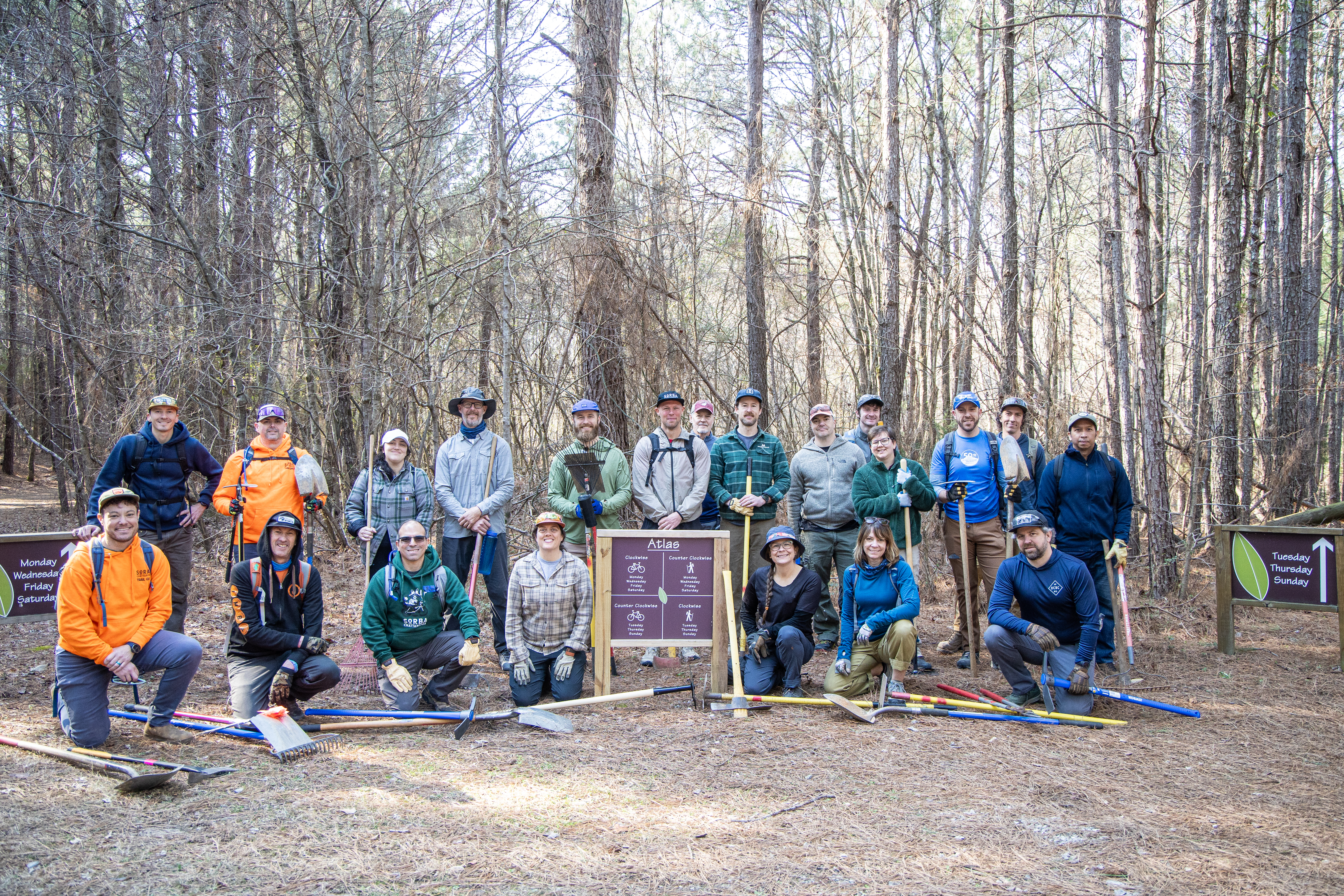
Work with the responsible land manager to receive permission and obtain volunteer agreements. Put together a small committee to organize trail work, tools, food and beverages. Prioritize tasks so you can focus on what needs to be done regardless of the turnout. Carefully plan the scope of the project, so you don't work people to death or waste their time. Crews of eight to ten people working for no more than four to five hours, including hike time, is a reasonable commitment for your average volunteer. If the work gets done on Saturday organize a group ride for Sunday so volunteers can take pride in their accomplishments and ride the section they worked.

Train Crew Leaders

Have trained crew leaders brought up to date on what work their crew will do. If you don't have any trained crew leaders, ask the land agency if they can train a few of your members, or contact the IMBA Trail Care Crews. Trail Care Crew schedules are formulated early each year but if your event is months out one of the crews might be available. They do a great Trailbuilding School that is full of useful information.

Tools

Be sure you have enough tools and that they are in good repair. Many trail groups set up a tool cache and put someone in charge of maintaining it. A few groups have their tools in a small trailer that is transported easily to work sites.

Feed The Troops!

Hand out free energy bars, lunches and drinks during the work session. A big pasta feed or hamburger fry afterwards with adequate supplies of beer and soda are also a nice touch. Once the work is over we gather at a central camp for a pasta feed and schwag giveaway.

Volunteers Need To Know They Are Appreciated

A big, heart-felt "THANK YOU" goes a long way. List volunteers in newsletter articles covering the event, or put photos of workers in your group's web site. Many trail groups have rewards programs with schwag as an enticement for a volunteering a certain number of hours. Many clubs also have a banquet or party at the end of the season to recognize volunteers who go above and beyond the call of duty. An annual points program can stimulate competition among volunteers for quality schwag. Many groups give out special t-shirts, patches, arm bands, helmet stickers, badges or awards for exceptional volunteerism.

Follow-up

Have volunteers sign up. Get their names, addresses, phone numbers and e-mail addresses, so you can follow up and keep them involved. This is particularly important with a new, first-time volunteer. If a first-time volunteer has enough interest to show up once, they will most likely return if they leave feeling welcomed and appreciated.

In the final analysis trail volunteers may never turn out in huge numbers, but advocacy leaders can maximize the turnout by following the suggestions listed above. Mountain bike trail organizations need to seek out those who will dedicate themselves to performing trail work. Developing a culture of trail work within a mountain bike community takes time. You can't shame, embarrass or badger people into joining the effort. Keep organizing workdays and inviting riders to join. As people get used to seeing trail work they'll realize that it is an inherent part of being a mountain biker - giving back to the sport.

Bill Harris
IMBA Colorado Rep
Colorado Plateau Mountain Bike Trail Assoc.

*The ideas discussed were gleaned from comments and suggestions from the listserv discussion and the author's own experience. Contributors include Mark Flint, Bob Michael's, John Silva, Todd Ourston, John Vanbaal, David Arndt, James Buratti, Mark Langton, Brian Junkins, Jeanne Patterson and Merk French.

See also: Volunteer Management, 10 Steps for Successful Events

Email this page Printable Version


Help | Site Map | Copyright
IMBA Homepage Join IMBA Now!