How to Organize Volunteer Workdays: Advocate Mark Flint's Success Story on the Arizona Trail
Tucson, Arizona mountain bike advocate Mark Flint has been a leader in volunteer trail service for 14 years. He has worked with countless local and state land managers to help build and maintain trails, including one of the biggest projects to date, the 800-mile Arizona Trail. Providing a cross-state route for non-motorized users, the Arizona Trail is more than ninety percent finished. Mark is volunteer coordinator and steering committee co-chair in a project to build a 25-mile segment of the trail in the Tucson area. The group organized a very popular series of volunteer workdays that are so successful they have had to limit the number of registrants! Read on to hear more of Mark's story and learn ten valuable lessons for making volunteer workdays fun and productive for all:
I'm involved in a mountain bike club in Tucson, the Sonoran Desert Mountain Bicyclists. I've also served as regional steward for the Arizona Trail, an 800-mile cross-state trail for non-motorized users. The trail lacks about 70 miles of being complete.
One of those incomplete sections is here in Southern Arizona. Members of the bike club got together. We knew we wouldn't be able to build it within the membership, no matter how dedicated and ambitious the mountain bikers are, so we decided to make it a community project.
Using personal contacts and guerilla marketing, we gave the snowball a gentle push.
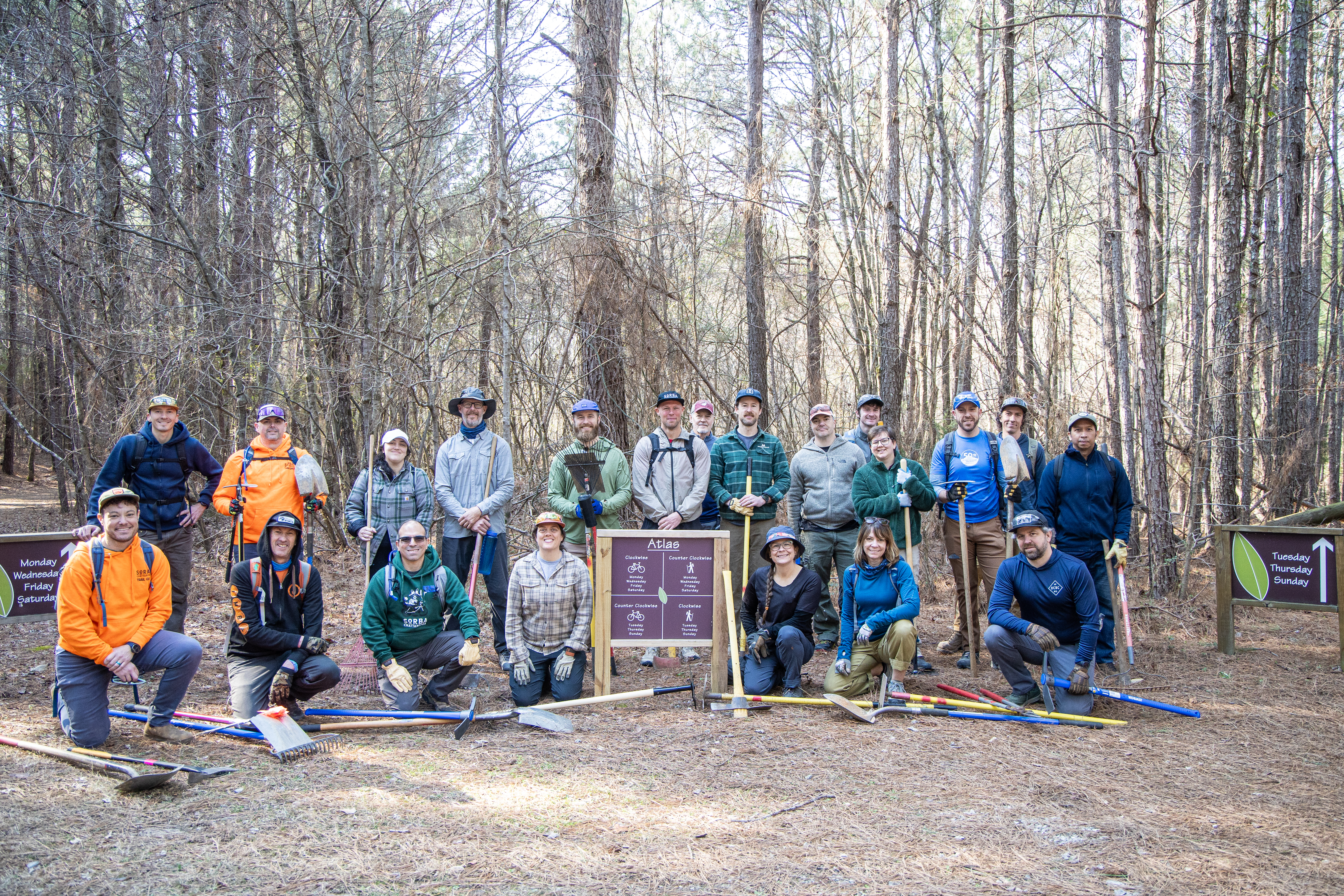
We had been gleefully anticipating 30-35 volunteers per work event. The first event had 45, then it was over 50, then 80. Now we limit it to 50 people, and events can fill up as far ahead as three weeks!
After one of the events, Larry Snead, the Arizona Trail Association executive director at the time, came up to me. What Larry told me blew me away. 'Mark, I looked around at the people when they met at the carpooling site,' he said, 'and I realized something. You had people of every age, from children to people in their 70s. You had people driving up in luxury SUVs and in old pickup trucks. You had black people, brown people and white people. There is incredible diversity, and all of these people have come together to build a trail.'
I realized then that we were building something a lot more important than a path. We were bringing people together. You could say our trail is a bridge. That bridge has connected me with some people whom I now consider good friends, and I'm sure this has been true for most of the people in the project.
One of the reasons it's so successful is the way we treat the volunteers. Here are a few of the ways we make sure they feel appreciated:
Keep the workday short
They have lives and families, and in my experience people with desk jobs tire out after 3-4 hours of building trail. Productivity goes down and safety becomes a concern. By taking only a weekend morning, they have the afternoon and the rest of the weekend for themselves.
Feed them
We have a great lunch sponsor and we send them home with a full stomach. Gourmet sandwiches, chips and a cookie, plus soft drinks. (Last year we served Mexican food, which was great but all you wanted to do after trail work and enchiladas, rice and beans was go lie on the couch for the rest of the afternoon.)
Reward them
We give out T-shirts that say, "I helped build the Arizona Trail" after they come to three events and every participant gets a water bottle and an 'I helped build the Arizona Trail' bumper sticker. These, of course, have our URL and become marketing/branding tools.
Don't waste their time
We organize to minimize standing-around time. People volunteer because they want to DO something. Making them wait and stand around is disrespectful and discourteous.
Emphasize fun
Yes, we are there to build a trail, but our crew leaders are trained to be sure the volunteers take breaks and enjoy where they are. We work harder at slowing them down than we do asking them to work! My philosophy is if they get a little less done but have fun they will come back, and you'll get more accomplished in the long run. I tell the volunteers that if they haven't enjoyed themselves we have failed.
Thank them
We thank them when they arrive, and our crew leaders are trained to thank them several times during the event. And we thank them when they go home. Sometimes I send thank-you emails to the volunteer list.
Some other things that worked for us:
Have a good hook
The Arizona Trail is a great concept, and it was easy to sell. People are building something that will benefit future generations, something they can take their grandchildren on and say, "I helped make this." Corporations are contributing to the social capital of the community. And trails provide measurable quality of life benefits -- health benefits in particular -- and economic benefits.
Have a sponsorship plan
Have a sponsorship plan, with levels of giving. We have raised around $15,000 to cover T-shirts, lunches and other costs.
Use technology
Our Website, www-aztrail-build.org has been a huge benefit. People can sign up for work events there, see pictures of past events, check FAQs to learn about what to bring and what to expect, and contact us about sponsorship. I keep a distribution list of volunteers and contact them with updates on meeting times and places, call for volunteers if numbers are down. (I'm also going to ask if they'd like to stay in the database after the project is over and work on trail projects for the Forest Service and BLM. If they agree, I'll turn their contact info over to my friends in the agencies.)
Divide leadership responsibilities
Divide leadership responsibilities to avoid burnout. As the process goes along be prepared to change and revise duties to avoid people giving more than they can comfortably handle.