Mountain Biking Tourism Success Stories
Learn from other regions who are banking on mountain biking
- Welsh Mountain Bike Initiative, Wales
- Medora, North Dakota
- Fruita, Colorado
- Hatfield-McCoy, West Virginia
- Adirondack Mountains, New York
- Rapelje, Montana
The advent of the mountain bike in the early 1980's resulted in economic jump-starts to several communities around the world. Today, places like Moab, Utah; Durango, Colorado; and Downieville, California enjoy international reputations for excellent bicycling in gorgeous locations. Bicyclists visiting from afar give these communities much-needed tourism dollars.
But a community need not be as unique as Moab or as grand as Durango to prosper from mountain biking. IMBA has prepared a list of common denominators that have helped these six areas prosper. (For more advice, read: Destination Mountain Biking: Positioning Your Community for Mountain Bike Tourism)
Here are six success stories to inspire trails tourism in your area:
Welsh Mountain Bike Initiative, Wales
This ancient landscape in Great Britain is the scene of new opportunities for outdoor recreation, particularly bicycling, on a rebuilt trail system. With the decline of coal mining, southern Wales' historic industrial base, the community turned to recreation to recover.
Local cyclist Dafydd Davis was hired in 1995 to build trails. He started alone using hand tools in the Coed y obrenin Park with a budget of just £750 ($1,000). The trails proved an instant success and use of the park doubled almost immediately. Davis obtained sponsorship from corporate backers such as the drink manufacturer Red Bull and U.K. Forest Enterprises helped him obtain mechanized equipment to build trails faster. Today, Davis' team is developing five mountain biking parks in Wales and employs 40 people full time. They expect to spend £800,000 ($1 million) in the next two years.
Contact: Dafydd Davis, , www.mbwales.com
Medora, North Dakota - The Maah Daah Hey Trail
In the early 1990s, local U.S. Forest Service managers began their dream of building a singletrack trail through the Little Missouri National Grasslands and the Theodore Roosevelt National Park. With time, and lobbying for federal funds, the Forest Service and National Park Service succeeded in constructing a 90-mile singletrack trail, which they named "Maah Daah Hey", a Native American term meaning "an area that will be around for a long time."
The Maah Daah Hey trail terminates near Medora and an increasing number of cyclists are making the long journey to this rather remote town. The soft clay soils of the Badlands proved excellent for building a trail that is extremely smooth. Because there are so few rocks and the agencies used state-of-the-art trail construction techniques, the Maah Daah Hey is perhaps the ultimate beginner ride. Where else can a beginner cyclist ride 90 miles through the backcountry on singletrack? The Forest Service has installed four backcountry campgrounds that have water wells, facilitating overnight camping on what is typically a four-day ride.
National magazines have published dramatic photos and exciting stories about Medora and the Maah Daah Hey.
Contact: IMBA North Dakota Representative Ron Leuthe at or RoughRiders Adventures / Dakota Cyclery 701-623-4808, www.maahdaahhey.com
Fruita, Colorado - Selling Singletrack
Ten miles west of Grand Junction, Colorado, the town of Fruita once prospered with irrigated agriculture and a local oil refinery. The refinery closed in the late 1980s, and many farms were subdivided into housing developments. Although this town did not fall too deep into economic doldrums, community leaders have welcomed the huge growth in tourism spurred by two mountain bike trail systems.
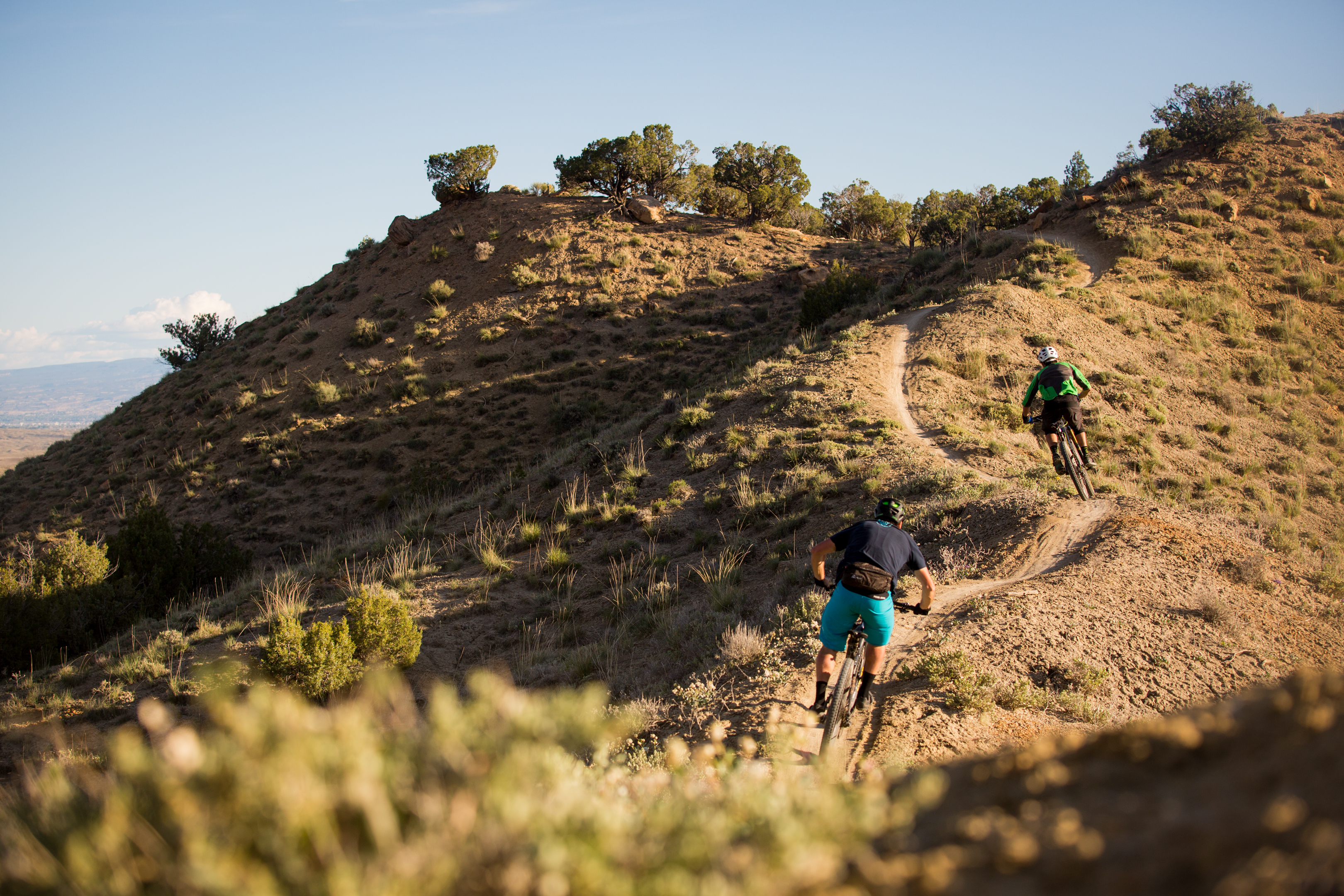
The first system developed was based around Kokopelli's Trail on Bureau of Land Management (BLM) land. The federal agency and a host of volunteers constructed and mapped the route in the late 1980s to provide a ride from Fruita to Moab, Utah. While many cyclists have ridden the 120-mile journey, short loops at the beginning of the route proved more popular. The BLM and local bicycling clubs gradually improved the singletrack system into a network that is outstanding by any measure.
In the mid-1990s, a young bicycle racer from Ohio moved to Fruita and opened a bike shop in the quiet downtown. Troy Rarick inspired the second trail system at the base of the Book Cliffs, ten miles north of town. With Rarick's shop centered between the Kokopelli's and Book Cliffs trail systems, downtown Fruita isn't so quiet anymore. Fruita has established an international reputation and the news has traveled widely. A recent visitor from Maryland commented that his trip to Fruita was spurred by an article in a bicycle magazine from Germany.
Contact: Troy Rarick, Over The Edge Sports, 970-858-7220; , www.fruitamountainbike.com
Hatfield-McCoy, West Virginia - 2,000 Miles of Shared-Use Trails
Plagued with a dwindling economy due to the declining coal industry, West Virginia has suffered high unemployment and a lack of economic diversity. Turning to recreation as the answer, the Hatfield-McCoy Recreation Area in southwestern West Virginia will ultimately be home to 2,000 miles of shared-use trails. One of America's 16 Millennium Trails, Hatfield-McCoy is unique in that most of the trails are located on private property owned by corporations. It took almost a decade to build community support and sign an agreement with the 20 landowners, but since the area opened in the fall of 2000, the system has added $51 million to the economy, created 1,572 new jobs and generated 303,000 visitors annually. Roughly 500 miles of trail are already open, showcasing a rich collection of historical and cultural sites. The project is expanding to adjacent areas of eastern Kentucky and southwestern Virginia and will include five million acres.
Contact: IMBA West Virginia Representative Matt Marcus , www.trailsheaven.com
Lake Placid, New York - Adirondack Park Mountain Biking Initiative
Lee and Judi Borland are the inspiration behind the Adirondack Mountain Biking Initiative (APMBI) that could become one of the United States' largest network of trails designed for mountain biking. The Adirondack Mountains in northern New York state include more than six million acres of state park land the APMBI is developing into stacked loop systems. A diverse team of bicycle advocates, government agencies, commercial interests and private groups totaling 21 organizations and 24 towns and villages are working to promote the area for destination mountain biking.
Contact: Lee and Judi Borland, 518-523-3959 or
Rapelje, Montana - The Potential
Rapelje, Montana, offers perhaps the clearest example of the possibilities of bike tourism in a non-mountainous setting. Rapelje is in the northern Great Plains and is surrounded by wide-open flatlands. In 1998, this tiny community was on the brink of becoming a ghost town, as family ranching declined and consolidated. At risk of losing its local school, residents turned to mountain biking. Area ranchers allowed the construction of trails on their private property and found a promoter to put on a small race. That race has grown to a 24-Hour marathon, on a trail system that in 2002 extends 30 miles. All eyes are on Rapelje to see if mountain bike tourism can help this small town.
Contact: Chris Veit at