IMBA - International Mountain Bicycling Association
What would we do without trails?

Stranger to Stakeholder to Partner

The Mobilization of Constituency on Public Lands

A Paper Presented to the Environmental Communication Commission Panel: Environmental Conflict, Consensus, Collaboration, or Co-existence? Influencing Elements in Multi-party, Multi-objective Land Use Issues

National Communication Association 1998 Convention New York, New York November 20-24, 1998

Jim Hasenauer, Associate Professor
Department of Communication Studies
California State University at Northridge
Northridge, CA 91330-8257
818-677-2086

Abstract: Managing the use of public recreational land is often marked by a high potential for disputes among competing user groups, management agencies, and adjacent communities regarding appropriate use. This tension can easily escalate into undesirable and unproductive, contentious conflict. Using principles of intercultural communication and social movement theory, this study analyzes the evolving relationship between mountain cyclists and land management agencies. In the mid-1980s, when mountain bicycling emerged as a popular outdoor recreation activity, early relations with land managers and the pre-existing community of trail users led cyclists to form organizations to formally represent them. These organizations have been generally successful in establishing cooperative rather than antagonistic relations with the management agencies. By examining the dialogue among land managers and organized mountain cyclist organizations concerning fact, value and policy issues, this analysis identifies the stakeholder intersections and the communicative choices that encouraged collaboration rather than conflict. The author invites further communication research in this arena.

This paper is an attempt to offer communication studies practitioners an historical framework for understanding a fruitful area of applied research in the praxis of public land use planning. The integration of recreational mountain biking into the mix of trail recreation has presented a definable history of organizational development, message exchange, events and decisions open to a potentially rich exploration of concepts central to our discipline. These include core concepts of intercultural communication, social movement theory, inter-group conflict processes and resolution, and rhetorical analysis. I have a number of reasons for wanting to stimulate and encourage research in all aspects of this context and I invite your interest.

Eyes and Ears Open, I'm Positioned

I have been involved with mountain bike organizations for more than 11 years; I've been riding for 14. I am on the Board of Directors of IMBA, the International Mountain Bicycling Association which promotes environmentally sound and socially responsible mountain biking. I have served as IMBA's president (1991-1996) and two years ago, on sabbatical, I served as IMBA's Director of Education. I was also co-founder and served 10 years on the board of a local mountain bike club, CORBA, the Concerned Off-Road Bicyclists Association in Los Angeles. I also serve on the boards of NORBA, the National Off-Road Bicycle Association and its parent corporation USA Cycling. These last two regulate bicycle racing in the United States and interface with Olympic and international bike racing organizations.

I have been personally involved in many of the initiatives that affect mountain biking on trails. I have met with high level federal, state and local land managers and with the representatives of other environmental and trail user groups. I have written for bike magazines and have co-authored two guidebooks to trails in my local Santa Monica Mountains (Hasenauer and Langton, 1994, 1998). It's fair to say I've been a leader in the direction the sport has taken and I've been recognized for these efforts.
I'm also a card carrying environmentalist and belong or have belonged to several local, regional and national land protection and preservation organizations. I am politically active on environmental issues, especially the Americans for Our Heritage and Recreation coalition's efforts to revitalize the Land And Water Conservation Fund which provides money from off shore oil drilling to put land in permanent, public protection. To me these are compatible, complementary identities. In fact, to me they are one identity. My environmental commitments and my passion for mountain bike riding nourish each other.

Of course, the other identity I bring to this project is an academic professing speech communication theory and practice. I teach courses in communication theory, gender and communication, interpersonal communication, intercultural communication, and public speaking argument and advocacy. I've come to see my environmentalism and commitment to mountain biking integrated as well.

My early advocacy efforts merely engaged my debate and communication experience as I pursued my self interest and took on what I felt was defective decision making. As my involvement increased over time, I realized the breadth of communication principles and practices imbedded in these conversations on recreational land use. The boundaries between my advocacy and teaching blurred. I've used my academic training and skills in the service of the environmental community and reciprocally, my mountain biking and environmental activism have enriched my teaching and thinking about communication (Hasenauer 1998a, 1998b). My university has supported my work in environmental education and community building.

I want to continue to integrate these identities and this paper is an attempt to do that. I'm clearly a "participant observer" here with all the baggage that implies. I'll try to be fair and I'll appreciate your feedback and direction.

Strangers

In a popular textbook in Intercultural Communication, Gudykunst and Kim (1992) argue that a key to understanding relations between culturally different individuals is to appreciate the phenomenon of the "stranger". Simmel (1950/1908) introduced the concept as a relational term, a way of positioning both the knower and the known. In encountering strangers, there is a sense of difference, of uncertainty, of anxiety, even of danger. Communication with the stranger is inherently problematic. There is a tendency to stereotype strangers since we lack personal knowledge about them. They are frequently subject to prejudice, especially prejudice rooted in ethnocentrism and in-group solidarity.

Intercultural affairs in our cities often swing on relations between strangers. These are played out in social dramas related to immigration, cultural diversity and race. Ultimately, the strength of our communities derives from strangers' and familiars' ability to find common ground, to begin to understand, and to cooperate for a common good. This is the essential problem of communication - "to share or make common" when we are not the same.

This paper uses the stranger construct and a number of others to illustrate the tension between familiars and strangers in another type of community. The recreational trails community, specifically the non-motorized, muscle powered trail community, is a loosely tied collection of individuals and groups who share a passion for backcountry recreation. This community has a common interest, but is defined by activities that are frequently experienced alone or in small groups. Members of the trail community present themselves as recreational users of the environment and usually as protectors and preservers of that environment. For most, the value of backcountry recreation is experienced in the encounter with nature. The internal contradiction of use vs protection resides close to the surface, thus trail groups must justify their activity as environmentally appropriate and often promote an ethic of minimal impact, leave no trace behavior. Muscle powered backcountry trail users include hikers, equestrians, runners, skiers and most recently mountain bicyclists. These latter are the strangers in this analysis.

When mountain bikers emerged on the trails used by pre-existing trail communities in the mid-1980's they were treated as strangers, as different and dangerous. Their visibility given their numbers, their equipment and their behavior had been taken to be a threat by the existing trail community. Like many naive newcomers, they assumed they would be accepted and their commonalities with the existing community would be recognized. It was a rude awakening. Mountain bikers organized to legitimize themselves by appealing to the values and processes of land managers and these other groups.

This scenario continues to be played out today and is related to reaching some critical mass. A few riders are tolerated, even welcomed as eccentric or exotic. When larger numbers emerge, there has often been a mobilizing effort against mountain bikers on trails. This would be marked by complaints to land managers and the adoption of anti-bike positions by traditional trail groups. The cyclists would also mobilize and this contributed to intensified perceptions of in-group vs out-group social conflict.

In places where this conflict is now long lived, e.g., in the San Francisco Bay area, in New York metro, in Los Angeles, or in Seattle, the years of conflict and the perception of it as a zero sum game have made it even harder to reach rapprochement. Consciously and unconsciously the groups antagonize each other. Both groups have exaggerated their differences, ignored their commonalities and forfeited their good will. In Los Angeles recently, one long time hiking trail leader left a meeting declaring "This is war."

In contrast, sometimes mountain biking emerged where there was no pre-existing trail community. In these cases, cyclists, hikers and equestrians sometimes joined forces to support some park goal or to limit some adverse development. From the start, they recognized their affinity. There were no strangers. This development foreshadowed the end state that is being achieved in those more contentious contexts only after significant, proactive work by cyclists.

A Short History

In 1981, Specialized Bicycle Company introduced the "Stumpjumper", the first mass produced mountain bicycle. The bike was modeled on a small number of custom made mountain bikes built in Marin County, California in the 70's although it's worth noting that there have been bicycles on dirt roads and trails since the bicycle came to the United States in the late 1800's. These new mountain bikes though had greater flexibility. They were relatively light, multi-geared and strong enough to endure long off-road rides on rough, rocky, primitive trails. The introduction of the mountain bicycle revived a stagnant bicycle industry. It boomed. Technological advances in materials, suspension and mechanical advantage continue.

When mountain bicycling first became popular, land managers didn't know what to expect from the activity and its participants. Many were justifiably cautious. There was an abundance of data used to guide decisions on other types of motorized and non-motorized recreation, but virtually nothing about off-road bicycles. The concerns and complaints of hikers and equestrians, especially in urban fringe areas led some land managers to close trails. Cyclists organized to prevent and reverse these closures and an incipient social movement was born. In 1983, the National Off Road Bicyclists Association was founded and took up the mission of "land access" as well as rules for competition. By 1988, NORBA focused exclusively on racing and had relinquished its advocacy work. The International Mountain Bicycling Association was formed by five local California clubs. IMBA's objectives were:

  1. to promote the sport of mountain bicycling by educating riders in safe, responsible and courteous cycling,

  2. to facilitate the formation of local mountain bicycle clubs,

  3. to act as a clearinghouse of information for the advocacy of land access at all levels of government,

  4. to lead the advocacy effort at the national level

  5. and to promote appreciation of and care for recreational lands by mountain bicyclists. (IMBA, 988)

Now there are some 10-15 million mountain bicyclists, more than 300 local mountain bike clubs, and IMBA has more than 14,000 members. The sport is diverse, encompassing a range of riding interests and styles from the occasional bikepath rider to world class, competitive athletes. (Mountain biking appeared as an Olympic Sport in Atlanta in 1996). Recreational riders make up the bulk of the sport's numbers. They are served by six national, monthly magazines specifically aimed at mountain bike riders.

The Human Relations Problem

As noted above, a common response to the presence of these strangers in some traditional trail communities led to attempts to keep bicyclists out. The language employed often revealed an implicit presumption of privilege and place in the claims of the traditional trail community as they defended their territory and practices. They felt they were legitimate; cyclists' legitimacy was questionable. The trails were their trails; cyclists had invaded them. They argued for separate rather than shared trails (separate but not equal) and complained that cyclists didn't know their place (the wide service and fire roads). They expressed frustration that cyclists were not satisfied with what they had been "given", and were angry when uppity cyclists kept returning to ask for more. When cyclists complained about their treatment as second-class citizens, they were told to abandon their identity "you are welcome, but your bicycles are not. Walk." There were also double standards, e.g. a horse's footprint in the dirt is OK, a bike track is "damage".

These language and perceptual dynamics should be familiar to anyone who studies human relations and inter-group conflict. I do not wish to trivialize significant human rights struggles by equating the cyclists' position with oppressed racial and ethnic groups, but the analogue is there. The process is the same.

The views expressed by anti-bike groups provided a moral impetus and an organizational imperative to the cyclists who would respond with claims of discrimination, unfair decision making, and prejudice. Efforts were spent organizing local clubs and regional infrastructures to empower cyclists and enable them to establish positive relations with land managers before the complaints associated with critical mass. By coincidence, the demographics of mountain cyclists afforded a greater probability of computer skills in comparison with the aging traditional trail users. Cyclists and cycling organizations were quick to establish newsgroups and listserves to facilitate their communication and organization.

These organizational efforts earned cyclists a place at the planning table. They had become stakeholders and most land managers have mandates to include stakeholders in their decision processes.

The Issues

Early on, four planning issues emerged: environmental impacts, user safety, liability concerns and most significantly, user conflict. The cyclists themselves played a pivotal role in the framing of these issues. They argued for fact based decision making, empirical evidence over anecdote, shared use over exclusion or separate facilities and education as the primary mode of regulating the activity. Now a great deal of experience from 17 years of activity has provided some empirical guidance on the issues, but all continue to require new research and dialogue.

Most land managers are charged first with protecting the resource and the primary question regarding mountain bike use was what are its impacts? The large body of data on motorized trail use and the resemblance between bicycles and motorcycles led some to believe that impacts were similar. Cyclists countered that the power differential was significant and that bike impacts were closer to those of other non-motorized trail users. Most studies (Wilson and Seney, 1994; Cessford, 1995) have concluded that mountain bike impacts are not significantly different than hiker impacts in most cases. Both of these uses tend to have fewer impacts than do equestrians. More research needs to be done on the impacts of all trail users and a number of projects are under way (e.g., Colorado State Parks, 1997).

The second concern has been one of safety. Is bicycling safe for the bicyclist and do bicyclists pose a threat to other trail users? Some hikers and equestrians argue that the speed differential and risk of surprise make bikes inherently unsafe on trails. Cycling advocates claim that education and responsible riding is the solution. Bike advocates would point out that while there is the potential danger inherent in all outdoor recreation, the number of mountain bike fatalities and serious accidents is minuscule given the number of riders. In both recreation and competition, most mountain bike accidents are minor and predictable (Chow, Bracker and Patrick, 1993; Kronisch, Pfeifer and Chow, 1996). Accidents involving bicyclists and other users are extremely rare.

Closely related is the question of liability for both public and private land managers. Bike advocates like rock climbers, backpackers and other backcountry recreationalists urge cyclists to take personal responsibility for themselves and their equipment. IMBA distributes a booklet of recreational trail liability laws in all 50 states to reassure public and private land managers.

Ultimately concerns about environmental impact, safety and liability give way to the thornier problem of user conflict. There is an emerging literature here (Moore, 1994; Watson, Williams and Daigle, 1991) and communication professionals have much to offer. Among the most significant findings are the affinity between cyclists and hikers (Hollenhurst, Schuett and Olson, 1995) even though hikers do not realize it (Watson, Williams and Daigle, 1991). There has also been the consistent finding that the perception of user conflict is often exaggerated by the multiple complaints lodged by a small number of people (Moore, 1994).

One user conflict issue is the question of aesthetic or philosophical appropriateness. The bike is a machine. It is manufactured. It has wheels and gears. Native Americans didn't have it. Does it belong on backcountry trails? Most cyclists see themselves as human scale and muscle powered, a technology not much different than titanium backpack frames, technical clothing or climbing gear. This is not a question of fact and will probably not be resolved by data. The 1964 Wilderness Act was interpreted in 1984 to specifically ban bicycles from designated federal Wilderness. Many national and state parks, forests and conservation lands specifically identify bicycling as a legitimate use. This judgement is most often made on a case by case basis.

Stakeholder Legitimacy and Emerging Partnerships

Recreational mountain bicyclists began organizing in the 80's and that continues today. It was clear that organizations were necessary to earn acceptance and to facilitate communication with other stakeholders. Clubs tended to form first near cities where high population and too little open space intensified management issues. Clubs almost always organize around a fixed place, a trail or trail system, a park or a mountain range.

Among the first orders of business was the adoption of codes of conduct while riding. The NORBA code was the first in 1983. IMBA's six Rules of the Trail were adopted in 1988 and have become the standard. They have been translated into several languages and are routinely used on signs, bike shop handlebar hangtags, pamphlets and other materials to guide rider behavior:

    IMBA Rules of the Trail
    Ride on Open Trails Only
    Control Your Bicycle
    Never Scare Animals
    Always Yield Trail
    Leave No Trace
    Plan Ahead

There are mountain bike skills classes that emphasize not only technical riding skills, but minimum impact riding and social etiquette. When a bicycle magazine runs a story or ad that is perceived as environmentally or socially irresponsible, readers write in to protest. The editorial and advertising contents of the magazines has changed considerably over the last 10 years. There is still a great deal of emphasis on racing, technology and performance, but there is now a consistent portrayal of environmental and social obligations and a diversity of rider demographics, skill levels and riding preferences is presented. Mountain bicyclists have also integrated their educational material into the well established Leave No Trace and Tread Lightly programs. Most mountain bike guidebooks have a section on responsible trail riding.

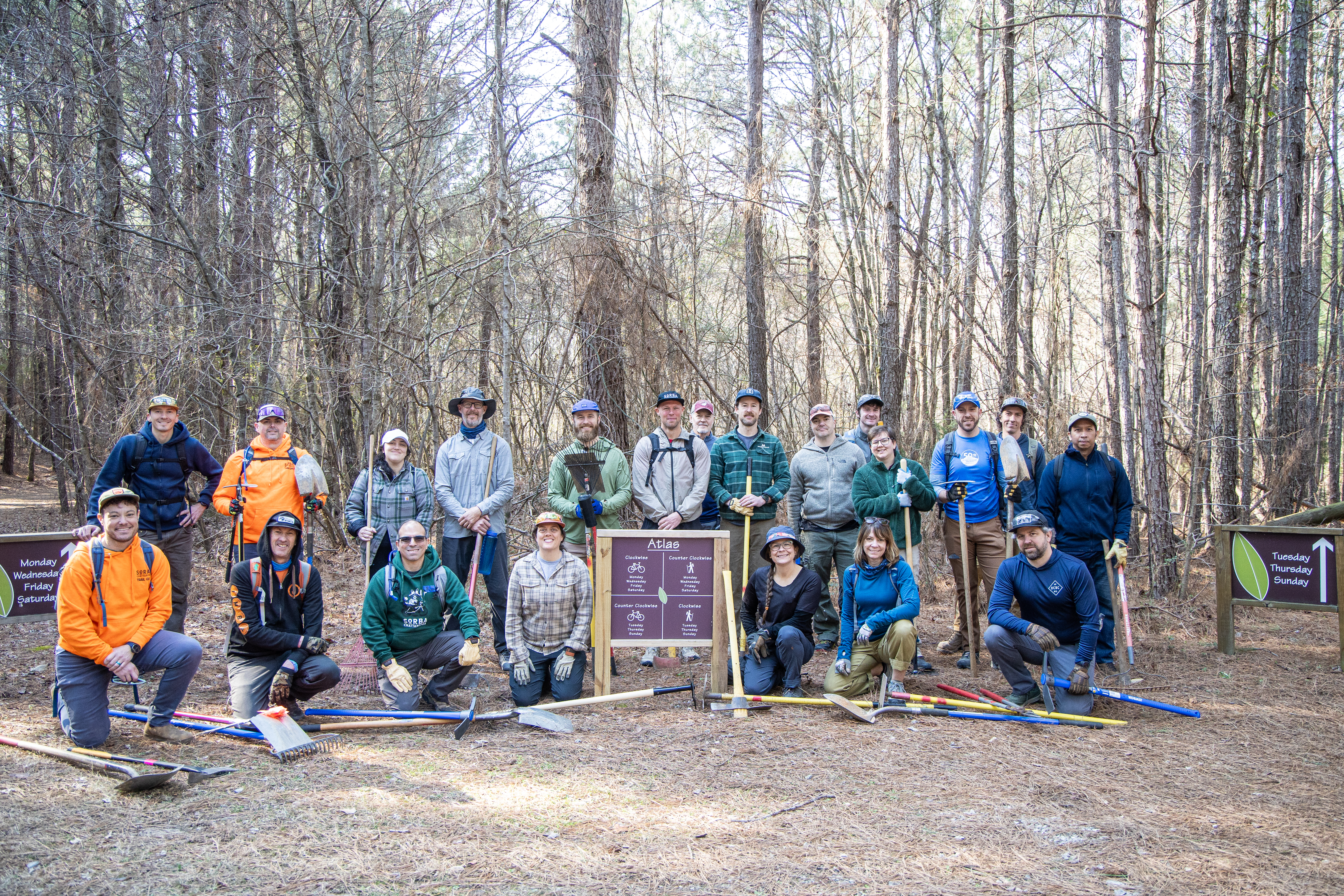
Organizations not only intensified cyclists' political voice, they enhanced the opportunity to create programs that would be valued by land managers, the other trail users and the general public. Volunteerism has become an important ethic in mountain biking. IMBA encourages all mountain bicyclists to contribute at least 20 hours a year of volunteer service to their local parks. Organized bicyclists now contribute hundreds of thousands of hours of trail building and maintenance. The first programs were established locally and then publicized through IMBA as models that could be adopted in other places. As IMBA grew, some programs became coordinated from the national office in Boulder, Colorado.

There are a number of local volunteer patrols who function as roving interpreters, peer educators, and first aid providers. These are loosely affiliated under the National Mountain Bike Patrol based on a ski patrol model. There are youth programs taking at risk or inner city kids on mountain bike field trips. There are partnerships with scout and school groups. There are even joint social events to bring hikers, equestrians and cyclists together.

With the sponsorship of Subaru America, IMBA has two full time, two person Trail Care Crews traveling around the United States. Each team has technical expertise on trail planning, construction and maintenance. They work with land managers and local volunteers on trail projects. In October of this year, one crew spent a month in Europe where IMBA has just opened an office.

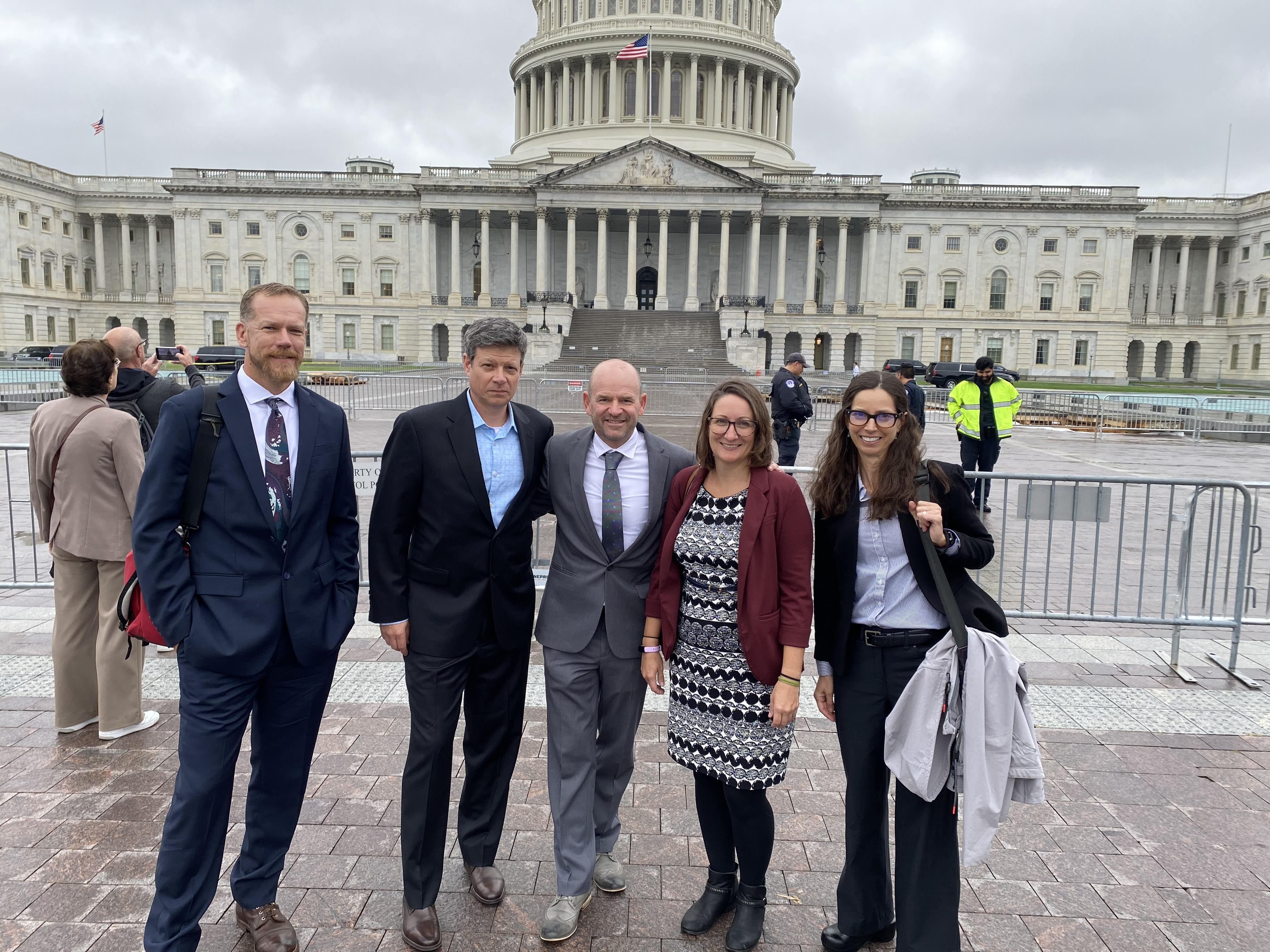
Cycling groups have become involved in public lands protection through lobbying for land acquisition funds and by attempting to monitor and control development on or near open space. Sprung (1997) identifies a number of local projects where mountain bicyclists raised significant funds for public land acquisition. Mountain bicyclists were active with other environmentalists in the legislative campaign which led to the passing of the 1998 TEA-21 transportation bill with millions of dollars for trails, alternative transportation facilities and other transportation enhancements. Mountain bicyclists have joined the campaign to revitalize the Land and Water Conservation Fund and are active in the campaign organization at local, regional and national levels.

Bicycle advocates have established programs to encourage racers to act as spokespersons and role models for the sport. These have included giving racing points for volunteer trailwork, placing responsible riding messages in interviews and involving racers in events for youth.

Mountain bike advocates have convinced the bicycle industry to support these advocacy and educational efforts. Most industry players are members of IMBA and many have taken on special projects to promote responsible riding. The American bicycling industry has been politically apathetic in comparison to other corporate sectors. The mountain bike trail access issue and the road bike alternative transportation movement has awakened an interest in legislative work and a new organization, Bikes Belong is being established to coordinate lobbying efforts.
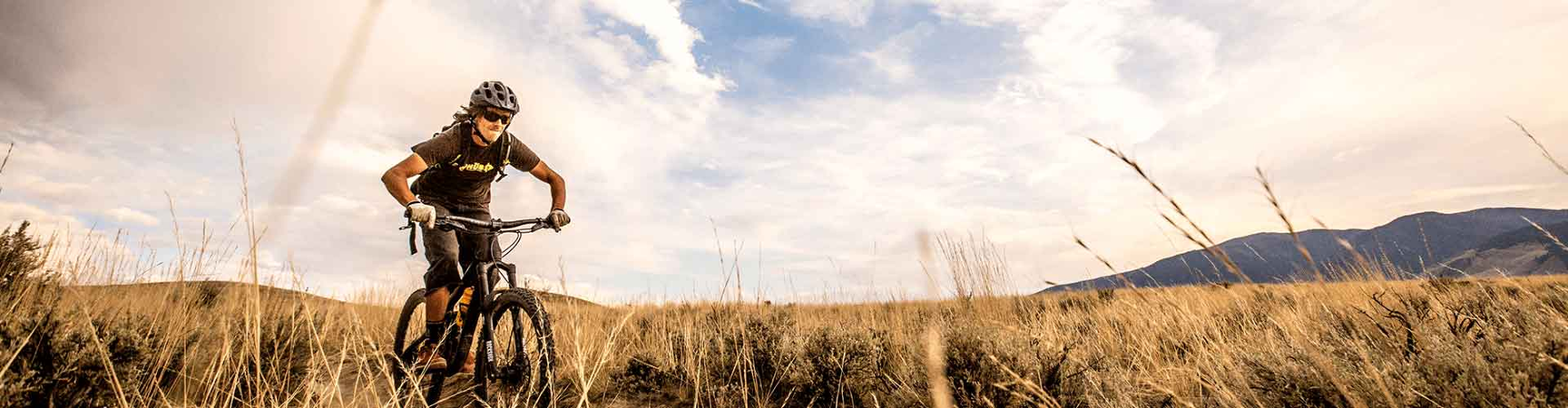
This is only a thumbnail sketch of a variety of activities undertaken by responsible mountain cyclists. They do them not only for their own sake and the benefits they provide, but also as a manifestation of the emerging identity of cyclists as responsible members of the backcountry trails community.

Superordinate Goals and Coalition Building

Over the last several years, IMBA and local mountain bike organizations have made official contact with land managers and other trail user and environmental membership groups. It is this work, rooted in the necessity to work together to accomplish superordinate goals, that may have the greatest potential for building the broader trail community. A classic study of inter-group conflict by Sherif (1966) found that cooperating on a superordinate goal alleviated intergroup tension better than other techniques.

This may be especially true if while cooperating on these goals members of different groups discover their commonality. A great deal of social research on trail user conflict points to the shared values held by cyclists and hikers (Watson, Williams and Daigle, 1991; Moore, 1994; Bjorkman, 1996; Hollenhurst, Schuett and Olson, 1995) but they are not likely to discover this until they interact.

In May of 1990, representatives of several groups met in Washington DC for a Mountain Bike Policy Workshop. The meeting led to a follow-up document (Keller, 1990) which provided land managers with an analysis of the issues and state of the practice in managing mountain bikes. Among the groups there were the American Hiking Society and the American Horse Council. Following that meeting, both groups adopted policies that recognized the legitimacy of mountain bicyclists and the overarching need to work together for trails and parklands. Recently, AHS re-wrote its policy in response to membership pressure. While still recognizing cyclists as legitimate trail users, the new policy privileges the hiking experience and the concept of the "hiking trail", a term that sets off alarm bells with bike advocates. This setback for mountain bicyclists is currently being addressed.

Perhaps the most interesting and fruitful dialogue has been between IMBA and the Sierra Club. In 1985, the Sierra Club amended its Off Road Vehicle policy to include mountain bicycles. The policy read in part "The Operation of ORVs (including mountain bicycles) is presumed detrimental to land resources and human safety." In 1994, after 6 months of mediation, representatives of the Sierra Club and IMBA met in Park City, UT and agreed on 5 principles:

  1. To work for Wilderness, park and open space protection;

  2. That mountain bicycling is a legitimate form of recreation and transportation on trails, including single track when and where it is practiced in an environmentally sound and socially responsible manner;

  3. That not all non-Wilderness trails should be open to bicycle use;

  4. To create joint projects to educate all non-motorized trail users;

  5. To encourage communication between local mountain bicycle clubs and Sierra Club entities.

Since then, IMBA has allied with the Sierra Club in its Environmental Bill or Rights campaign and on various legislative efforts. Earlier this year, the Sierra Club completed new Background and Guidelines which accompany its Policy on Off-Road Use of Bicycles. While the policy is extremely cautionary, the new Guidelines embrace the Park City agreement and state that the Sierra Club "supports responsible off-road bicycling."

In addition, IMBA has signed working agreements with the Bureau of Land Management and with the Forest Service to work together to provide opportunities for responsible mountain biking on their lands. Discussions are currently under way with the National Park Service.

Cyclists are actively working with other groups on the Land and Water Conservation Fund, park and trail budgets, TEA-21 implementation, transportation planning, sustainable communities, the public land user fee controversy, species and habitat protection, greater liability protection for public and private land owners and a variety of other issues.

These relationships are indicative of the changing standing of mountain bikers as they've moved from the position of strangers knocking on the door of an unwelcoming trail community to their acceptance as stakeholders who need to have a voice in decisions to their full partnership in the community that cyclists desire.

Cycling's demographics have led automobile companies and other non-endemic advertisers to place mountain bicycles in TV and print advertising. In advertising, mountain bicycles are iconic of freedom, adventure and fun. To a large extent, this has normalized mountain biking in generalized public opinion.

In 1998, there have been two major US trail conferences. The Rails to Trails Conservancy sponsored the First International Trails and Greenways Conference in San Diego in January and the American Trails Association recently held its National Trails Symposium in Tucson. In both cases, mountain bicyclists were well represented across the programs. Their level of programmatic and volunteer activity has centered them.

The Future

Public land managers have greatly expanded cycling trail opportunities and cyclists have created working relationships with other trail user and environmental groups. Despite this, there are still a few individuals and organizations that actively oppose mountain bicyclists on trails. They attempt to maintain the stranger perception that cyclists feel they have left behind. It is in those places where relations between cyclists and other trail users remains strained even bellicose.

The risk to the community at large is that both sides will neglect the real needs of the broader land protection community. If individuals and groups stay alienated, their conflict will only escalate.

In most places though, cyclists and other trail users are talking to land managers and each other trying to forge a dialogue in a new trail community. There are still the historic issues of environmental impact, safety, liability and user conflict. There are issues of resource allocation and distributive justice, and there are the logistical problem of assisting understaffed, underfunded and overworked land managers. The common commitment to the protection of wildlife and wild places may be the superordinate goal that unifies the muscle-powered trail community.

I urge my colleagues in communication studies to consider the opportunities for further analysis of recreational trail use issues. It's a fertile, heuristic area for important applied communication research.

References

Bjorkman, A.W. (1996). Off-road bicycle and hiking trail user interactions. a report to the wisconsin natural resources bureau of research. Eagle, WI.

Cessford, G.R. (1995). Off-road mountain biking: a profile of participants and their recreation setting and experience preferences. Department of conservation science and research series no. 93. Wellington, New Zealand: Department of Conservation.

Chow, T.L., Bracker, M.D. and Patrick, K. (1993). Acute injuries from mountain biking. Western journal of medicine. 159, 145-148.

Colorado State Parks. (1997). Draft-second version of the trails and wildlife bibliography. Available by request from Colorado State Parks Trails Program, 1313 Sherman Street, Room 618, Denver, CO 80203.

Gudykunst, W.B. and Kim, Y.Y. (1992). Communicating with strangers: an approach to intercultural communication, 2nd ed. New York: McGraw Hill.

Hasenauer, J. and Langton, M. (1994). Mountain biking the coast range. Guide 7: the santa monica mountains, 3rd ed. Bishop, CA: Fine Edge Productions.

Hasenauer, J. and Langton, M. (1998). Mountain biking santa monica mountains' best trails. Bishop, CA: Mountain Biking Press, Fine Edge Productions.

Hasenauer, J. (1998a). Strangers in the recreational trails community: the case of mountain biking. A paper presented at the North American Interdisciplinary Conference on Environment and Community, University of Nevada at Reno.

Hasenauer, J. (1998b). Shared use community trail systems. A paper presented at the National Trails Symposium. Tucson, AZ.

Hendricks, W.W. (Ed) (1997). Mountain bike management and research. A special issue of Trends, 34, 1-56.

Hollenhurst, S.J., Schuett, M.A., Olson, M.S., Chavez, D. And Mainieri, T. (1995). A national study of mountain biking opinion leaders: characteristics, preferences, attitudes and conflicts. USDA Forest Service Report: PSW-93-0029CA and PSW-93-0034CA.

IMBA, The International Mountain Bicycling Association (1988). Why imba? Land access alert, 1, 2.

Keller, K. (Ed.). (1990). Mountain bikes on public lands: a managers guide to the state of the practice. Washington, D.C.: Bicycle Federation of America.

Kronisch, R.L., Pfeiffer, R.L. and Chow, T.K. (1996). Acute injuries in cross-country and downhill off-road bicycle racing. Medicine and science in sports and exercise. 28, 1351-1355.

Moore, R. L. (1994). Conflicts on multiple-use trails: synthesis of the literature and state of the practice. Report # FHWA-PD-94-013. Washington, DC: Federal Highway Administration.

Schmid, J. (1998). Trails Resource Bibliography. Available by request from South Carolina State Trails Coordinator, Department of Parks Recreation and Tourism, 1205 Pendleton St, Columbia, SC 29201.

Sherif, M. (1966). In common predicament: social psychology of intergroup conflict and cooperation. Boston: Houghton Mifflin.

Simmel, G. (1950/1908). The stranger. In K. Wolff (Ed. And Trans.), The sociology of georg simmel. New York: Free Press.

Sprung, G. (1997). Mountain biking can foster progressive management. Trends, 34, 15-17.

Stewart, C.J., Craig, A.S. and Denton Jr., R.E. (1994). Persuasion and Social Movements, 3rd ed. Prospect Heights, IL: Waveland Press.

Watson, A.E., Williams, D.R. and Daigle, J.J. (1991). Sources of conflict between hikers and mountain bike riders in the rattlesnake nra. Journal of parks and recreation administration, 9, 59-71.

Wilson, J.P., and Seney, J.P. (1994). Erosional impact of hikers, horses, motorcycles and off-road bicycles on mountain trails in montana. Mountain research and development, 14, 77-88.

Email this page Printable Version


Help | Site Map | Copyright
IMBA Homepage Join IMBA Now!