Bureau of Land Management: Wilderness Study Area Management
Bureau of Land Management (BLM) administration of Wilderness Study Areas (WSA) is somewhat complex. Though a national policy exists, its influence is balanced with local decisions, resulting in something of a rough case-by-case management policy.
At the national level, guidance for the 17 million acres of WSA's is provided by the BLM Wilderness Study Area Interim Management Policy H-5880-1 (Wilderness IMP). The Wilderness IMP affects WSAs until they are formally designated Wilderness or released by Congress.
Eric Finstick, a BLM Wilderness expert explains that the Wilderness IMP discourages new uses in WSA's. Acceptable new uses must be temporary and not diminish the land's potential for official Wilderness designation. Because mountain bikes are considered "new" uses in most WSA's (which were created in 1980), they can only be allowed on a WSA if they meet both of these criteria
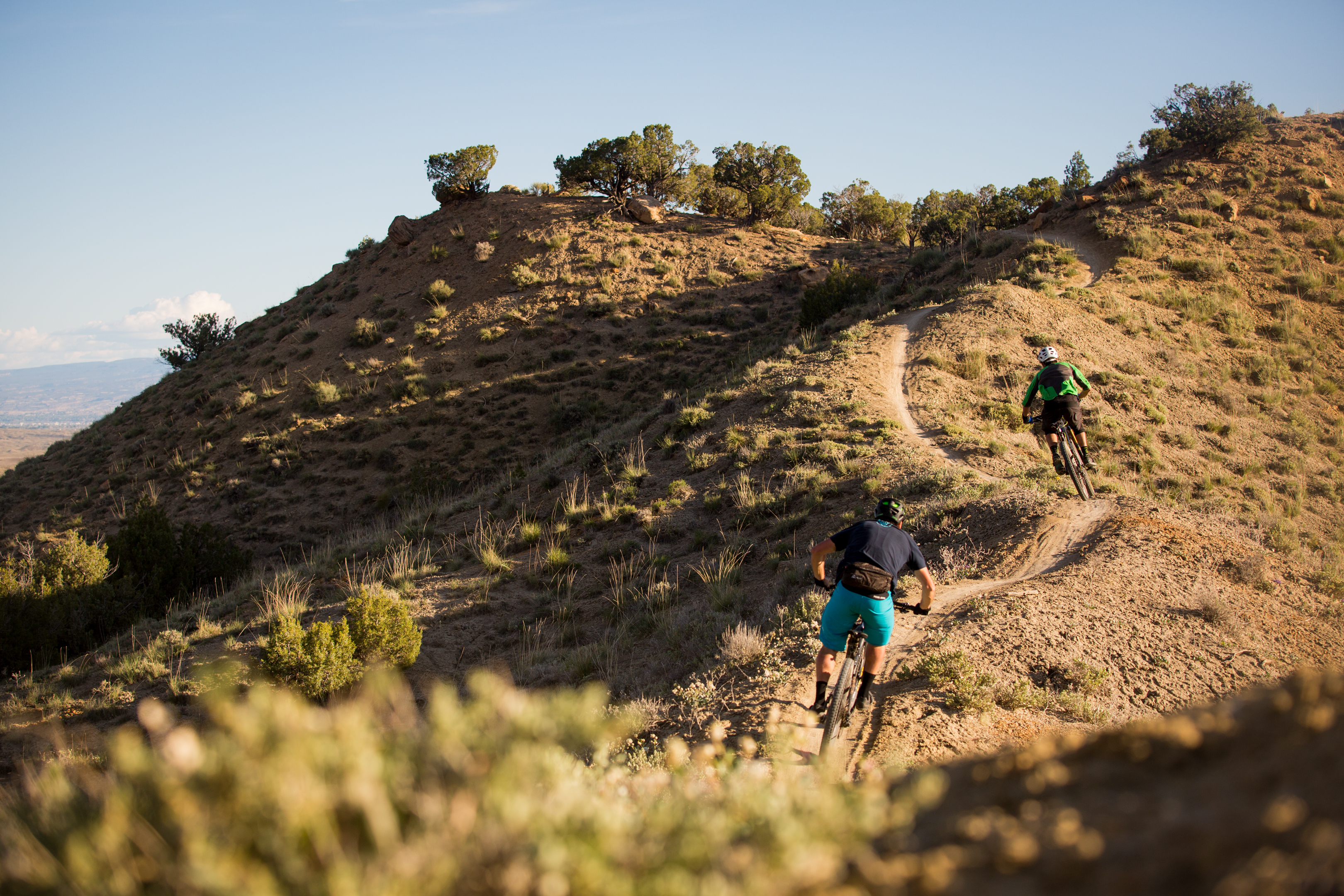
If permitted in a WSA, mountain bikes must stay strictly on existing routes. The Wilderness IMP does allow construction of new trails in WSA's under certain circumstances. However, no new trails can be developed in WSA's for mountain bike use, and new trails that may be constructed for other purposes would not allow mountain biking.
Mr. Finstick states, "The place where mountain bikes would most likely be allowed would be on existing ways that may be open to limited vehicle use in the WSA, where the use on the way predates the WSA, and where the vehicle use is being strictly monitored to assure no new surface disturbance, such as off route travel, widening or lengthening of the route is resulting. In such a case, it would be most reasonable to also allow mountain bikes on the route under the same conditions."
Local management plays an important role in determining appropriate use of WSA trails. Resource Management Plans (RMP), the comprehensive planning document for local BLM areas, can ban bicycles from WSA trails when they provide a proper argument for doing so. IMBA recently appealed a decision to ban bicycles from some WSA trails in the King Range National Conservation Area. The appeal was turned down because the RMP provided justifiable reason for providing a "non-mechanized" setting in the WSA.
The King Range case illustrates how bicycles can be prohibited from a WSA trail just as any other trail. The Wilderness IMP does not necessarily supercede local management. Nor does it automatically allow mountain bikes in WSA's. Therefore, a good relationship with the BLM land manager and state office is most important in ensuring that bicycles are a welcome component of WSA management.
Gary Sprung, longtime IMBA policy expert, believes that bicycles in WSAs generally have not been a problem in most areas. He notes, though, that IMBA has not surveyed this issue comprehensively, partly because many WSAs are quite remote and may not have enjoyable singletrack.
A helpful resource covering the general management policies for WSAs can be found at: www.blm.gov/nlcs/wsa/faq.htm