IMBA - International Mountain Bicycling Association
What would we do without trails?
Horses and bikes

Bikes and Horses:
A Case for Sharing

National Symposium on Horse Trails in Forest Ecosystems

Prepared by Michael Kelley
Clemson University
October, 1998

This presentation will cover aspects of relations between equestrians, their horses, cyclists and their bikes. My basic thesis is that horses and bikes can, and must, share trails together with all other non-motorized users. I hope to show that "problems" are often matters of perception rather than reality, and those that are real can almost always be solved with a proactive approach. The basic tools to accomplish this are education and joint experience. Our biggest challenge is to build the community of trail users and open space advocates into a proactive force to enable all of us to use trails together, and to ensure that trails will be available for future generations of trail users. We must do this together, and the consequences may be severe if we do not.

In some people's minds, horses and bikes cannot co-exist on trails together. We have all heard "horror stories" of encounters with bikes, and any equestrian would be understandably appalled at the thought of any of these incidents occurring with a horse in their barn. We must deal with this.

At the same time, we have other concerns. The amount of public land is decreasing rapidly due to development and population pressures. The number of trail users is increasing geometrically. I'm told that the number of equestrians is decreasing. It strikes me that we all need to act together as one trail family.

The Horse

IMBA teaches cyclists rudimentary things about the nature of the horse. We know that horses were originally plains animals, with a "flight" or "fight" response to danger, A sudden or unfamiliar stimulus will spark this instinct. Self-preservation is the first law of nature for the horse. It has an inbred fear of being eaten, and although it may be the fastest animal in the world at distances over 50 yards, it is vulnerable within that space. So it has an instinctual fear of small, tight, dark spaces, like the single track trails that all trail users crave.

The horses' alarm system operates well through sight, smell and instinct. They have uncanny eyes. Although they allegedly cannot distinguish between colors and have poor depth perception, their eyes are independent, and they are capable of using both binocular and monocular vision. They also have a 340 degree field of vision.

Horses are also quite fragile and, like human athletes, are subject to popped tendons, torn ligaments, broken bones or miscellaneous twists of joint. These can result in tremendous pain to horses, huge vet bills, long term recovery and even euthanasia in the case of serious injuries. Even a slight injury can leave an indelible memory of terror in a horse.

We also know that horses have a very distinguished history. They have hauled cannon, ambulances, fire engines, and even Charleton Heston into the most chaotic of circumstances. Horses can be trained to do almost anything.

Conflicts: Perception or Reality?

Horse and Biker

Obviously, the biggest concern expressed by equestrians deals with both real and perceived dangers of horses being scared by cyclists. Accidents have occurred causing injuries, and even a few horse fatalities. Sometimes these have been caused by inconsiderate rude behavior on the part of cyclists. Sometimes by inexperienced horse riders or spooky horses, and sometimes by a combination of all three. Land managers find that the actual number of significant incidents involving bikes and horses are few, relative to historical use of all users.

Serious accidents have been occurring for centuries on trails used by horses. The advent of mountain bikes didn't change the horse's basic nature, and the risk that equestrians take when riding on narrow trails has always been present. Deer, quail, bee hives, other horses with rude riders galloping up and inciting a herding reaction–these things have always been a risk to equestrians. Now there's just one more potential risk thrown into the melee. This is a consequence of the changing demographics of our times.

While we often hear of the conflicts, we usually don't hear of the thousands of trail enthusiasts who have no problems with bikes or horses. We tend to remember the dramatic, and forget the everyday. Horror stories are told, retold, and embellished, but commonplace trail rides where equestrians and cyclists interact without incident are forgotten and never mentioned.

Adjoining areas can have completely different attitudes towards horse and bikes. In Marin County, in northern California, equestrians and cyclists have seemingly been at war for 10 years. Many equestrians from that area are uncompromising in their belief that multiple-use of trails is an impossibility. Yet a mere trot away across a valley is China Camp State Park, where the Superintendent refused to be swayed by the "conventional wisdom," and opened multi-use singletrack trails. There have been no incidents there over several years. The Superintendent had the benefit of years of experience with bikes and could be proactive.
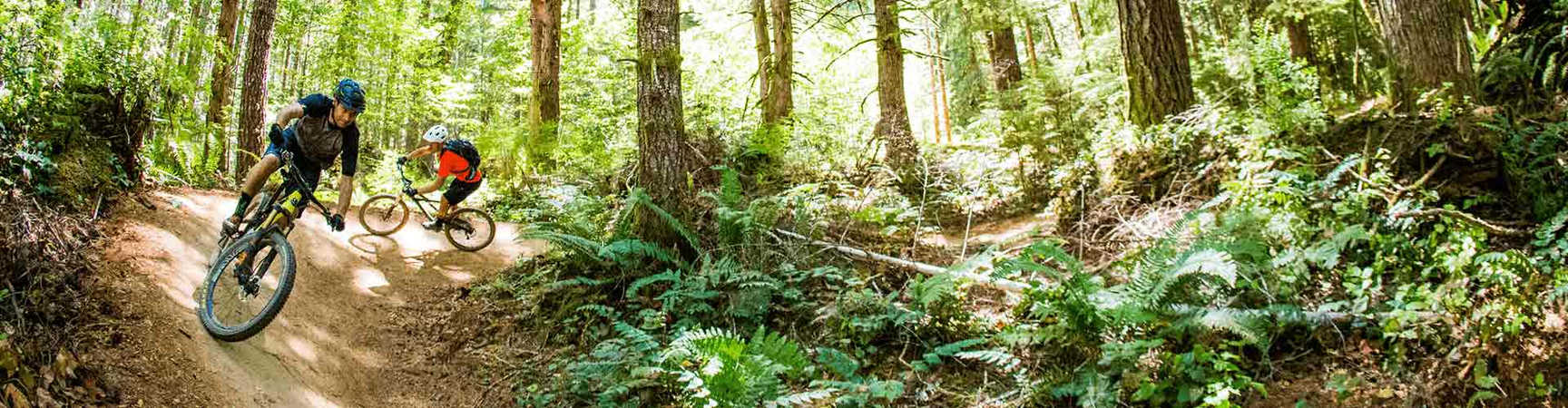
Conejo Open Space District (COSD) north of Los Angeles is another example where informed land managers ignored dire warnings of perceived danger, and told the users that they would have multi-use trails. Horses had been there for a long time, when nearby jurisdictions began closing trails to bikes. COSD refused. Again, they had the benefit of several years of national experience with bikes, and were able to be proactive rather than reactive. The users were not offered the choice of bickering among themselves, and in fact got together to create a multi-use trail system that continues to function well today.

Trail Impact

Environmental concerns must play a large role in guiding the ways we all enjoy the outdoors. Cyclists have often taken punches on the issue of erosion. We have even had equestrians launch attacks at public hearings, indicating that bikes would somehow cause too much damage and destroy trails. This is not appropriate. It has been shown by studies that the impact of hikers, bikes and horses is relatively similar, compared to the impact of building the trail in the first place. It is foolish for equestrians and cyclists to be at all divided on this issue. Keep in mind that horses have been justly and unjustly under attack for trail damage for decades.

In reality, the impact of all users is significantly less than the impact of water. A poorly designed trail that get's zero use will erode more than a well designed trail that receives heavy use by anybody. What we should all care about most is building and rebuilding trails to make them sustainable. Trails designed for bicycling, equestrian, or motorcycle use need more thorough engineering than a hiking trail. It is important for land managers to realize that the impacts of non-motorized use are relatively the same, and to construct trail to handle the heaviest use. Any trail strong enough to handle horses, can handle bikes.

Trail width necessary to accommodate both uses is subject to controversy. Some jurisdictions, particularly those which formed regulations during the early days of mountain bikes, require road sized-trails in order to accommodate both uses. Nowadays, more information and experience indicates that significantly smaller trails are better for multiple use. Narrow trails tend to slow users down, and in that respect, are less dangerous. The narrower the trail, and the more features such as turns, rises and falls, obstructed views, and occasional protruding rocks or roots, the slower mountain bikers will go. Most experienced mountain bikers would rather ride these challenging trails than smooth, wide open trails that encourage high speeds.

Width of trails can depend upon proximity to urban areas. In the San Francisco Bay Area, China Camp State Park is very close to large population centers. Its multiple use trails are four to five feet wide, become narrower as vegetation fills in, and accommodate horses and bikes very well. In the backcountry, any trail wide and tall enough for a horse, can also accommodate a bike.

So, what are the problems in more detail, and what solutions will work? I've divided the approach into three areas: the cyclist's responsibility, the equestrian's responsibility, and our collective responsibility.

Horse and biker

Cyclist's Responsibility

Education works very well to solve trail conflicts. IMBA has developed the Rules of the Trail for cyclists, which, if followed, almost always eliminate problems. In their short form, they are distributed world-wide. Our rules for dealing with horses are as follows:

  • All cyclists must continually watch for horses, and slow down when the sightlines are poor.

  • Cyclists must make sure that the horse knows they are there, and that they are human, not predators. A backpack or a bike may appear to a horse to be a hungry animal. Voice communication is the best way to provide this assurance, though in some areas, bells work well. Since people (with voices) feed horses, and bells don't, voice contact is generally better. Cyclists should also speak with the equestrian. This encourages positive relationships between users as they greet one another on the trail.

  • The approach to the horse is the most critical moment. From the front, the cyclist should stop, and check with the equestrian, if necessary stepping off the trail on the downhill side to allow the horse to pass. When approaching from the rear, we urge care to alert the horse and rider that we are coming, in sufficient time to avoid spooking either. Once communication is established, the equestrian will often have the best suggestion about how to pass. It may be necessary to wait for a wider spot in the trail. Often the cyclist will leave the trail (on the downhill side) to allow the horse to move to the rear. When passing, it goes without saying that cyclists should proceed slowly and steadily, while still talking to the horse to help it relax.

  • We suggest that cyclists not pet horses, without guidance from the equestrian. We do have a variant on that. We sometimes carry carrots, and give them as treats, always with the permission and instructions from the equestrian. We have had local "Carrot Days". One of my horsey pals suggests that equestrians with spooky horses carry carrots themselves. When encountering cyclists, the horseback person tosses the carrot on the ground, and asks that the cyclist give it to the horse. With this approach, we can get the horse to think of cyclists as food providers rather than predator. Perhaps this will be a step in the right direction. But it isn't always a perfect solution. Many equestrians don't feed their horses when the horse has a bit in its mouth. Sometimes nose bands are too tight for the horse to open its mouth and accept a treat. There is a specific way to feed a carrot to a horse without losing ones fingers. Again, this depends upon the horse and upon clear communication with its rider.

Equestrian's Responsibility

This discussion about education would be incomplete without mentioning education within the equestrian community. Any kind of riding requires skills. This includes both stadium and trail riding. Trail riding requires learning the skills necessary to be outside of the arena, including riding with bikes and other users. We are all aware of instances where riders attempt to ride animals that are beyond their skill level. Some horses can spook at any time. I remember one example where a horse jumped at a piece of paper during a public trail dedication and threw its rider. This was a combination of a borrowed horse and rider error. An equestrian friend reacted strongly to this incident, arguing that people who borrow horses and can't stick on when the horse spooks should be considered just as irresponsible as mountain bikers who can't control their bike's speed. The consequence of a loose horse galloping away from a dumped rider on a singletrack trail can't be ignored. Equestrians must be subject to the same level of responsibility as mountain bikers, and it's unfair to accuse a mountain biker of being always at fault when a horseback rider is thrown. One equestrian acquaintance has also strongly suggested that some horses simply don't belong on the trail at all.
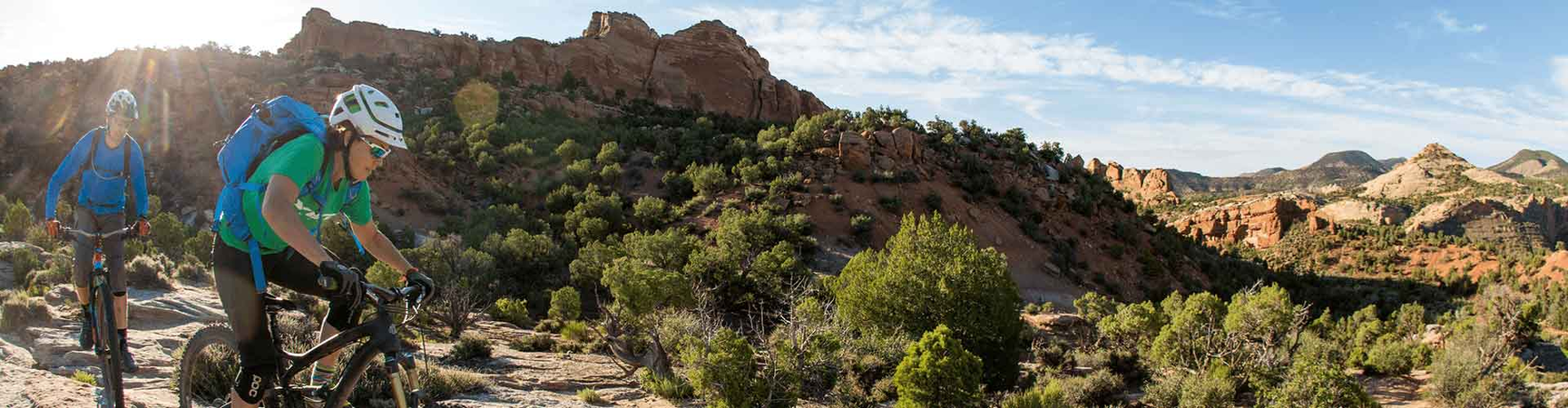
As mountain bikers, we are willing to acknowledge that there are some reckless riders in our community, and we are working to educate them. We think it reasonable to request the same level of conscientiousness from the equestrian community in training horses and riders to ride trails.

As stated earlier, most horses can be trained to withstand almost anything. We have developed programs to assist in this. We often have horse desensitization clinics, not unlike the obstacle course events that equestrians are familiar with. Cyclists maneuver repeatedly around the horse, in as close quarters as circumstances permit. Where appropriate, we ask that the cyclist act rudely, so that the horse gets used to that. The results can be spectacular. Some equestrians perform this type of training frequently to make their horses brave on the trail.

A few years ago, Sharon Gibson suggested rules horsemen could follow, which would increase their safety and enjoyment of trails. These appeared in Equestrian Trails on October of 1991, and included:

  1. With some slight changes in terminology, follow the IMBA rules of the trail. They make sense and show common courtesy.

  2. Understand that bikers, like riders, are individuals. The actions of one do not typify the actions of all.

  3. Get to know the mountain bikers in your area. Explain to them that you are aboard 1,000 pounds of unpredictable animal and how horses react to fear. Remember that many non-equestrians are actually afraid of horses, and may also react unpredictably, out of that fear. Tell them about your horse if they express an interest.

  4. Take responsibility for your horse's education. Let it see a bike close up, at rest and without a rider aboard, preferably on a trail you normally ride. Many horses accept bikes on city streets but spook at seeing them on the open trail. Let your horse get used to the sight of bikes, helmets, walking sticks and backpacks.

  5. Contact your local bike shop for information and referrals to groups who may be willing to work with you.

  6. Contact our local mountain bicycling groups. Let them know about the specific trails, situations and conditions that concern you. You will find some of them very helpful. You may even be able to do some joint trail maintenance activities to increase safety for all.

  7. Be polite to the people, (horsemen, hikers and bikers) you meet on the trail. Let them get to know you and your horses. People are always more considerate when meeting friends on the trail.

Both equestrians and cyclists can also learn to withstand just about anything–even each other, despite often heard protestations to the contrary. When the dust clears, we find that we agree about almost everything, and that at the heart of it all, we want the same basic experience. We share the wonder at what we are able to experience on our chosen steeds. We love the beauty of the outdoors and the joy of life we breathe as we travel through wild lands. We revel in sports which require exquisite balance and self-control, and which inherently involve a certain amount of risk and exposure to injury should we loose our balance or control of what's under the saddle. We get saddle sores and sore backs. The more time we devote to our respective sports, the more likely we are to put every spare dollar into it. We grow attached to our mounts, give them names, groom and maintain them. We relish the wind whistling in our ears from a swift run along an open trail. We whine about the relative paucity of the opposite sex in our chosen sport. So take a cyclist to lunch.

Bikers and horse

Collective Responsibility

Our combined responsibilities are even greater than those owed to our own user groups. We can only succeed as a united community. There are several ways we can fulfill these responsibilities.

We've got to share responsibility for our irresponsible members. Trail patrols are proven methods of easing tensions and educating users. Combined patrols, which involve all user groups, are particularly effective. Patrollers receive training, often including CPR and first aid instruction. They may work with public safety departments. They act as a peer group, giving advice on proper trail behavior, and being role models. IMBA has a National Mountain Bike Patrol, patterned after the National Ski Patrol.

Joint events are proven ways to encourage a happy trail community. Dramatic evidence of this comes from the Peninsula south of San Francisco. Imagine this scene: A well meaning equestrian sees a pack of horses riding towards him, and not far behind, some cyclists. He rushes forward to warn his pals that bikes are coming. He is met with the reply, "That's OK, they're with us." This happens during the annual Romp and Stomp ride. "ROMP" refers to the Responsible Organized Mountain Pedalers, a mountain biking group, and "stomp" refers to the horses that participate in the ride. Every year the group meets for a picnic and a joint ride. They go on the same trails, to the same destinations, in mixed groups. Cyclists and equestrians get positively giggly with sentiment and good feelings for each other during the course of the ride.

Perceptions after participating in that event have changed dramatically. One equestrian who actively and vocally detested mountain bikes attended a Romp and Stomp event, perhaps only to prove that it would not work. After the event, she completely reversed her stance. She became completely enthused with bikes and wanted them on the trails with her. Sure, most situations will not result in a "conversion" such as this–the trail to Damascus isn't always easy–but it does illustrate the subjective nature of the problem.

Events also can include competitions. A few years ago, a cyclist beat a horse on a 100 mile trail ride for the first time, which was exciting news for me and my cyclist and equestrian friends. We have heard about relay races and poker runs that have combined teams. There have been ride and tie events, and relatively athletic events where equestrians and cyclists have switched mounts in mid event. We find it best if these events take place on the same route, which is entirely possible if the participants are prepared.

Horse groups often invite cyclists to participate in their events. For example, cyclists often provide obstacles for horses to negotiate in safe style in trail trials events. They also help with crowd control and alerting other users during equestrian endurance events.

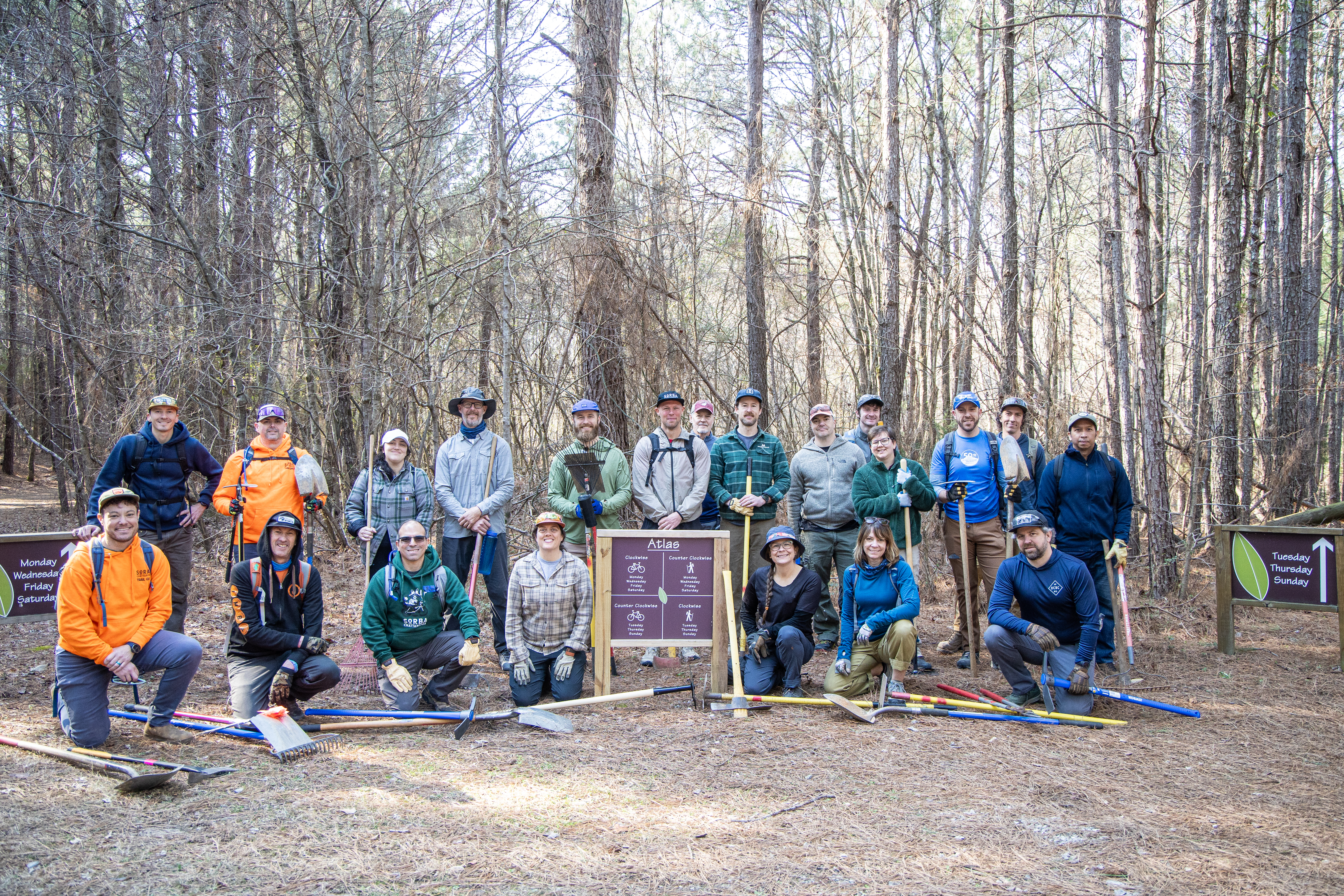
That old standby event, the trail project, is one of the best ways to build community among users, and at the same time give something back to the land that serves us so well.

We build our trail community by working together with land managers on trail and open space advocacy. We have all seen instances where different user groups enter advocacy situations at each other's throats. This almost never works. It leaves bitter feelings, and often a net loss to the trail family. In fact, our diversity of use ought to be our main strength.

A while ago, we completed a multi-year effort to obtain access to a water district's land. We wanted access for bikes and increased access for other users Horses and hikers could already use it under a permit system. We made a big effort to go in with a united community, and the multi-use trail council presented a proposal for this increased access. During the hearing, most testimony favored the increased access, but a few equestrians bolted from the trail council, and said that the land in question was "too special" for bikes. They even used the trail council's name, indicating that they were the minority view. We all lost. No bikes were allowed and the equestrians did not get the access they wanted.

After that hearing, the board members had a few things to say. Most indicated that not only did they not like bikes, they also wished there were no horses on the water district's land. The rebel horse people made faces as long as their horses'. They were next! To top it off, the rest of the trail council was very irritated at this public display of a lack of unity, and it took a while to get back on track. All trail users lost this round.

In another case involving access to nearby water district land, the same trail community presented a cohesive and united approach. Virtually everyone who spoke at public hearings was in favor of equal access for bikes, horses and hikers. This included a strong coalition of trail users, the same trail council referred to above, the environmental community and the press.

This time the trail community won in important aspects. It emerged united, prepared to advocate for trails and open spaces with renewed vigor. It got over 12 miles of trail for bikes and horses that would not have happened without this collaborative effort. It also got the promise from the district board to examine the issue again.

So, on the advocacy front, we urge cyclists, hikers, equestrians and land managers to band together to achieve our goals. In so doing, we must keep in mind that these are indeed mutual goals–we share much more than we disagree on. Keep in mind that advocacy involves a multi-way trail. Users and land managers should be sensitive to each other's needs. We also must be sensitive to the needs of land managers. We've got to collaborate to keep track of the myriad of legislative, funding and maintenance matters that impact our trails and open spaces.

Multiple or Shared Use

There are many general, yet persuasive reasons to favor multiple use trails wherever possible. Sometimes there is pressure from other trail users who don't want bicyclists on "their" trails, perhaps because they feel their sweat equity gave them ownership, or simply because they were there first. This country club mentality has no place on the public lands. Mountain bikers now form a huge tax paying group–the largest in many areas, and it is unjust to exclude them from land that is purchased and maintained by their tax dollars.

To the extent these views predominate, land managers feel forced to provide separate trail opportunities to cyclists who represent a significant percentage of trail users. This can lead to trail saturation in ecosystems best left wild. It is truly a loss for everyone when social management of different user groups negatively affects the wildlife that calls those lands home.

Over the years, IMBA has devised several points in favor of a trail system that is generally multiple use :

  1. Shared-use trails can best accommodate the needs of the most users. A generally open backcountry disperses users across an entire trail system. Single use or restricted use trails tend to concentrate users. This increases environmental and social impacts.

  2. Shared-use trails help build a trail community by increasing the need for all users to cooperate to preserve and protect a common resource. Encountering other users on a trail offers the opportunity to meet and talk. Without that opportunity, it's difficult to establish mutual respect and courtesy. Separate trails breed ill will, territoriality and rivalries.

  3. Shared-use trails are most cost effective for land managers. They require fewer signs and less staff. Monitoring and enforcement is simplified.

  4. Shared-use trails enable responsible, experienced users to educate outlaws and novices. Because they share the same trail system, the opportunity for peer regulation is enhanced.

Conclusion

To sum up, I hope I have convinced you to support shared use as a preference. That doesn't mean all trail must be shared use–equestrian only trails are certainly appropriate some times, particularly on private property. But we do feel strongly that at least non motorized users ought to generally share the trails together, and act together as family members in the trail community. If we don't do this, consider the consequences. Developers are constantly after our trails and open spaces. Huge resources for the environment, such as the potentially $900,000,000 Land and Water Conservation Fund will be lost without collaborative effort. Both equestrians and cyclists have been unjustly under attack, and there is always the risk that both groups will be picked off in access disputes. So let's work together and make it better for us all.


Appendix A: MOU between cyclists and equestrians

Oregon Equestrian Trails
Oregon Mountain Bikers
Memorandum Of Understanding


Problem Statement:

Currently there is minimal coordination between the user groups in the on-going battle to ensure our continued use of the back country recreational areas.

Goal:

Create a partnership to aid each others' organization in this regard.

Statements:

  • Shared trails benefit both equestrians and mountain bikers. It is in our mutual best interests to work together to encourage land managers and owners to develop and open multiple use trails for non-motorized recreational users.

  • We recognize that some trails are not suitable for multiple use, and Oregon Mountain Bikers does not advocate, for example, allowing mountain bikes in wilderness areas and that OET does not advocate equestrian uses in or near environmentally sensitive areas.

  • In other areas, safety concerns and environmental sensitivity, may not allow bicycles and/or horses together on certain trail areas.

  • Conflict between users has not been a significant problem in Oregon. Conflict is more frequent where congestion is an issue, and the best way to avoid conflict is to ensure adequate trails exist to serve the users.

  • OET and Oregon Mountain Bikers realize the need to become proactive in the on-going perception of user-conflicts.

It is understood and agreed upon that we will:

  • Invite members of mountain bike and OET clubs to speak at one another's meetings, and even to join each other's clubs to have ongoing liaison.

  • Keep both clubs informed on current and/or future trail planning opportunites that will be designated as shared use.

  • Exchange newsletters and any other informational pertinent to our causes.

  • Conduct joint events, such as trail work parties and fundraisers for trail systems.

  • Establish a trail advocacy listserv, open to all individuals who support multiple use of trails.

  • Work together to develop awareness of each other's needs and requirements on the trail. By communicating closely, OET and Oregon Mountain Bikers will become proactive in dealing with conflict.

  • If, during the planning, design, and construction of trail facilities, shared use is not identified by the land managers as being the preferred alternative or design, then the two groups will make attempts to work together to remove obstacles or identify alternatives so that the trails can be rerouted or redesigned to be safe for shared use.

  • Recognizing that problems on the trails generally stem from individuals who are not members of groups like OET and IMBA, local mountain bike advocacy clubs and Oregon Mountain Bikers, education of non-members and recruitment of members to both groups is critical to the success of shared trail use. OET and Oregon Mountain Bikers will exchange membership recruitment ideas and will encourage membership in each others' organizations.

To continue making Oregon a model of cooperation between equestrians and mountain bikers, this agreement is entered into between:
Oregon Equestrian Trails
Oregon Mountain Bikers

This presentation was completed with the kind assistance of Mark Flint, Patty Cielsa, and Gary Sprung.

Email this page Printable Version


Help | Site Map | Copyright
IMBA Homepage Join IMBA Now!