IMBA'S Comments on the USDA Forest Service Roadless Initiative - 1999
Dec. 20, 1999
USDA Forest Service-CAET
Attention Roadless Areas NOI
P O Box 221090
Salt Lake City, UT 84122
Dear Forest Service,
The International Mountain Bicycling Association (IMBA) supports the President's Initiative to preserve and protect America's roadless areas. We believe that no roads should be built into the roadless areas within America's national forests. Mountain bicyclists generally prefer to ride in areas that few roads, as long as there is reasonable road access to trailheads.
IMBA is a national and international education and advocacy organization with 300 member clubs, 15,000 members, and more than 100 corporate partners. The mission of IMBA is to promote mountain bicycling opportunities that are environmentally and socially responsible.
Summary
The following is a summary of IMBA's comments. More detailed analysis follows.
- Roadless areas are important to mountain bicyclists because they are undisturbed and natural.
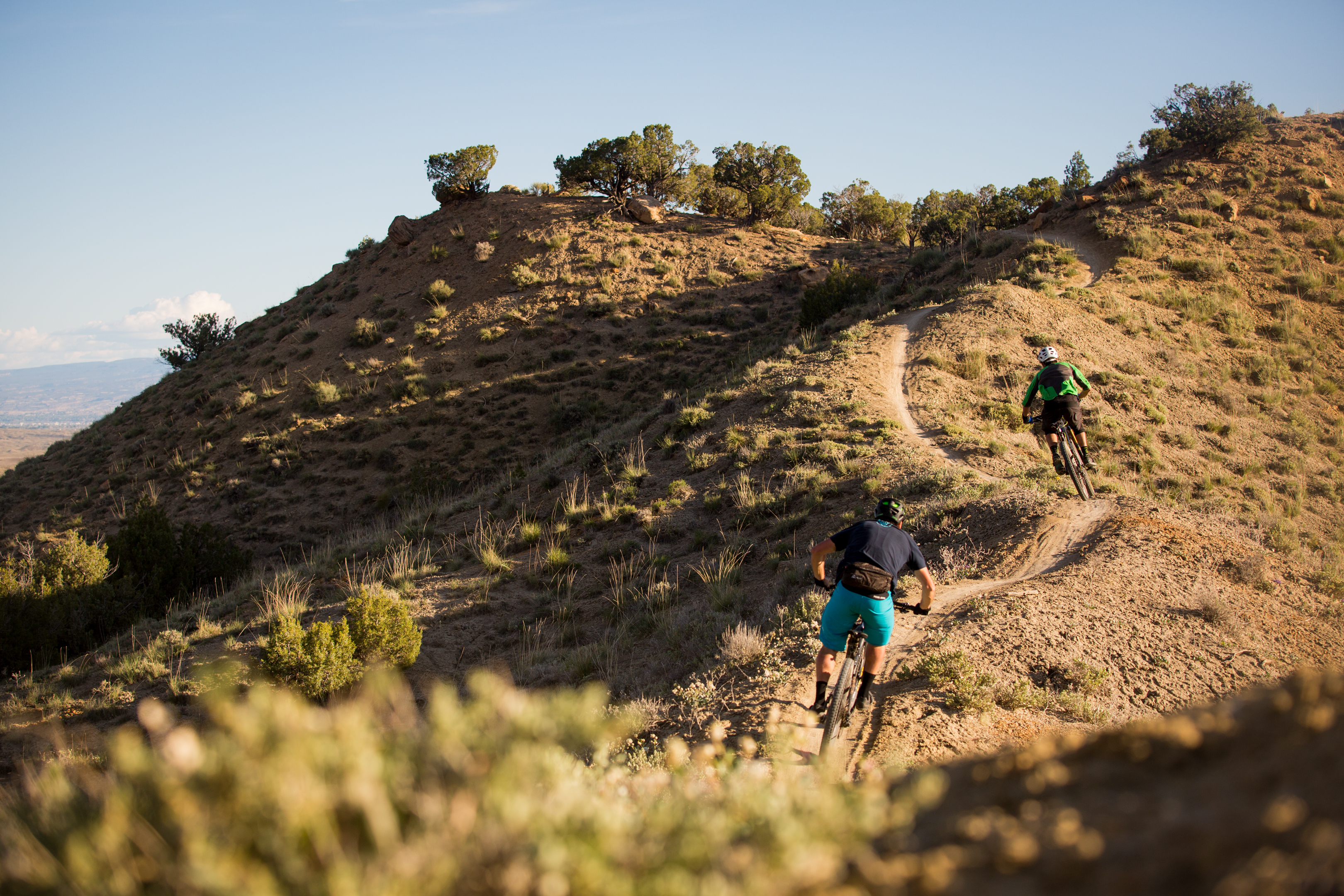
- Roadless areas are ideal for bicycle riding because they usually contain singletrack trails that provide the types of experiences most mountain bicyclists prefer.
- Roads and road use can detract from the quality of the mountain biking experience on Forest Service land, making a place less natural and noisier.
- IMBA sees the Roadless Initiative as an opportunity to create and implement a new, effective method of protecting lands, while allowing mountain biking.
- IMBA will oppose roadless area designations if the Forest Service requires or gives national guidance indicating that roadless areas should be managed as if they are Wilderness, or according to the same (or similar) travel restrictions that pertain to Wilderness.
- Local land managers and the public must continue to play a role in recreation management of roadless areas.
- Mountain bicycling should not be restricted in roadless areas unless scientific research demonstrates the ecological impact cycling is greater than that of other allowable recreation uses.
- IMBA believes that bicycle use -- a form of non-motorized recreation and transportation -- is appropriate in roadless areas and consistent with the purposes of these areas.
Effects Of Banning Road-Building
The Notice of Intent states that the environmental impact statement will examine two main issues. The first is the effects of eliminating road construction in roadless areas. IMBA asks the Forest Service to consider the outcome of the opposite action: the effects of constructing such roads on the opportunities for mountain bicycling. These roads are typically built to support logging, mining and other industrial activities, or to access inholdings. These activities can degrade the quality of mountain bicycling experiences, discouraging visitation and hurting tourism.
Ecological Values
The second issue under examination relates to social and ecological values that make roadless areas important. IMBA requests that the Forest Service examine how mountain biking relates to those values.
IMBA recognizes that all types of forest uses, including recreation, have ecological impacts. IMBA agrees with the Forest Service statement that roads and activities associated with roads cause ecological problems.
But we do not believe that the agency, or any scientist, can at this time reasonably distinguish the ecological impacts of different non-motorized recreation forms. Almost no science performed to date compares the impacts of different forms of recreation. The effects on wildlife of people walking, running, horseback riding, mountain bicycling, or motorcycling on a trail are often argued, but with no science to resolve those issues. The complexity in that debate is significant. Among the many parameters of impact are duration of impact, noise, and startling. Generally, hikers have longest duration, mountain bikers startle more, and motorcycles cause more noise, but there is little evidence to support any statements regarding the relative significance of these effects. The diversity of species affected compounds the complexity.
It would be an error to single out bicycling -- or, for that matter, any other non-motorized singletrack trail users -- as especially harmful compared to other users. Therefore, all four of the proposed alternatives for part one of the EIS ought to allow bicycling within roadless areas.
Social Values
The social values issue relates to diverse perceptions, opinions, and philosophies held by Americans. Some may believe that roadless areas are not proper places for bicycling because bicycles are "mechanical." This is the reason bikes are banned in Wilderness under current interpretation of the Wilderness Act. IMBA maintains that "mechanical" transport is consistent with the values of roadless areas. The tenets of Wilderness management should not be applied to roadless areas.
Mountain bicycling is human powered, silent recreation. It helps people appreciate and respect Nature, motivating them to protect it. Nature needs a human constituency that includes mountain bicyclists.
Smaller, Uninventoried Roadless Areas
IMBA recommends that the agency adopt a rule or policy that encourages individual national forests to examine smaller roadless areas on a site-specific basis, with thorough public participation. A prohibition on road building in these areas could benefit bicyclists.
Tongass National Forest
The Notice of Intent specifically requested comment on the Tongass National Forest in Alaska. IMBA believes that the proposed rule should apply to the Tongass, and the EIS should examine the effects of the rule in both parts one and two.
Motorized Recreation
IMBA requests that the Forest Service not lump bicycling into the motorized recreation category, both in terms of analysis and management actions. Bicycling is non-motorized and properly belongs within analysis and management for non-motorized recreation.
IMBA is concerned about the widening of singletrack trails into wide routes by the travel of all-terrain-vehicles. ATVs are too wide for singletrack trails. Their wheelbase is typically 50 inches, whereas the tread width of most Forest Service singletrack is 12 to 36 inches. Bicyclists highly value this narrow character of singletrack and strongly object when ATVs cause such routes to widen. The wide route created by ATV use is essentially a road. This problem applies to any singletrack trail, not just those within roadless areas. But it is particularly relevant for this rulemaking. ATVs are not appropriate and should be prohibited within roadless areas.
Burden Of Proof
Among the four alternatives outlined in the Notice of Intent, the third may create an impossible standard for recreation by requiring that activities "contribute" to ecological values of roadless areas. What about allowing those activities that do not harm or interfere with ecological values? Vegetation management, trails maintenance, or stream restoration may enhance ecological values. But it is difficult to see how any human recreation can contribute to ecological values.
An opportunity
IMBA supports the Roadless Initiative because it will protect natural, undisturbed areas and bicycling opportunities. In addition, IMBA sees this Initiative as an opportunity to create and implement a new, effective method of protecting lands. While IMBA can support the designation of new Wilderness areas within national forests, we also seek to protect lands with legal tools that allow mountain bicycling. An official Roadless Area designation type can be exactly that.
However, we will oppose Roadless Area designations if the Forest Service requires or gives national guidance indicating that roadless areas should be managed as if they are Wilderness, or according to the same (or similar) travel restrictions that pertain to Wilderness. Such a requirement would eliminate the appeal of this designation as a supplement or alternative to Wilderness.
That stated, we hope that the Forest Service will recognize in this process the value of creating something different than Wilderness, so bicyclists can support the agency's process and intent.
Thank you for your consideration of these comments,
Yours truly,
Tim Blumenthal
IMBA Executive Director
cc:
The White House
House Resources Committee
Senate Environment and Public Works Committee
IMBA activists
Conservation groups
Motorized recreation groups