IMBA - International Mountain Bicycling Association
What would we do without trails?

IMBA & NEMBA Position On White Mountain National Forest Draft Plan

Regarding Bicycling Travel Management

Oct. 25, 2004

The International Mountain Bicycling Association (IMBA) and the New England Mountain Bike Association (NEMBA) submit the following comments on the White Mountain National Forest Draft Management Plan and Draft EIS. These comments focus on the plan's proposed general travel management provisions for bicycling. We will submit separate comments on the Plan's Wilderness recommendations later in the comment period.

IMBA is a national and international education and advocacy organization with 450 member clubs, 32,000 individual members, and more than 400 corporate partners and dealer members. IMBA creates, enhances, and preserves trail opportunities for mountain bikers worldwide.

The New England Mountain Bike Association (NEMBA) represents the interests of its 4,500 members and the over two million mountain bicyclists in New Hampshire, Maine, Vermont, Massachusetts, Rhode Island and Connecticut. Our organization focuses on promoting responsible and sustainable mountain bicycling, preserving the natural environment and protecting recreational resources

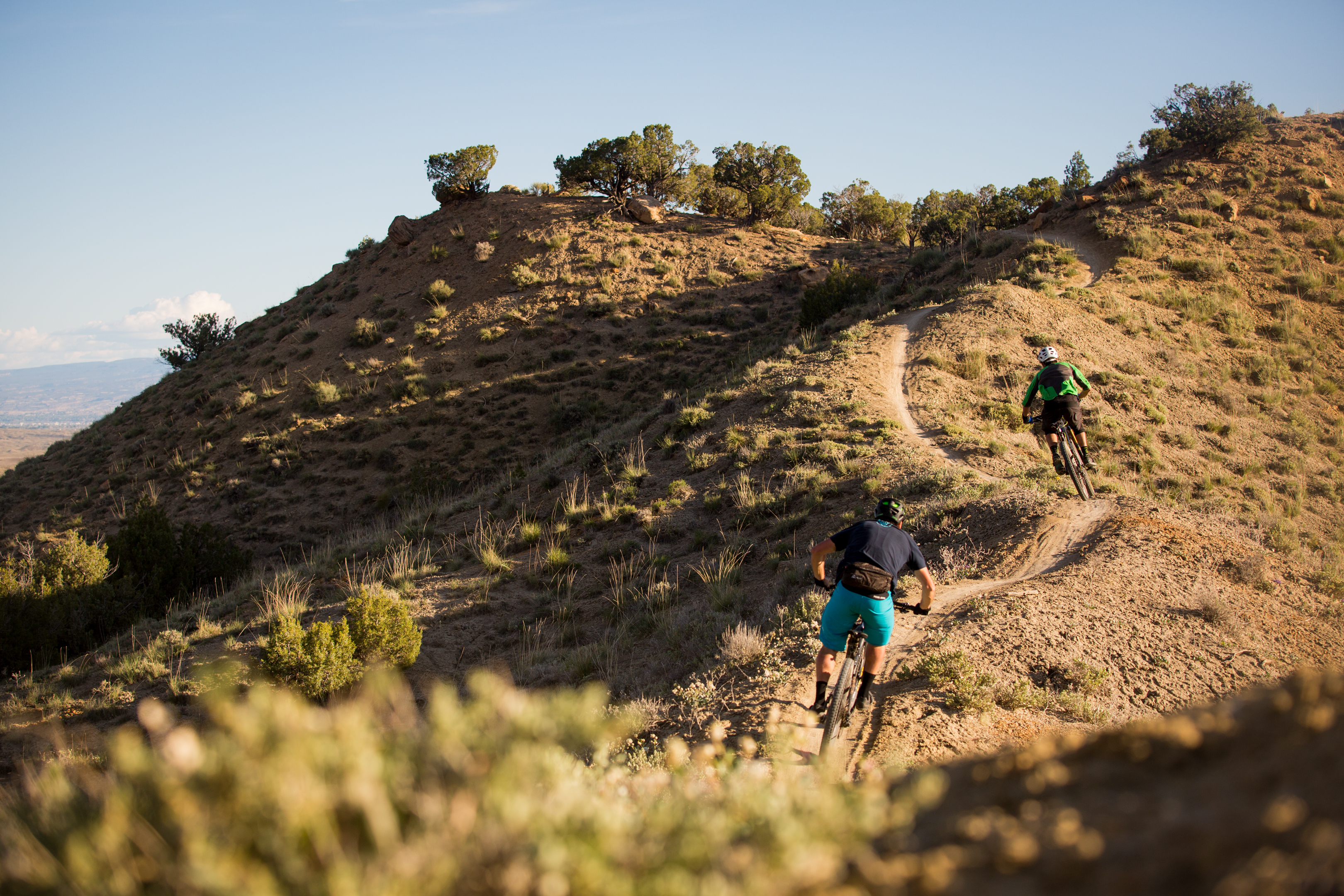
Based on a recent Outdoor Industry Association study, 45 million Americans rode bicycles on narrow trails ("singletrack") an average of 14 times in 2003, for a total of over 500,000 outings. This makes mountain biking the second largest trail user group in the country. We appreciate the agency's willingness to cooperate with our organizations.

COMMENT ON PROPOSED RULES AND DEFINITIONS

IMBA and NEMBA recognize that the Forest Service has taken a positive approach to bicycling in the White Mountain National Forest. We particularly appreciate that the new Draft Land and Resource Management Plan refers to bicycling as "mountain biking," rather than "mechanized" travel. (We disapprove of the growing trend to call bicycling "mechanized," because the term's definition is unclear in the Code of Federal Regulations. )

The Draft Plan and EIS for the White Mountain National Forest includes three proposed forest-wide management direction rules that will regulate mountain biking (Plan; p. 2-23). IMBA and NEMBA partially support these proposed rules, but suggest improvements. Our comments derive from the following interests:

  • Protecting natural resources
  • Providing adequate recreational opportunities for non-motorized trail users
  • Applying rules equitably for user groups with comparable impacts
  • Maintaining district rangers' ability to adaptively manage resources case-by-case based on actual conditions

Rule S-1

In the Draft Plan, Rule S-1 states:
Except for designated Wilderness and the Appalachian Trail corridor, which are closed, Forest development trails will be open unless closed to mountain bike use.

IMBA and NEMBA support proposed rule S-1.

Rule S-2

In the Draft Plan, Rule S-2 states:
Cross-country mountain bike travel outside the open system of Forest trails and open travel corridors is prohibited.

Proposed Rule S-2 suffers from problems of definition. First, the Glossary for the DEIS does not define "cross-country travel." Its common use is to mean travel that involves stepping on or rolling over vegetation, or passing over un-trodden soil, as opposed to staying on a linear path where vegetation is already denuded and soil is already changed from previous travel. "Bushwhacking" is probably a synonym.

The Glossary also does not define "trail." While there is an official system of forest trails, there is also vagueness about the word in our language. In its most vague and broad application, a trail is any linear patch where vegetation is already denuded and soil is already changed from previous travel. Another confusing application refers to four-wheel-drive roads as trails. The Forest Service itself redefined "trail" when in the 1990s it eliminated its regulation prohibiting all terrain vehicles on trails. In some forests the agency now allows motorized vehicles up to 50 inches wide to travel on most non-Wilderness trails. Perhaps "cross-country travel" and "trail" have opposite meanings.

The Glossary defines travel corridors as:
Discernable routes not likely to recover naturally within one year. Does not include Forest System Trails, incidental trails, or classified Forest System roads. Examples include timber skid routes and abandoned roads.

The term "travel corridor" seems to represent a point somewhere in the middle of this spectrum of definitions. But the "travel corridors" definition includes ways as wide as roads or as erosional as timber skid routes. The Draft Plan would close many of them to bicycling. Why? Does the Forest Service intend to ban bicycling on abandoned roads?

The "one year recovery" aspect of the "travel corridor" definition is problematic. What makes one year the standard? Some game trails persist for decades or generations. Why is a time factor involved at all? Would the Forest need to have ecologists evaluate the term and degree of "recovery"?

IMBA and NEMBA support a change of the definition of "travel corridors' to mean the basic minimum of what a trail is. "Travel corridors" should be that most vague and broad meaning of the word "trail." We suggest the following revised definition for "travel corridors":

Any path, corridor, or route where vegetation is mostly denuded, or soils are altered by previous travel, or the corridor is otherwise clearly demarcated; and which facilitates further travel on that route.

In this context, a "travel corridor" is what users should stay on, as opposed to going "cross-country." The Forest Service should encourage bicyclists, hikers, and equestrians to stay on trails and travel corridors.

All users cause impacts when they travel cross-country over vegetation. IMBA and NEMBA do not support the trampling of vegetation by bicyclists or any other users.

Is vegetation trampling occurring so much that the agency should prohibit all cross-country travel? Our answer is "no" when talking about the White Mountain National Forest as a whole, but we would support local prohibitions of cross-country travel in areas of high ecological sensitivity, provided that the prohibition applies across the spectrum of users.

Hence, IMBA and NEMBA support a redefinition of "travel corridor" as stated above, combined with a change of Rule S-2 to state:
Where necessary or seasonally appropriate, all travel will be restricted to travel corridors or system trails, and cross-country travel will be prohibited for all users, except authorized administrative or scientific purposes.

Please note that bicyclists are not likely to cause much of a problem with regard to vegetation trampling through cross-country travel. It is extremely difficult to bike off of established routes in the thick forests and rugged terrain of White Mountain National Forest.

Rule S-3

In the Draft Plan, Rule S-3 states:
Mountain biking will not be allowed on travel corridors unless open to that use.

IMBA and NEMBA recommend changing this proposed rule because it is unfairly applied only to bicyclists, unnecessarily restrictive, difficult for trail users to understand, difficult to enforce without significant additional resources, and does not adequately address the related issue of unplanned new routes that the Forest Service is probably concerned about.

Rule S-3 as drafted is unfair and discriminatory to bicycling because it applies only to bicyclists and not also to hikers and equestrians. The body of empirical science that has investigated mountain biking has strongly indicated that bicycling causes about the same amount of damage to trails, about the same amount of vegetative trampling, and about the same amount of wildlife impacts as hiking. Horses probably do more damage to trails than bicycling. Hikers are more numerous than cyclists and have a strong tendency to travel cross-country. If bicycling and hiking have the same natural resource impacts, and the Forest Service allows hikers to travel anywhere in the forest, then why is the agency proposing significant restrictions to bicycling?

Another way of putting that question is, "Since pedestrian travel often results in the creation of unplanned, unauthorized new routes, why is the Forest Service not restricting hikers from traveling off official, system trails?" This is especially pertinent given that the Draft EIS states, "The disturbance to wildlife associated with hiking trails may be more than that from use of roads or motorized trails (Vaske et al., 1983; Jordan, 2000)." Hiking causes impacts to trails, vegetation, and wildlife, yet it is almost completely unregulated by the USDA Forest Service and other agencies.

We believe this rule could cut legal bicycling mileage on the White Mountain National Forest in half.

Many, perhaps most, of the trails on the White Mountain National Forest were created originally through timber harvest and unplanned travel by hikers and equestrians over the past 300 years of human occupancy of New Hampshire. Because of this origin, and because the sciences of ecology and soil science have guided trail development for only a few decades, many of those trails ascend too steeply, have inadequate water control, or enter ecologically sensitive areas. On the White Mountain National Forest, there is a major need to reroute many of the existing trails, regardless of who uses them.

The process of human travel creating new, unauthorized, unplanned trails probably must end. There are now so many people enjoying outdoor recreation - especially near the U.S. eastern metropolitan areas -- that trail proliferation is becoming an important management issue. But the proposed Rule S-3 addresses only a portion of the people who are causing the problem and addresses it indirectly. It would be difficult to enforce.

Some mountain bikers, like many hikers and equestrians, have an adventurous spirit and enjoy traveling "off the beaten path." This is a natural instinct for humans and the Forest Service should recognize it as a good value. For this reason, abandoned roads and other travel ways are an important part of the recreational experience. They are particularly important to bicyclists in the White Mountain National Forest, because so many of the Forest system trails are too steep and unrideable for bicycles.

The proposed rule does not directly address the problem of unauthorized trails, nor does it provide adequate resources to enforce rules, existing or proposed, relating to unauthorized trails. The most effective way to address the issue of unplanned routes is the existing national regulation prohibiting unauthorized trail building and the proposed rule S-2 regarding off-trail use, modified as described in the previous section. Additionally, IMBA and NEMBA can assist with trail user outreach and education.

IMBA-NEMBA propose the following substitute for Rule S-3:
Except for areas and routes closed to public travel by official order, non-system travel corridors will be open unless closed to hiking, equestrian, and mountain bike use.

Another potential formulation:
District Rangers may close areas and routes to public travel to protect significant biological or cultural resources.

BUILDING RELATIONSHIPS AND MAKING PLANS

Mountain bicyclists and the USDA Forest Service are benefiting from increasingly positive and productive relationships on national forests nationwide. The Forest Service has generally regarded bicycling and all outdoor recreation as good, but it also sees the need for limits and is addressing that through both regulations and cooperative projects.

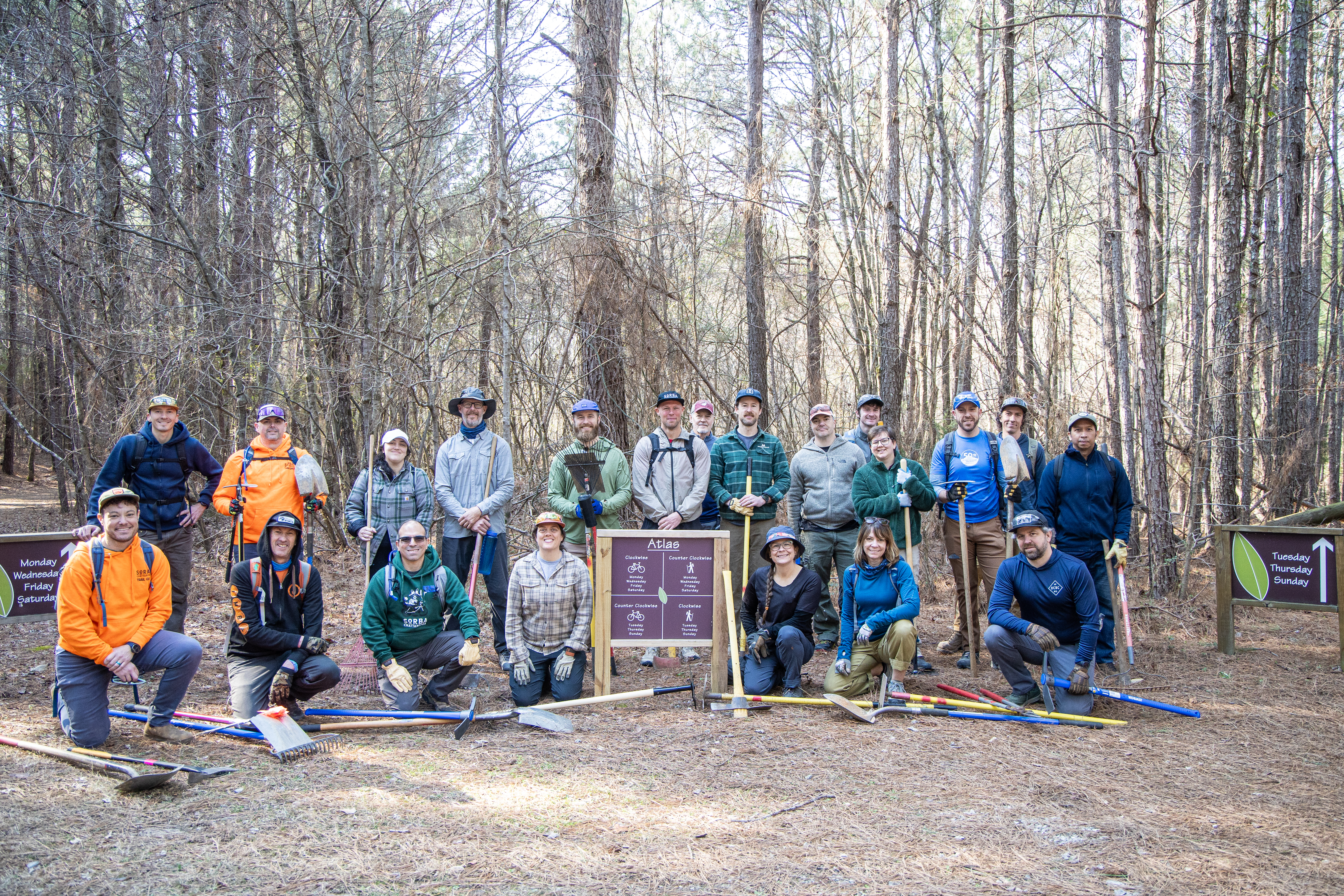
IMBA and NEMBA provide highly trained volunteers and crew leaders to assist the Forest Service with needs stemming from the expansion of mountain biking and other recreational trail use. In the last two years, NEMBA has leveraged $2100 in Recreational Trail Program funding with over 850 hours of trailwork in the White Mountain National Forest, and we are excited about further opportunities. Through cooperation, bicyclists and the Forest Service can address the real social and ecological problems that are arising through the growth of mountain biking and expansion of all outdoor recreation. There is much potential to expand volunteer trailwork and volunteer ecosystem restoration projects.

IMBA and NEMBA worry that the approach to bicycling expressed in the proposed rules and definitions of the Draft LRMP and DEIS could lead to a general deterioration in land manager-bicyclist relationships. A closed-unless-opened policy can work well only if combined with diligent travel management planning, public outreach, trail user education, and reasonable regulation and enforcement. Without those elements, a closed-unless-opened policy creates confusion, user conflict, and often backlash from the public. These feelings result in unauthorized trail construction, environmental impacts, and erosion of the public-private partnership. That can lead to a decrease in bicycle tourism in the communities surrounding the forest, which would affect the communities' relationships with the Forest Service.

We believe that an area-by-area, site-specific approach will generate the public support that is necessary for effective recreation management.

TRAVEL MANAGEMENT PLANNING

IMBA and NEMBA are willing to work with the Forest Service to delineate the right trails and travel corridors for each area of the White Mountains National Forest. We ask the Forest Service to initiate a series of travel management planning processes for particular sections of the National Forest, starting with the area between North Conway and the Pemigewasset Wilderness. Over the 15-year life of the Land and Resource Management Plan, there hopefully will be enough money and human energy to eventually address all areas of the forest. This formal travel planning process should be incorporated into the Land and Resource Management Plan.

In each planning process, the agency can, with ongoing public participation, thoroughly inventory all travel routes and make decisions about each path. Some should be obliterated. Some should be shared-use trails. Others may occasionally be appropriate for a single type of user. The community of people involved can probably come close to consensus on a reasonable system of trails and rules for each place.

But a needed key to this process is recognition that bicycling is not especially or particularly damaging to natural resources compared to other users. If there is a need to restrict bicycling more than hiking it stems only from social issues. Some hikers wish to have hiking-only areas, and national regulations have prohibited bicycling in designated Wilderness and on the Appalachian NST. With large areas of the White Mountains National Forest already off-limits to bicycling, how many more hiking-only areas are appropriate?

An area-by-area, site-specific approach will generate the public support that is necessary for effective recreation management.

SUMMARY

IMBA and NEMBA request the following.

  1. Please change the proposed rules and definitions as specified above.
  2. Please initiate public travel management processes for particular areas of the White Mountains National Forest.
  3. Please continue to partner with bicyclists and other recreation users to conduct more trailwork and ecosystem restoration and monitoring projects.

Thank you for your consideration of these comments.

Sincerely,

Gary Sprung
IMBA senior national policy advisor

Philip Keyes
NEMBA executive director

Mark Jenks
IMBA New Hampshire State Representative

Email this page Printable Version


Help | Site Map | Copyright
IMBA Homepage Join IMBA Now!