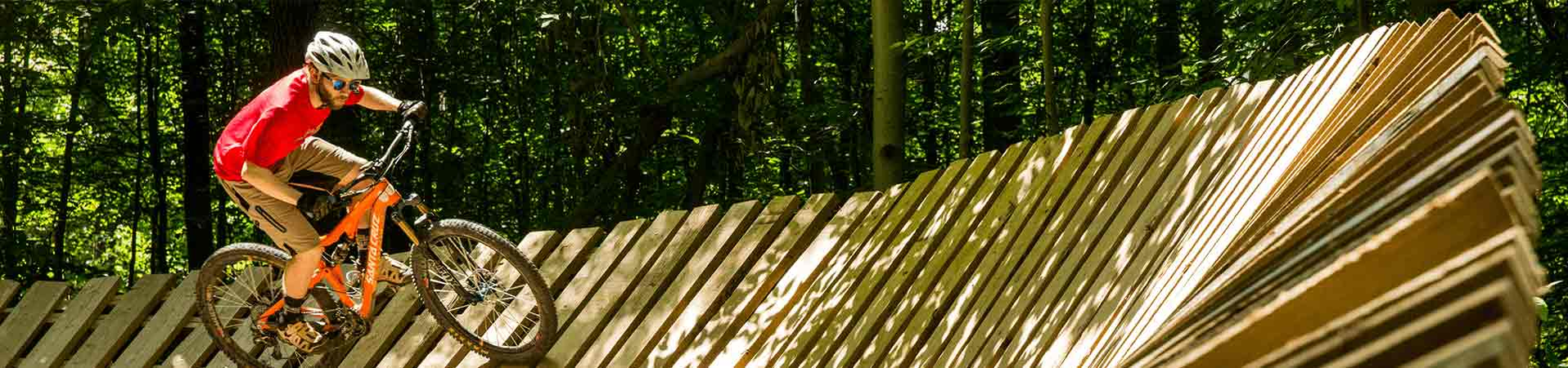
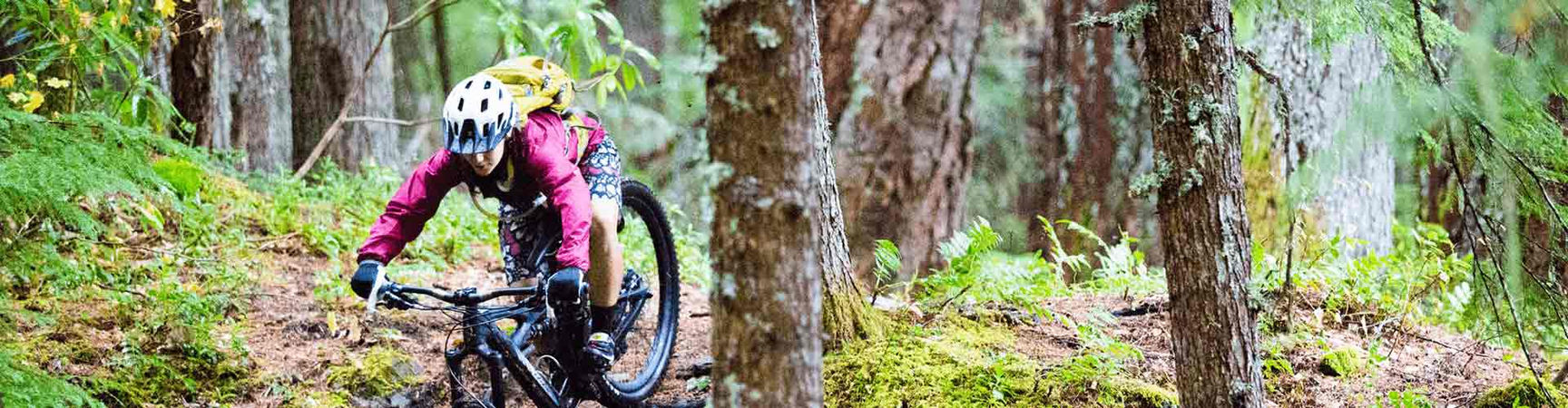
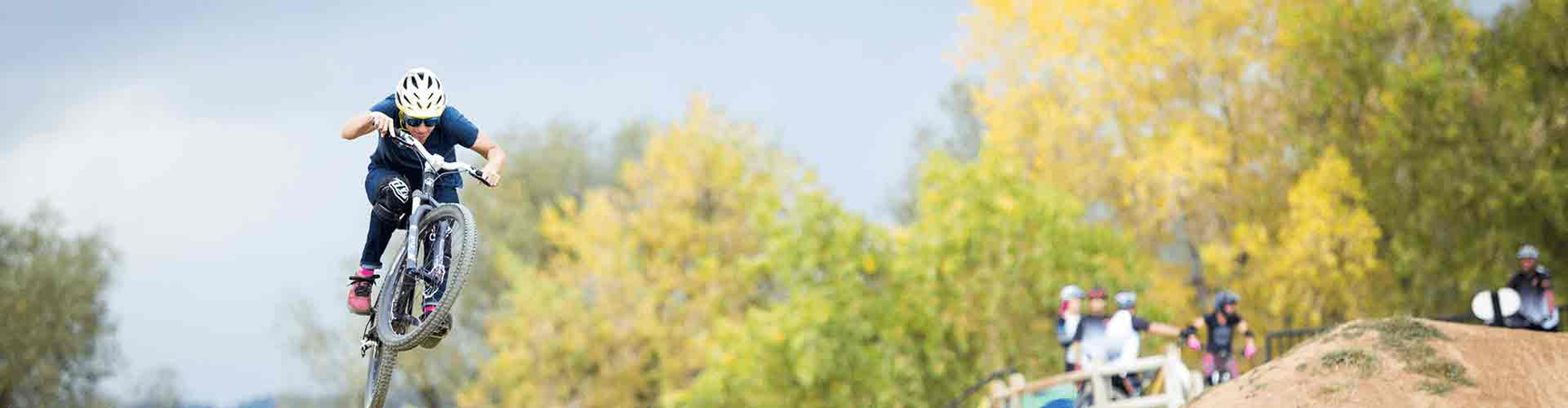
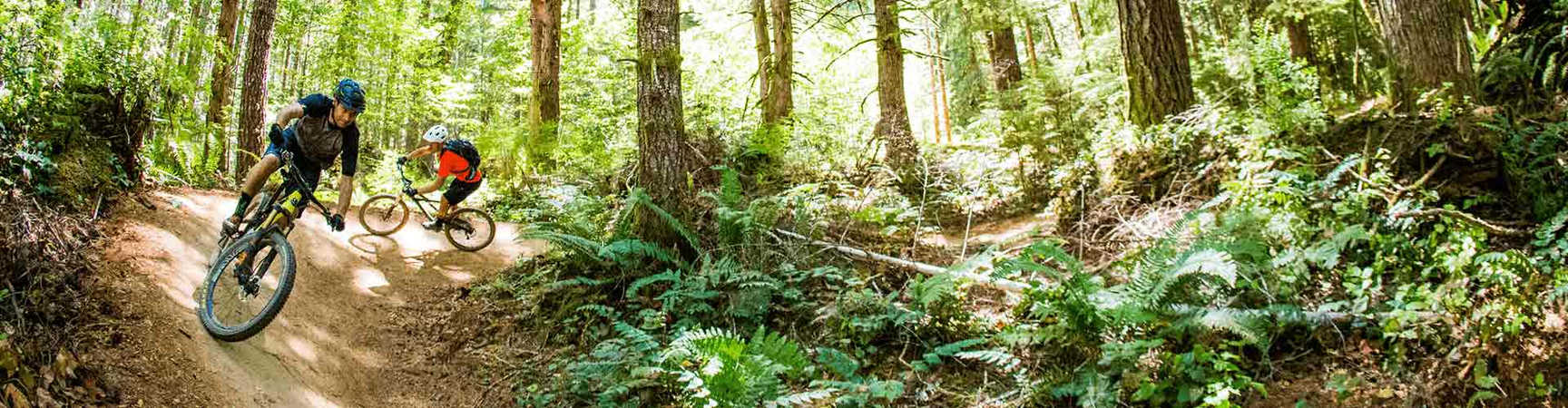
Where To Put The Challenge In The Trail?
All year, ITN has been presenting trail design articles authored by IMBA Trails Resource Director Kurt Loheit. In the last issue, Rich and Jen Edwards, Subaru/IMBA Trail Care Crew No. 3, talked about the specific role exposure can play in enhancing the feeling of challenge on a sustainable trail. In the article that follows, the Edwards return to the topic of technical challenge and focus on designing it into a trail system.
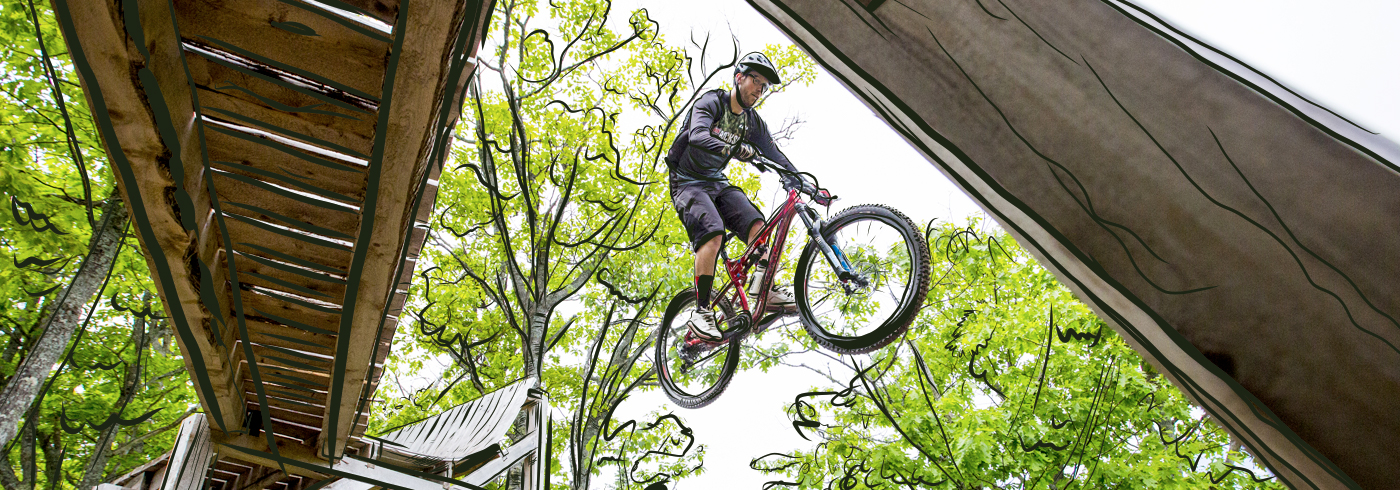
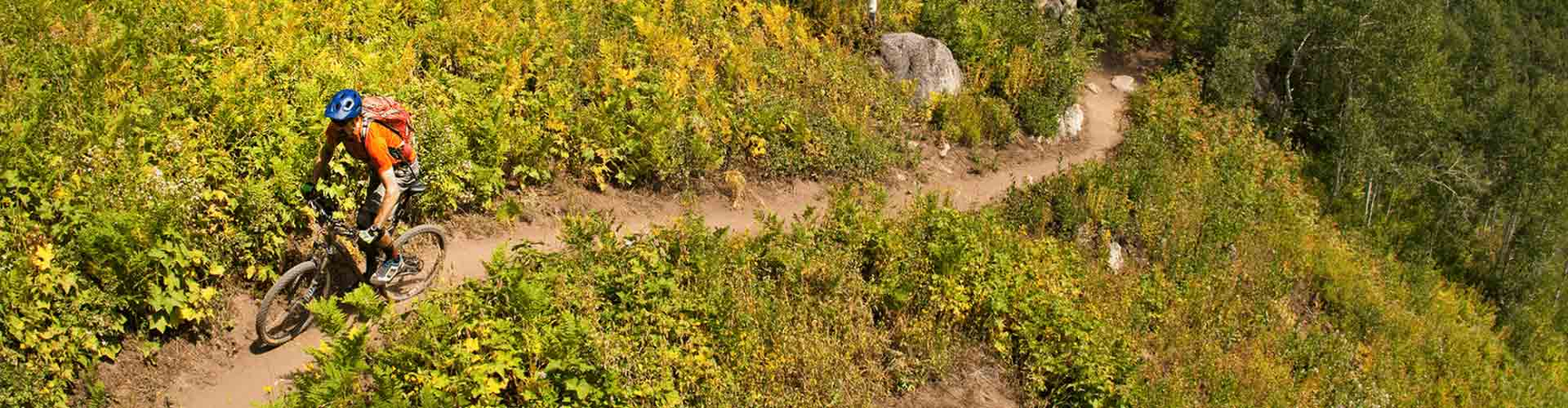
Where to put the challenge in the trail? As the Subaru/IMBA Trail Care Crew we've heard accusations by users that we're sanitizing their trail. This is most often because we're replacing an eroded gully with a sustainable contour trail. If the plan calls for a challenging trail we'll build it burly and difficult to navigate. If the new path must be designed to be ridable and walkable by everybody (including horses), then we follow that specification.
This year we've built several reroutes that were more sustainable and more difficult to navigate than the problem sections we removed. In each instance it was because those locations were appropriate for a technical feature. The locations we have found that are good places for more technical trail sections are rural locations or more remote parts of large, diverse trail systems. Urban areas with a large trail user population generally don't make the best location for aggressive trails due to a shortage of green space. However, an urban green space that's large enough to support a larger trail system may have room for a challenging trail or two.
In planning, we try to think about all the people who would possibly support and use the trail system. Don't build a public trail system that only five percent of the public can or wants to use. Instead, build a diverse trail system that provides for the varying desires and abilities of all potential trail users. A stacked loop system facilitates diverse trail styles. It typically includes:
A. A core or trunk trail: Begins at the trailhead, heavily used, connects to the rest of the trail system, can be a loop, tends to be wider, smoother, with longer sight lines than other trail sections. The core or trunk trail may need to be designed to ADA (Americans with Disabilities Act) specifications. This is often a non-challenging short (half-mile or less) trail that provides leisurely strolling side by side, family riding, and accessible for visitors with disabilities. This portion of the trail system will not provide as much technical challenge, solitude, or exertion as other sections. This trail is usually found directly off the parking area and is the easiest to access.
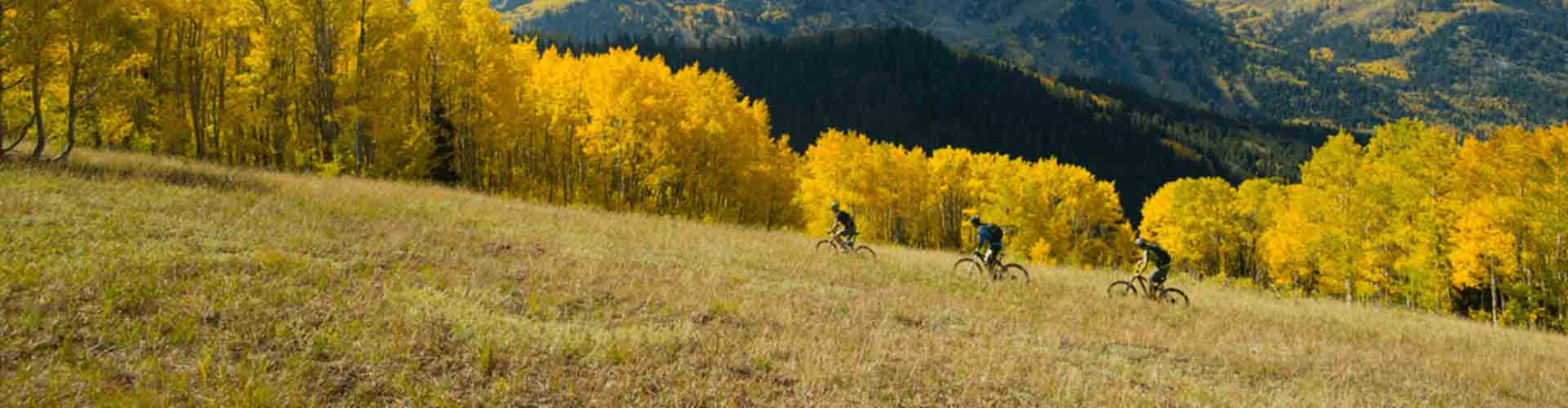
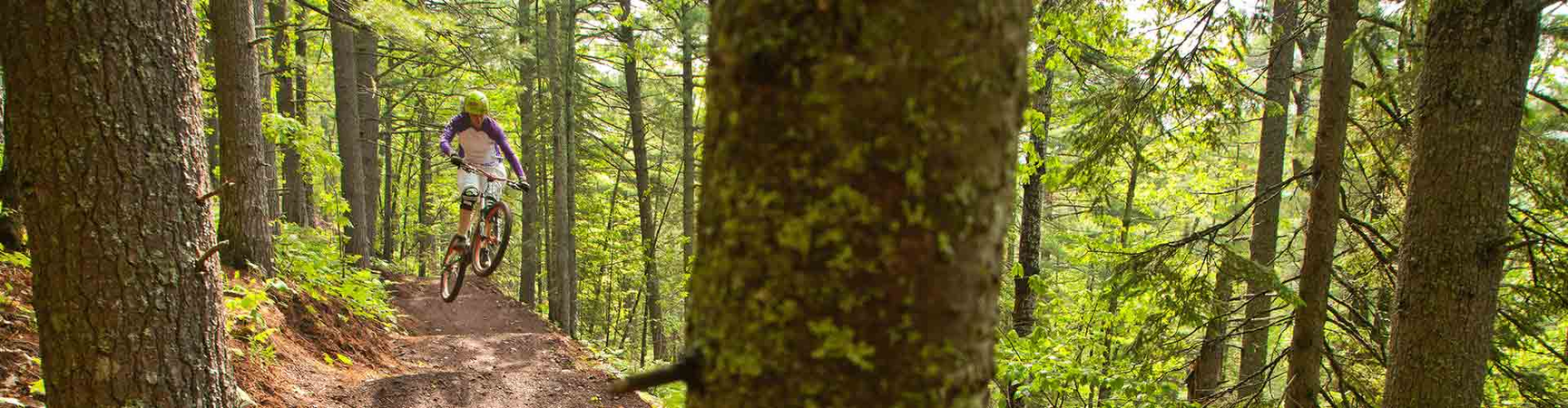
B. Primary trails: Comprises a good portion of the overall loop system, provides circuits without requiring use of challenging trails. These trails are more exciting and typically feature narrower, rougher tread, more elevation change and tighter turns than the Core trail. Some challenging features may be appropriate.
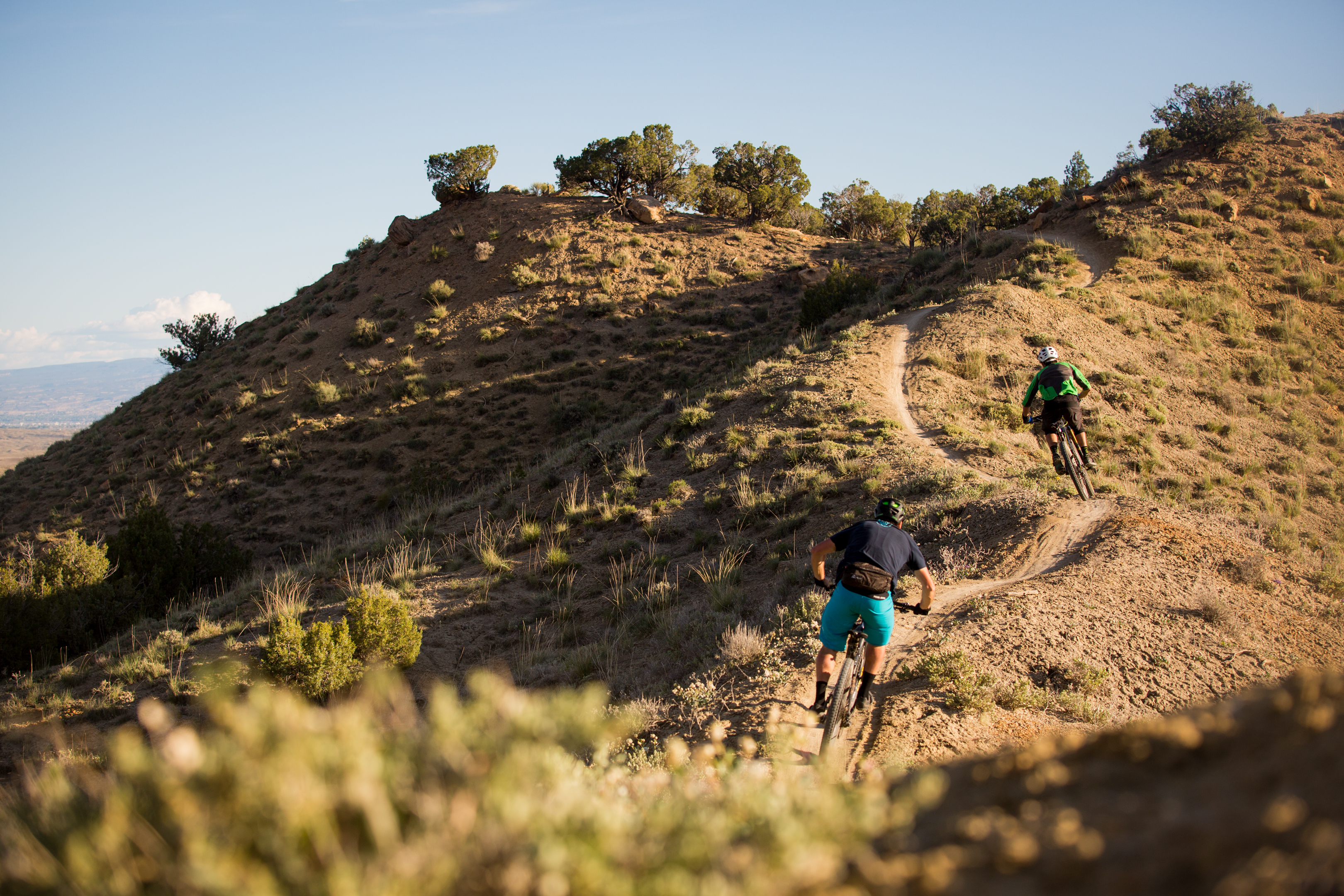
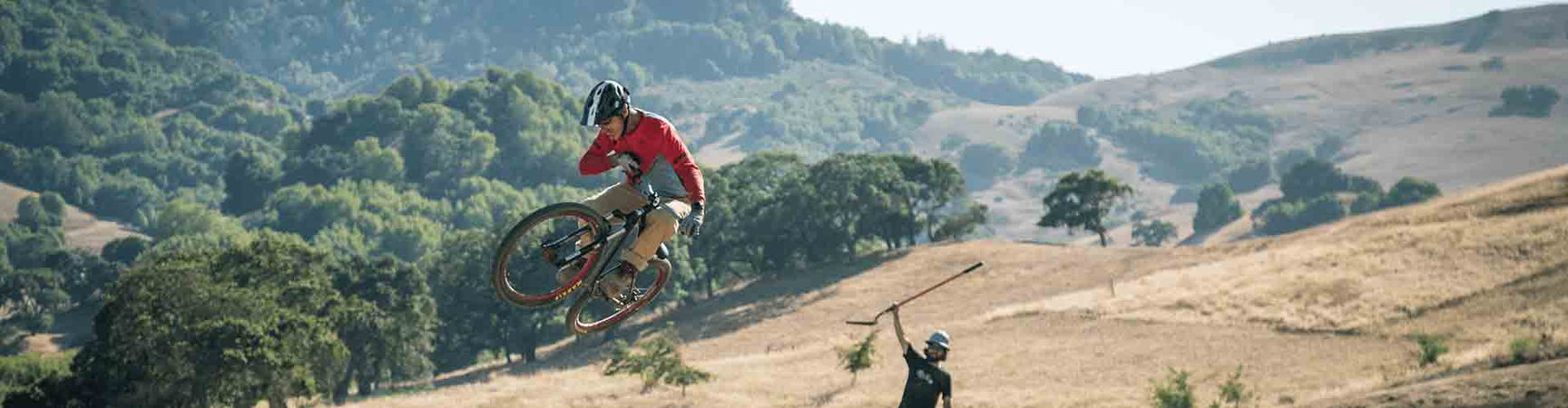
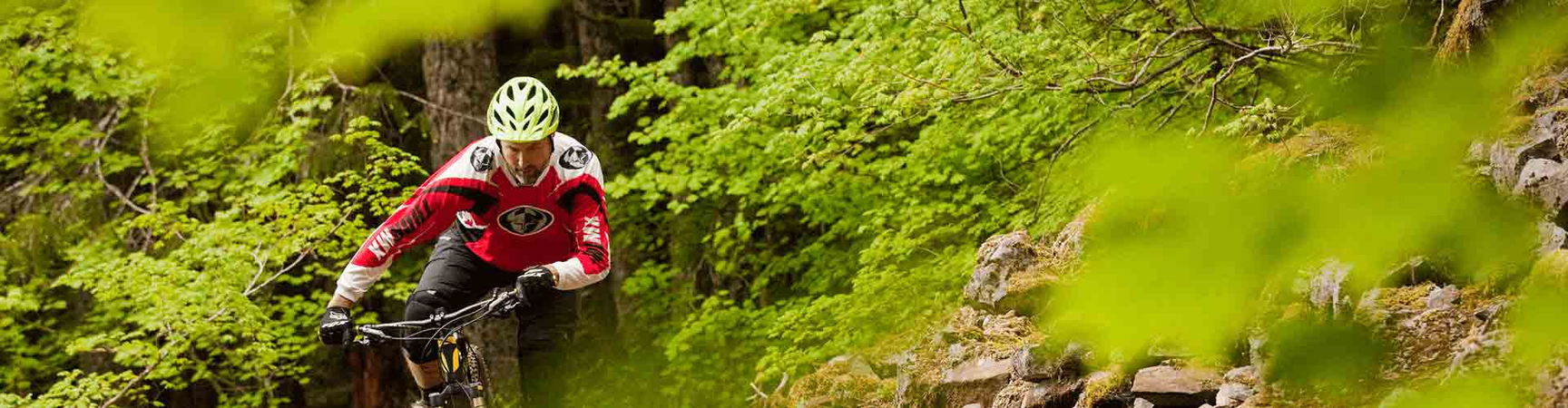
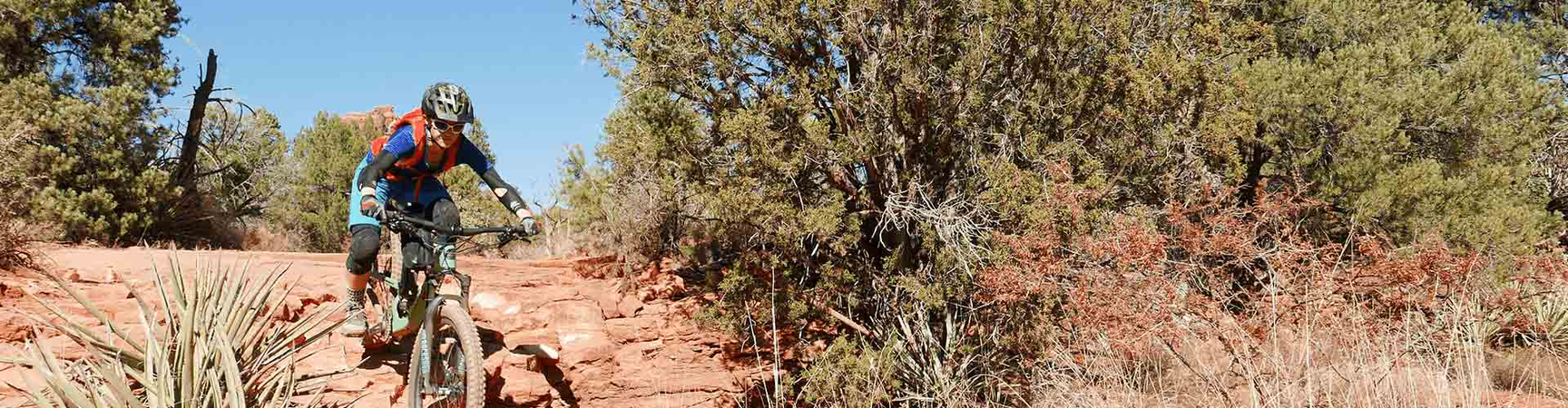
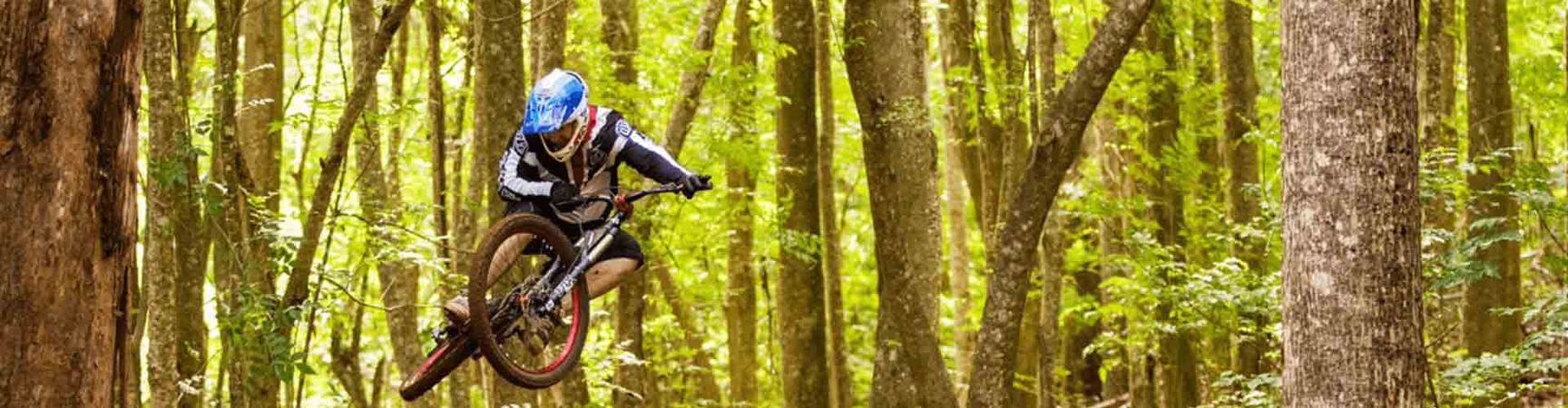
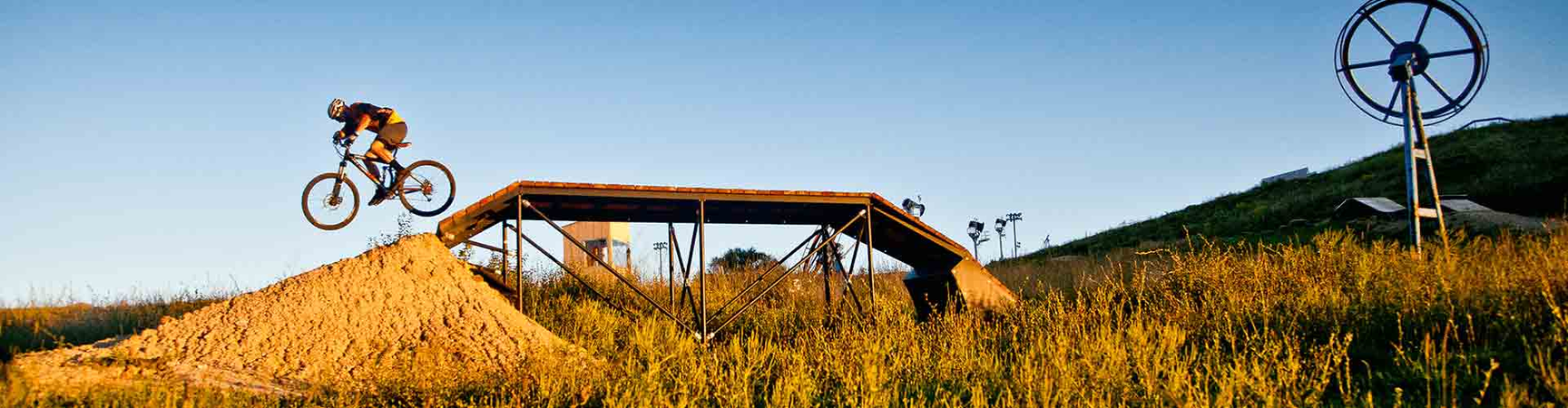
C. Challenging trail: Located at the back end of a stacked loop system or in a trail system that is more than an hour's drive from a metro area. The remote character and challenging tread of this trail deters some users, while providing a high quality experience for others. This trail will give trail runners, avid cyclists and other outdoor enthusiasts a greater opportunity for solitude as well as a suitable place to test their skill and stamina.
One component (though hardly the only one) of most outdoor recreation experiences seems to be using physical skill and stamina to overcome adversity while enjoying the natural surroundings. People don't walk the Appalachian Trail because it's easy. The attraction of pushing our limits and reaching for new goals has been a part of recreation in the American outdoors since the days of Roosevelt and Leopold. By helping to build diverse trails that cater to folks new to the outdoors and still challenge and delight seasoned backcountry veterans, we ensure that the constituency for outdoor recreation will continue to grow.