IMBA - International Mountain Bicycling Association
What would we do without trails?

Wild Today, Gone Tomorrow?

Virginia's threatened roadless areas offer fine biking

By Jeb Tilly
Special to The Washington Post
Friday, November 16, 2001; Page WE64

At 27,248 acres, Little River Roadless Area southwest of Harrisonburg is one of the largest parcels of reasonably undisturbed public land in Virginia's George Washington and Jefferson National Forests. It's also home to some of the best mountain biking in the state, which is one reason I was there on a beautiful weekday in October.

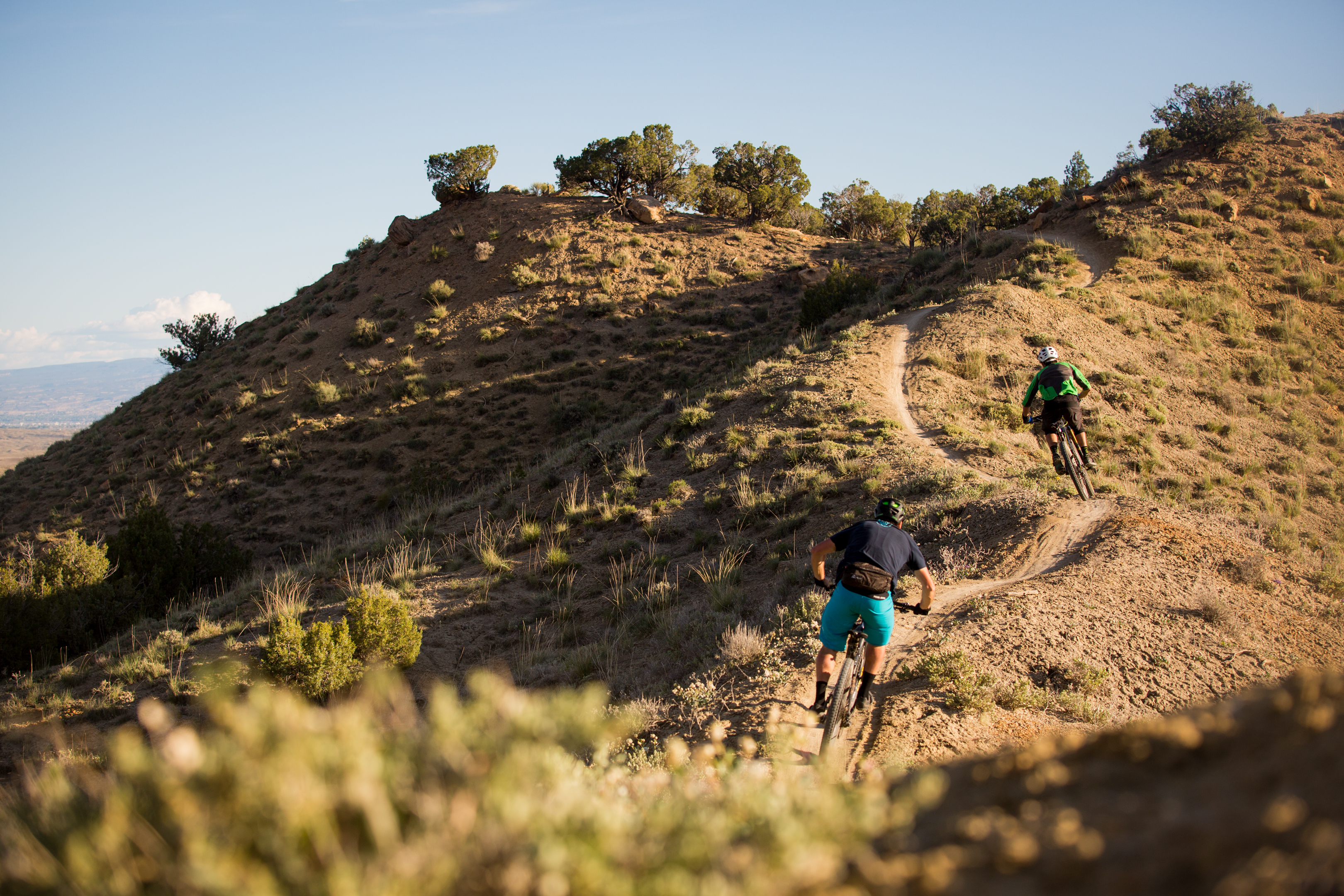
Chris Scott, owner of Shenandoah Mountain Touring, a local mountain bike guide service, agreed to introduce me to the area's world-class downhills. Together we huddled against the wind at the Hearthstone Ridge trail head and made last-minute adjustments to our bikes. Below us the orange shag of the turning canopy seemed to extend uninterrupted to the horizon -- a sight largely unavailable in the increasingly urbanized East. Somewhere out there was seven miles of furious single-track hidden by the detritus of the trees' first fall shedding and littered with pointy rocks the size of moonshine jugs. My bike, an old beater with no suspension, seemed almost to quail at the thought. Scott's fully suspended brute bobbed up and down at his touch like a prizefighter before a championship bout.

I'd come to Little River with more on my mind than primo trail riding, however: On Sept. 11, the National Forest Protection Alliance (NFPA), a confederation of conservation groups dedicated to ending commercial exploitation of federal lands, released a report titled "America's 10 Most Endangered National Forests." In seventh place was Virginia's GW-Jeff. Why? Because many of its Roadless Areas -- undeveloped parcels of reasonably pristine forest like Little River, more than 50 of them in all -- are in danger of being clear-cut, explored for gas or oil, mined or leased for grazing livestock. That's bad news for the environment -- and to members of the Washington area's outdoor sports set, who count on the GW-Jeff's 1.5 million acres to provide an escape from cramped apartments and numbing commutes. I wanted to see what we had to lose.

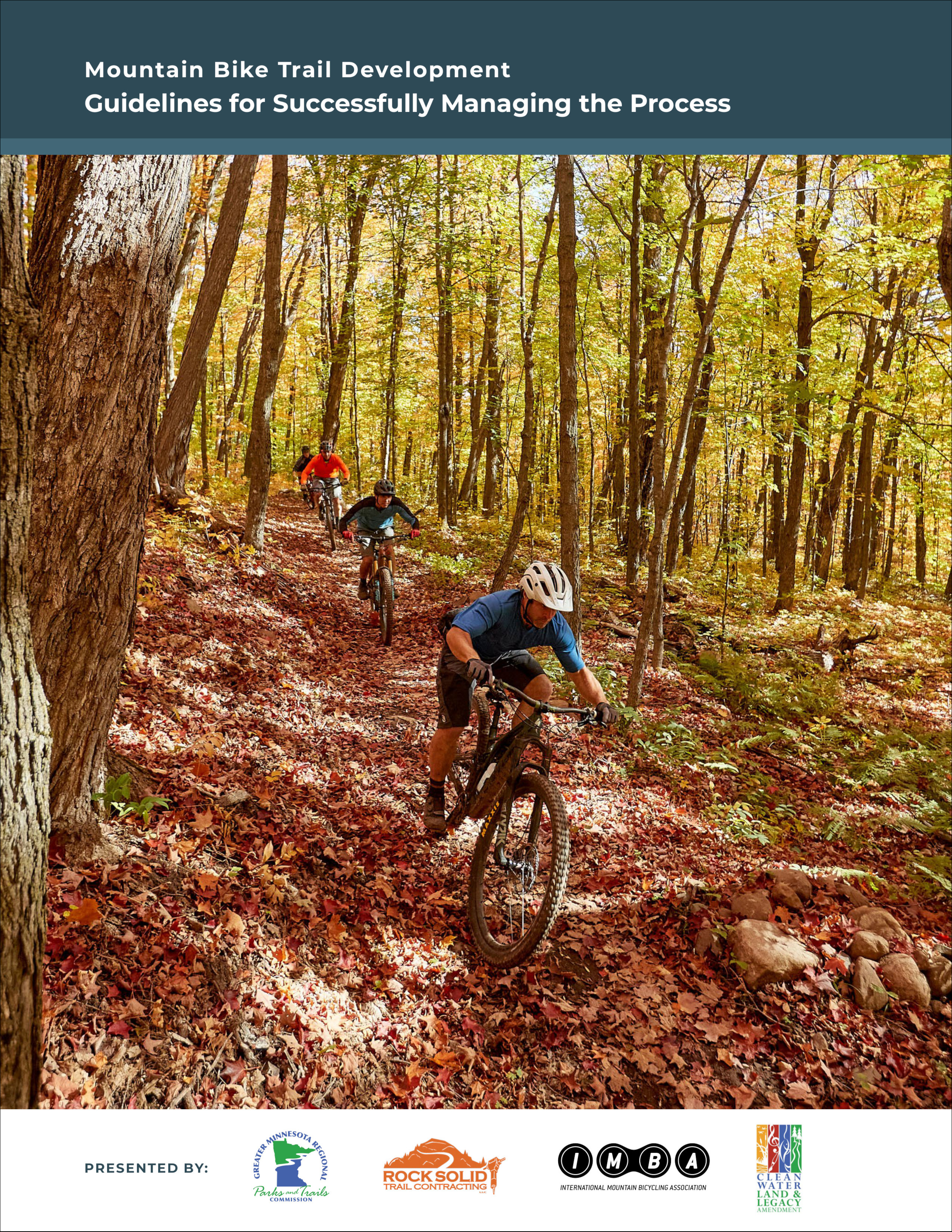
In no time Scott and I were hurtling down Hearthstone Ridge on a trail that descended in swoops through a healthy-looking eastern hardwood forest. Scott steadily gained distance as I rode cautiously, feeling every bump on the narrow trail. At a deceptively smooth spot I let off the brakes and attempted to catch up. Instantaneously, my front tire hit a huge leaf-covered rock, nearly bringing me to a standstill. I rolled to a stop as air wheezed out of the popped tube.

Scott had already disappeared around the next turn. As I sat in a patch of sun to fix the tube I was struck by the sudden calm of the place. There was no sound of traffic -- of any human noise, in fact. A light breeze stirred the leaves in gentle eddies beneath the trees. I imagine Rip Van Winkle started his famous nap the same way, cradled by the contours of the earth, lulled by the sounds of nature.

Roadless Areas are the epitome of the sylvan escape. They're as backcountry as it gets in the shadow of the nation's capital, the kinds of places where one imagines Indians once lived, and where bear, bobcats -- perhaps even mountain lions -- still roam. The areas range from huge, like Little River, to tiny, like the 836-acre Hoop Hole area. And Virginia has a wealth of them. Combined, the state's Roadless Areas make up 50 percent of all roadless land in the southeast, which is one reason the NFPA is especially concerned about protecting them.

Another reason is that, unlike Wilderness Areas or National Parks, Roadless Areas aren't protected from extractive uses by federal or state law. They're simply there, as delicious to recreationists -- and logging companies -- as a bowl of Cherry Garcia is to an Appalachian Trail through hiker. Which is why it's vitally important that recreation enthusiasts become familiar with them. Only through public support -- in the form of enthusiastic, healthy recreational use and maybe a letter to your congressional representative -- will these areas eventually get the protection they deserve.

Fearing the worst, Scott pedaled back up the hill to find me. As I coaxed my tire onto its rim he pulled alongside. "Not a bad place to break down," he said. I agreed, stifling a yawn, and we were off again through a forest that was, for the moment, ours alone.

VIRGINIA'S SECRET BACKCOUNTRY

If you're interested in visiting the Old Dominion's Roadless Areas, prepare yourself for a little work. The majority of them aren't serviced by guides, nor are they well documented in hiking or biking guidebooks. Exploring them requires persistence. Shenandoah Mountain Touring (540/434-2087; mountaintouring@aol.com) would be happy to show you around Little River. To find the rest, arm thyself with the Virginia Atlas & Gazetteer (available at any Barnes & Noble for $17.95), a good pair of boots and a map and compass. Karin Wuertz-Schaefer's excellent guide, "Hiking Virginia's National Forest" ($10.95) contains information about some of the areas, but for a complete (not very detailed) map of what's out there go to http://roadless.fs.fed.us/. Three of the best and most accessible areas are listed below.

BIG SCHLOSS (20,752 acres) offers classic ridge and valley terrain in the Lee Ranger District (540/984-4101) eight miles west of Woodstock. Most of the area was logged at the turn of the century to provide charcoal for commercial furnaces, but the existing forest is more than 80 years old and shows little signs of its painful past. Its main draw is the magnificent sandstone outcropping of the Schloss ,which rises like a rampart above scarlet and chestnut oak. A moderately difficult out-and-back walk of five miles leads to the summit of the Schloss. For a longer hike, try the 13-mile loop that follows the Mill Mountain, Big Blue and Stony Creek trails and Forest Road 92. Primitive camping is possible anywhere on the hike, but the Potomac Appalachian Trail Club (703/242-0693) maintains Sugar Knob Cabin at the apex of the loop, where the Big Blue and Stony Creek trails join. It's available by reservation only and provides a welcome night's rest between two days of gorgeous hiking. Access to trails in the Big Schloss area is easiest from the Wolf Gap recreation area. To get there, follow Route 42 west from Woodstock to Columbia Furnace, then hang a right onto Route 675 (Wolf Gap Road) and follow it for 6.6 miles. Maps: USGS Wardensville, Wolf Gap and Woodstock quads. National Geographic Trails Illustrated map No. 791.

LAUREL FORK (9,996 acres) on the Warm Springs Ranger District (540/839-2521) in far northwest Highland County is home to flora and fauna found almost nowhere else in Virginia. Its high elevation and cool climate nurture a forest of northern hardwoods and montane red spruce far different from the Appalachian oak forest that dominates the rest of the GW-Jeff. Northern flying squirrels glide between the branches of black cherry and sugar maples. Beaver make shallow ponds at the headwaters of the area's streams. Mink and snowshoe hare bound through broad sub-alpine meadows. The area was logged heavily around the turn of the century, and old railroad grades still exist from the narrow-gauge lines the Norfolk & Western Railroad used to haul logs out of the steep terrain. In winter they make for perfect cross-country ski touring. During the rest of the year Laurel Fork is a hiker's paradise. Circuit hikes are easy to come by. The shortest (six miles) follows Buck Run Trail to Laurel Fork Trail and returns via Locust Spring Trail. To get to Locust Springs picnic area, take Route 250 west from Monterey for 21 miles and hang a right on Route 28. Go about seven miles and turn right at a sign that says Locust Spring Picnic Area. Turn left at the first intersection and bear right at the second. Maps: USGS Thornwood and Snowy Mountain quads. National Geographic Trails Illustrated map No. 791.

SKIDMORE (5,641 acres) is a relatively small area in the Dry River Ranger District (540/828-2591) west of Harrisonburg. It's a wonderful example of what the NFPA wants to protect. Nestled high at the head of Skidmore Hollow is one of the few remaining stands of virgin eastern hemlock in Virginia. There, a thick canopy of evergreen boughs filters the sun and keeps the forest floor dark and loamy, forming an ideal habitat for the endangered Cow Knob salamander and other threatened species. Red-breasted nuthatch, magnolia warbler and brown creeper -- species uncommon in the rest of the forest -- flit from tree to tree. The Virginia Division of Natural Heritage recognizes the hemlock forest in Skidmore as one of the state's most significant old growth stands. They're a reminder of what Virginia's forests once looked like -- and they're an alluring destination for hikers, albeit adventurous ones. The terrain in Skidmore Hollow was steep enough to keep loggers out in the late 1800s and today trails are scarce or nonexistent. Bring a compass and be prepared for some good, healthy bushwhacking. The best way to get to Skidmore Hollow is by following Route 42/257 west from Bridgewater until it becomes Briery Branch Road (Route 924). Follow Briery Branch Road for 6.5 miles to the intersection of Forest Road 85. A left turn goes to Reddish Knob and the jumping-off point for Little River area trails. Go right instead toward Flagpole Knob. Follow the dirt road for 23/4 miles, bearing right at the fork, and park in a meadow on the left before you reach Flagpole Knob. Follow a northwest bearing out of the meadow, angling right to avoid thick mountain laurel, and walk downhill a quarter-mile into the old growth. Maps: USGS Brandywine quad. National Geographic Trails Illustrated map No. 791.

© 2001 The Washington Post Company

Email this page Printable Version


Help | Site Map | Copyright
IMBA Homepage Join IMBA Now!