Congressional Testimony Provided by IMBA and ORBA
April 5, 2006
Congressman Greg Walden, Chair
Congressman Tom Udall, Ranking Member
House Resources Committee
Subcommittee on Forests and Forest Health
1337 Longworth House Office Building
Washington, D.C. 20510
Dear Chairman Walden and Ranking Member Udall:
On behalf of the International Mountain Bicycling Association (IMBA) and the Oregon Mountain Bike Alliance (ORMBA), I write to offer comments on H.R. 5025, the Mount Hood Stewardship and Legacy Act.
The International Mountain Bicycling Association (IMBA), founded in 1988, leads the national and worldwide mountain bicycling communities through a network of 80,000 supporters and more than 600 affiliated clubs, including 19 in Oregon. IMBA teaches sustainable trailbuilding techniques and has become a leader in trail design, construction, and maintenance; and encourages responsible riding, volunteer trailwork, and cooperation among trail user groups and land managers. Nationwide, IMBA members and affiliated clubs conduct close to 1,000,000 hours of volunteer trail and advocacy work annually and are some of the best assistants to federal, state, and local land managers.
The IMBA affiliated Oregon Mountain Bike Alliance (ORMBA), is a network of Oregon organizations, bicycle clubs, individuals, and companies interested in enhancing mountain biking opportunities while protecting our nation's forests. ORMBA's mission is to preserve, protect, and promote mountain bike access for diverse riding experiences through education, communication, and unified action. Representatives from three major clubs in Oregon have been working on this bill in conjunction with the sponsors and others: the Portland United Mountain Pedalers (PUMP) represents cyclists around Portland, the Columbia Area Mountain Bike Advocates (CAMBA) represents cyclists around Hood River, and the Central Oregon Trails Alliance (COTA) represents cyclists in the Bend area.
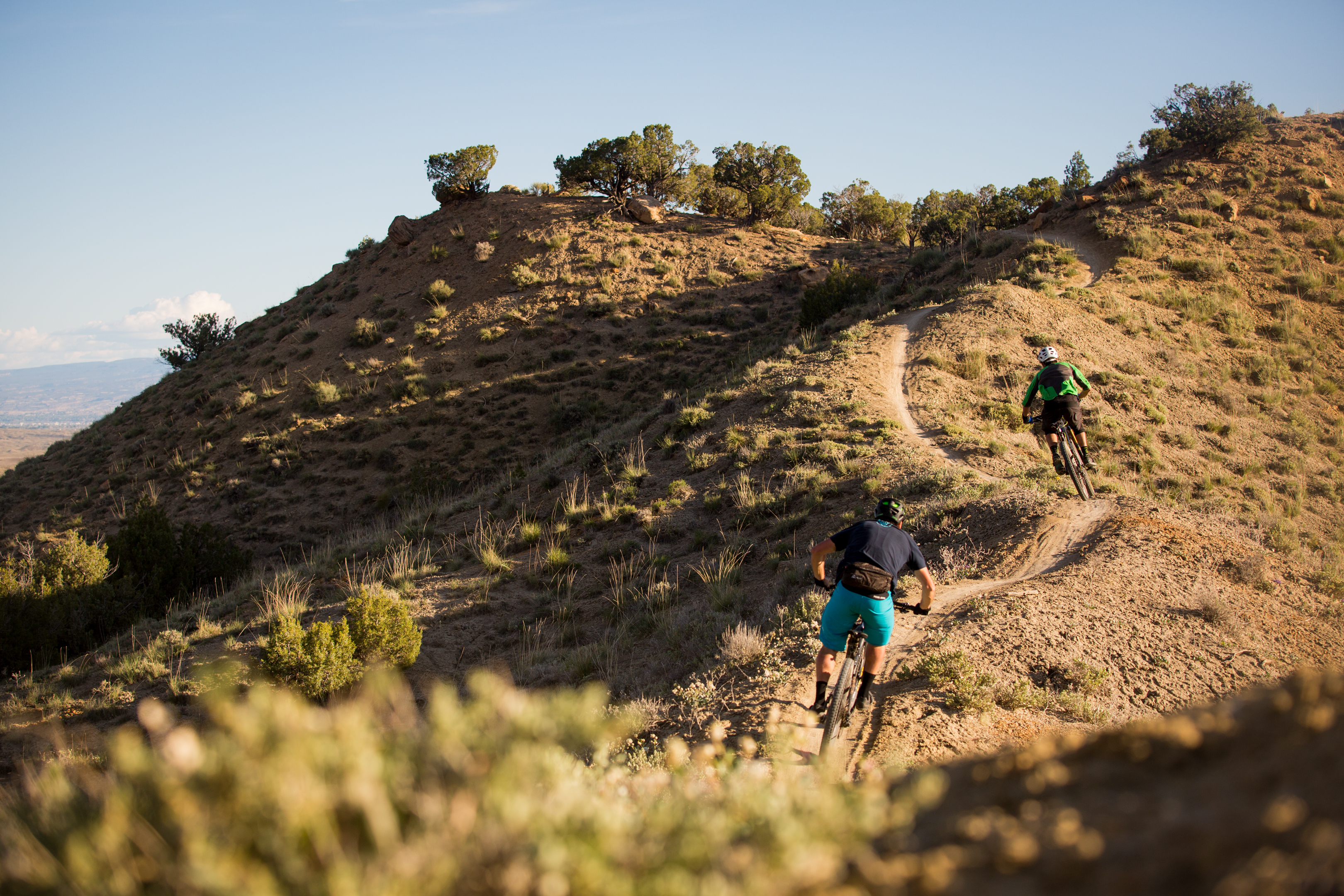
Mountain bicycling is a very popular sport, with 39 million participants nationally and close to 400,000 participants in Oregon (Outdoor Industry Association). Outdoor recreation is a way of life for residents and many tourists travel to the state to experience it via mountain bike. Oregon is also known for being solutions-minded and looking for new ways to tackle old problems. We applaud the collaboration that has resulted in this legislation, preserving natural resources and many mountain bicycling opportunities.
Bicyclists have a fundamental interest in the protection of undeveloped public lands for the same reasons as hikers and equestrians. The opportunity for solitude and a connection with nature on narrow trails is an extremely important component of mountain bicycling treasured by all experienced cyclists. These backcountry areas provide a setting equivalent to a powder day for skiers or 18 holes on Pebble Beach for golfers.
IMBA and ORMBA support H.R. 5025, the Mount Hood Stewardship and Legacy Act. Specifically, we are pleased the bill includes:
- An investment of almost $800,000 of unobligated special use permit fees to be retained for trails and recreation on Mount Hood
- Consideration for high use recreation areas that are popular within the mountain bike community - that these trails were left outside proposed Wilderness boundaries to allow for continued bike access
- A seat on the Mount Hood National Forest Recreational Advisory Council for a mountain bike representative
- The suggestion that the Forest Service consider creating singletrack trails open to bicycles from decommissioned roads
- Recognition of recreation as a dynamic social and economic component of Mount Hood
IMBA and ORMBA suggest excluding 28 miles of trail at Roaring River to allow for continued mountain bike access. A map is included of the proposed trails. We suggest creating a 10-foot wide buffer around these trails and protecting them in another way, one that precludes motorized travel or development, such as a National Protection Area or National Scenic Area. This plan would only remove 33 acres or less than one tenth of one percent of the 77,500-acre proposal.
We believe carving out these trails eliminates the unnecessary choice between Wilderness and a low-impact, quiet, human powered form of recreation by protecting the land and allowing current mountain bike access to continue. Roaring River needs to be protected from resource extraction, commercial activity, structures, and road building. It does not need to be protected from mountain bikes. Available trail resource science demonstrates that hikers and bicyclists have a similar impact on the land, and do less damage than horse travel. Hikers and equestrians are both allowed in Wilderness.
We also suggest language to allow the 10-foot buffer to be movable for adjustments to the trail due to environmental concerns such as forest fires, mudslides, blow downs, or other unforeseen environmental disasters. We propose a clause such as: "To the extent necessary to protect National Forest resources, the Secretary from time to time may adjust the alignment of the trail. The 10-foot wide buffer would move with the new alignment, but no adjustment shall have the effect of decreasing the total number of acres protected as Wilderness." Therefore, if the trail needs to be rerouted, its buffer is not fixed in the exact location drawn when H.R. 5025 is finalized. The buffer can move and adjust to better protect the land and allow for continued trail access while not taking away from the overall Wilderness acreage. Further, allowing continued use of mountain bikes on these trails should not complicate management concerns for the Forest Service and includes one more constituency to help maintain the trail.
Since there is historical and existing use of mountain bikes on these trails, we believe this request is reasonable and consistent with other exceptions in the legislation for power lines, private in-holdings, valid existing rights, grazing, fish and wildlife management, bull trout restoration, and continued access by Indian tribes. A detailed list of other special considerations in existing Wilderness around the country can be found on the Wilderness.net website.
IMBA believes that mountain biking is a healthy, human-powered outdoor activity with minimal environmental impact and a positive economic influence for Oregon. IMBA requests the committee amend this legislation to allow continued mountain bike access on 28 miles of trail, removing 33 acres at Roaring River from the 77,500-acre proposal. We hope the committee will protect these acres just like Wilderness but allow for our existing use. Just as wild lands foster an appreciation of nature in hikers, equestrians, and others, the pristine riding opportunities preserved in our request strengthen cyclists' commitment to public lands preservation.
In the future, IMBA and ORMBA hope to work with the committee and the bill's sponsors to introduce legislation that will protect more acres around Mount Hood. We believe that there are more appropriate land protections than Wilderness that will allow for existing recreational user groups, but protect more of the land and trails we value.
Thank you for the opportunity to submit comments on this important legislation.
Sincerely,
Jenn Dice
Government Affairs Director
International Mountain Bicycling Association (IMBA)
Attachments:
- Roaring River Trail System Map
- Trails Affected by H.R. 5025