Skip to Navigation

Public Lands Omnibus Bill Becomes Law

For Immediate Release 4-8-09

Contact: Jenn Dice
IMBA Government Affairs Director
jenn [at] imba [dot] com
303-545-9011

President Obama last week signed into law the 160-bill Public Lands Omnibus Management Act, legislation that is largely positive for the mountain biking community. IMBA and local riders were directly involved in negotiations concerning individual bills that directly affect mountain biking. In most cases, mountain bikers’ proactive approach preserved traditional singletrack experiences. However, important singletrack was lost in two states.

In Oregon, Virginia, California and Colorado, mountain bikers were deeply involved in crafting effective land protection proposals. This proactive partnership model produced bills with creative solutions for protecting responsible use and valuable natural resources. “Local riders and IMBA played a remarkably effective role in producing legislation with bike-friendly policies. This long-term involvement has proven crucial to many of our successes,” says IMBA Executive Director Mike Van Abel.

One of the Omnibus Act’s biggest benefits is the use of multiple, creative solutions to protect bicycle access and the environment. In particular, companion land designations that IMBA favors -- like National Scenic Area and National Recreation Area -- are taking a more prominent role than ever before and giving land managers more options for bicycle-friendly designations.

Unfortunately, though, prized riding opportunities were lost in West Virginia (Wild Monongahela Wilderness) and California (Eastern Sierra and Northern San Gabriel Wilderness). IMBA had lobbied strongly for bicycle-friendly designations to protect singletrack access and natural resources, but the final bill included only a small percentage of our recommendations. West Virginia riders lost 75 miles of trail, some of which has been the site of numerous trailwork and race events. In Mammoth Lakes, California, new Wilderness will prohibit mountain bike trail expansion adjacent the town’s boundary.

On the positive side for mountain bikers:

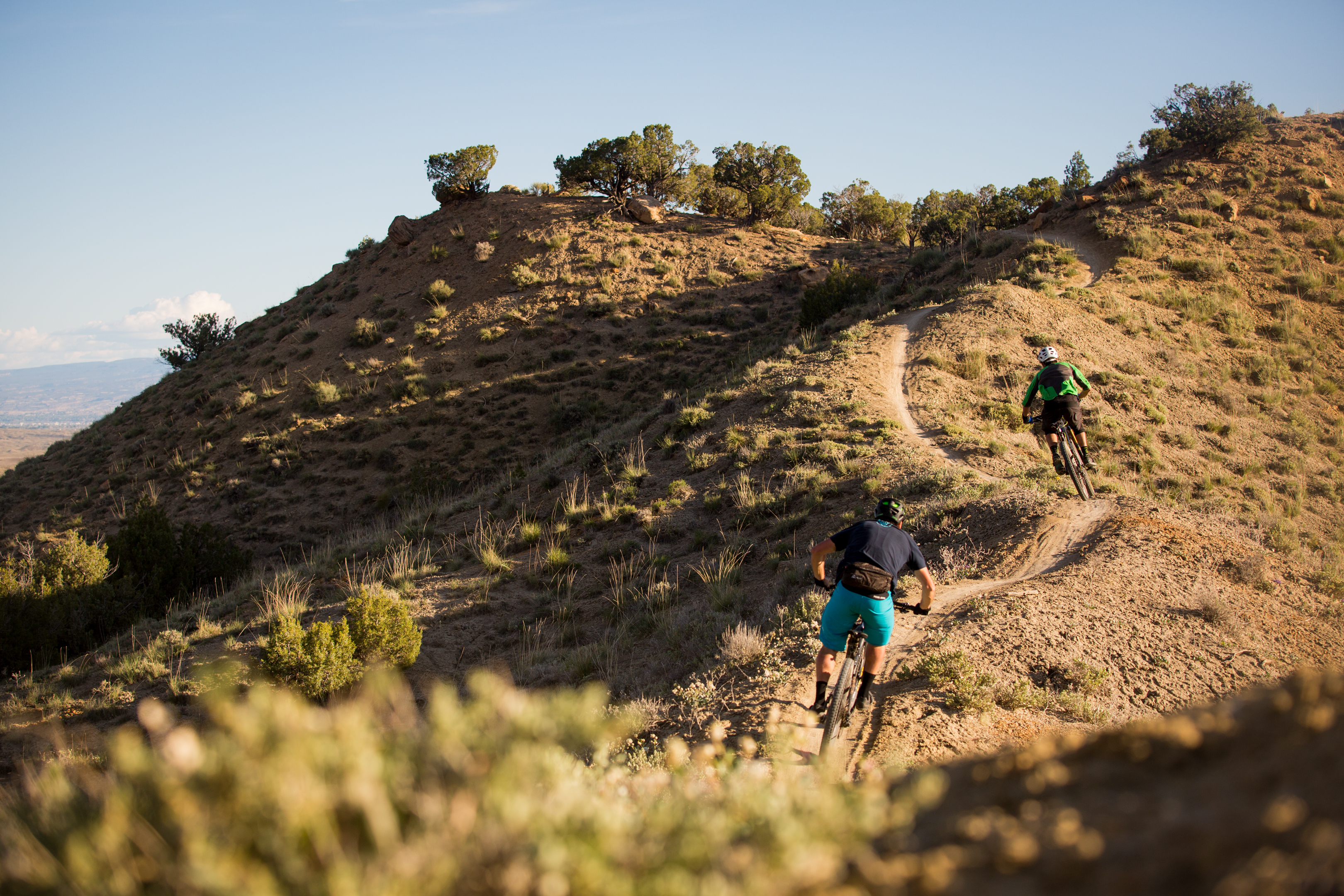
  • The Virginia Ridge and Valley Act includes more than 10,000 acres of National Scenic Area, where continued mountain biking will be allowed. The bill also stipulates reconstruction of a critical bicycle trail.
  • The Mount Hood Wilderness Act, Oregon, protects traditional bicycling trails under a strong National Recreation Area designation. Read about IMBA’s involvement in this bill.
  • The Rocky Mountain National Park Wilderness Act, Colorado, employs a boundary adjustment to allow the completion of a 16-mile shared-use trail along the park's western boundary.
  • The Dominguez-Escalante National Conservation Area Act, Colorado, includes a bike-friendly National Conservation Area designation that encompasses a smaller Wilderness core.
  • In developing the Riverside Wilderness Act, California, local mountain bike advocates were able to preserve most traditional bicycle trails and support the bill.
  • The National Landscape Conservation System (NLCS) Act will provide greater recognition for 26-million acres of the Bureau of Land Management's best lands. The NLCS includes many trails important to mountain biking, including those near Fruita, Colorado.

Cooperation with the conservation community was a cornerstone for success in many of the bicycle-friendly agreements. “We are pleased to have worked together with local cyclists and with IMBA in crafting two key Colorado portions of this package--Rocky Mountain National Park Wilderness and Dominguez-Escalante National Conservation Area,” said Steve Smith, assistant regional director for The Wilderness Society’s Central Rockies Office.

The Act also includes more than 40 bills improving National Park Service (NPS) resources, including expanding and adding national parks, commemorative trails and protecting park resources. IMBA is part of the NPS Centennial Coalition to help improve NPS units in time for their 2016 anniversary.

X
You may login with either your assigned username or your e-mail address.
The password field is case sensitive.
Loading