RTP Funds Trail Assessments and Training
TO: State Trail Administrators and Trail Advocacy OrganizationsFROM: Christopher Douwes, Trails and Enhancements Program Manager, Federal Highway Administration
Subject: RTP News October 27, 2005 - for States and Trail Advocacy Organizations
RTP TRAIL ASSESSMENTS and TRAINING
The 2005 State Trail Administrators Meeting had a training session on trail accessibility and trail sustainability, and the importance of trail assessments (see www.fhwa.dot.gov/environment/rectrails/stam2005/index.htm).
I want to recommend to you how you can provide this kind of training and do trail assessments within your own State, or have regional training among neighboring States.
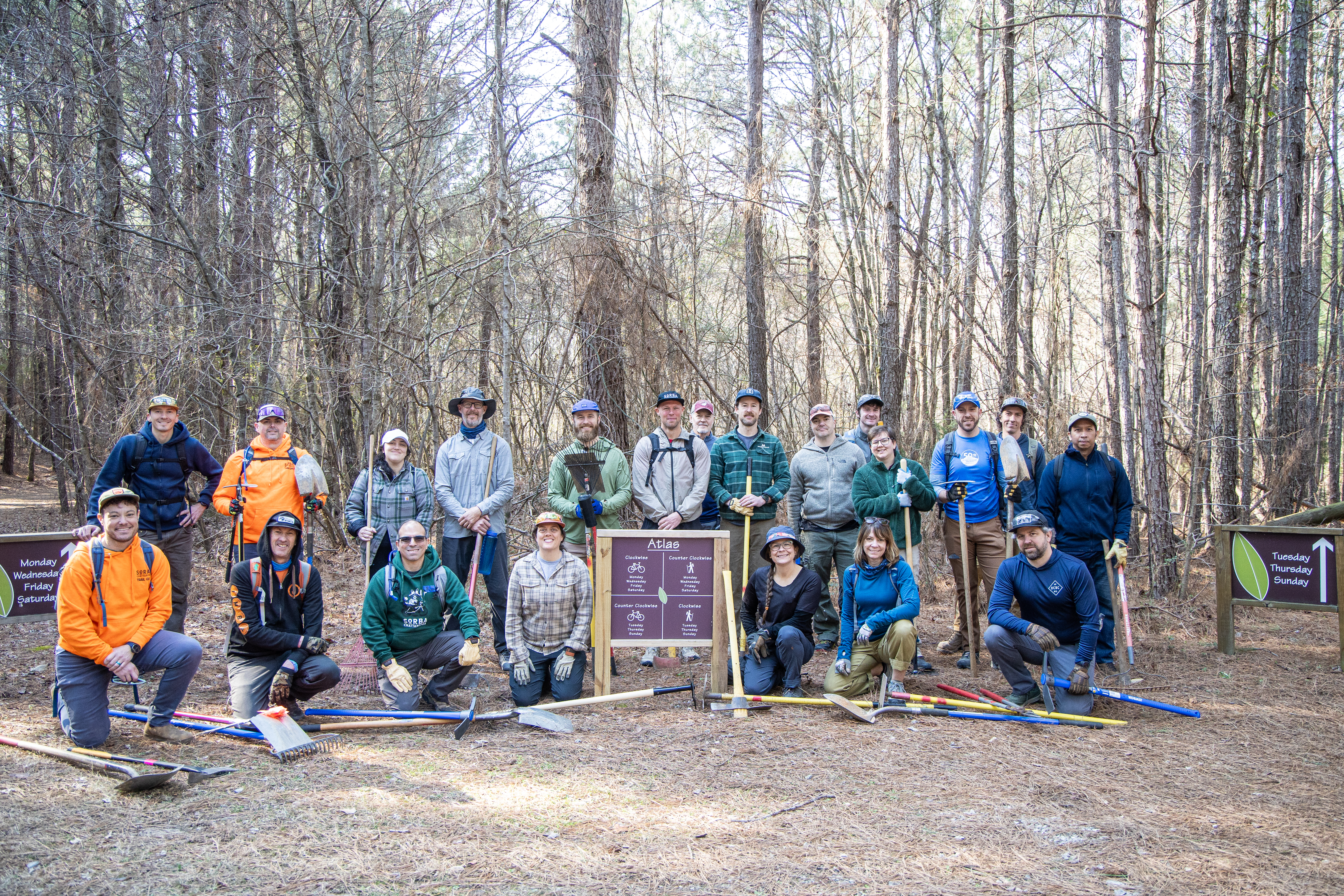
You can use RTP funds to develop and provide training on trail accessibility and trail sustainability, and to do trail assessments. You can train and use State staff, local government staff, staff from other government entities (including Federal and Tribal), youth conservation or service corps, nonprofit organizations, for-profit organizations, for-profit contractors, and volunteers. You can provide funds for professional trailbuilders or trainers to do trail assessments. You can provide funds to hire professionals to train others to do trail assessments, such as youth corps participants or volunteers. You can provide funds to hire trainers to train trainers to do trail assessments.
Here is a draft of what I intend to include in the Revised RTP Guidance. [These are revisions compared to the version some of you saw at the STAM meeting. Also, it is a DRAFT, and could change again: I'm open to ideas.]
DRAFT FOR Permissible Uses / Eligible Project Categories
Category C, purchase and lease of recreational trail construction and maintenance equipment, includes purchase and lease of trail construction, maintenance, or assessment equipment, including lawn mowers and trail grooming machines, provided the equipment is used primarily to construct, maintain, or assess recreational trails. This provision does not include purchase of equipment to be used for purposes unrelated to trails. For example, a lawn mower purchased under this program must be used primarily for trail and trailside maintenance, not to maintain open lawn areas or sport fields.

Category F, assessment of trail conditions for accessibility and maintenance, allows States to fund specific projects to assess trails to determine how accessible the trails are for people who have disabilities, develop programs to provide trail access information, and to assess trails for current or future maintenance needs.
Category G, development and dissemination of publications and operation of educational programs to promote safety and environmental protection, (as those objectives relate to 1 or more of the use of recreational trails, supporting non-law enforcement trail safety and trail use monitoring patrol programs, and providing trail-related training). This permits a State to use up to 5 percent of its apportionment each fiscal year for the operation of educational programs to promote safety and environmental protection as those objectives relate to the use of recreational trails. This figure is 5 percent of the apportionment rounded down to the nearest dollar. This is the maximum allowable-a State may use less than this amount.
Typical education projects may include:
- Development and operation of trail safety education programs.
- Development and operation of trail-related environmental education programs.
- Production of trail-related educational materials, whether on information displays, in print, video, audio, interactive computer displays, etc.
- Trail patrols to monitor trail use, safety, conditions, and/or environmental impacts.
- Trail patrols to provide trailside assistance such as providing emergency aid, search and rescue, helping trail users repair equipment, etc.
- Trail patrols to educate trail users, such as encouraging people to avoid environmentally sensitive areas.
- Development and delivery of training that promotes safety or environmental protection related to recreational trails. This includes training related to trail planning, design, construction, maintenance, operation, and assessment, because each of these steps can relate directly to safety and environmental protection. Note: this does not include training related to club or organizational development or grant-writing skills.
- States are encouraged to enter into contracts and cooperative agreements with youth conservation or service corps to develop and provide training and to be involved in trail patrols.
- States using RTP funds to develop training and education materials and programs should acknowledge the RTP and the FHWA.
(H) payment of costs to the State incurred in administering the program, but in an amount not to exceed 7 percent of the apportionment made to the State for the fiscal year to carry out this section. This permits a State to use up to 7 percent of its apportionment each fiscal year for State administrative costs. This figure is 7 percent of the apportionment rounded down to the nearest dollar. This is the maximum allowable-a State may use less than this amount.
Allowable administrative costs include items such as:
- Staff time to administer this program, including development and delivery of training for potential project sponsors on how to apply for RTP funds in the State.
- Meetings of the State recreational trail advisory committee.
- State RTP Program staff or RTP advisory committee attendance at trail-related training sessions, meetings, and conferences.
- Newsletters, websites, or other communications related to recreational trails.
- Statewide trail planning related to the RTP.
- Statewide trail conference support. States using RTP funds for conference support should acknowledge the RTP and the FHWA, and invite FHWA division office participation.
- States using RTP funds to develop training should acknowledge the RTP and the FHWA.