IMBA - International Mountain Bicycling Association
What would we do without trails?
Welcome to the World of Freeriding

Welcome to the World of Freeriding

The next generation of mountain bikers is looking for a challenge

Published in Parks and Recreation magazine
December, 2005 (Vol. 40, No.12)
By Mark Eller

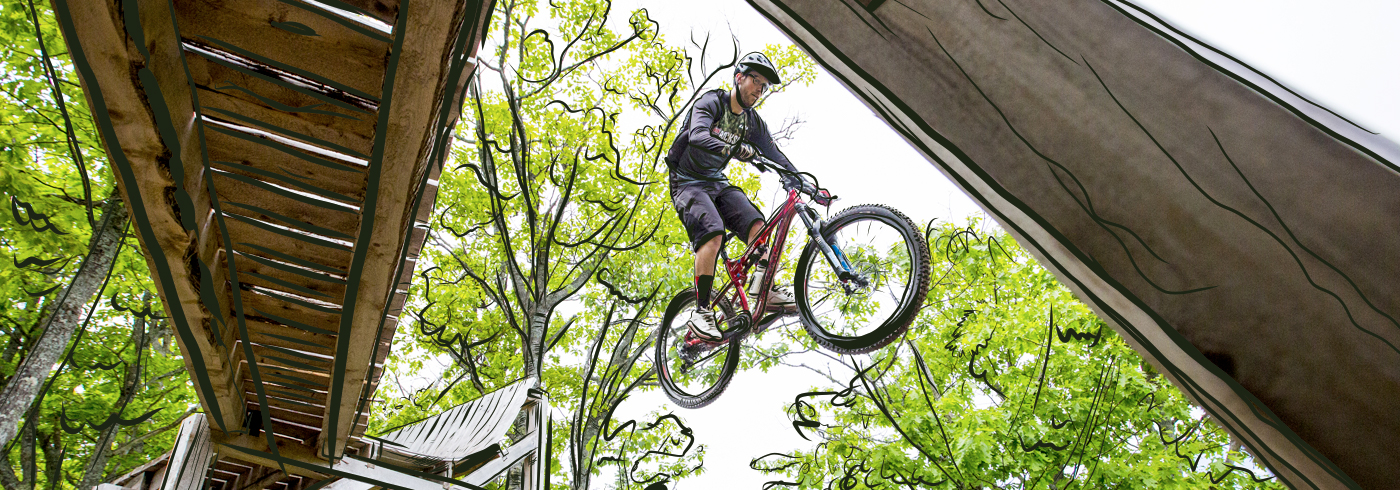
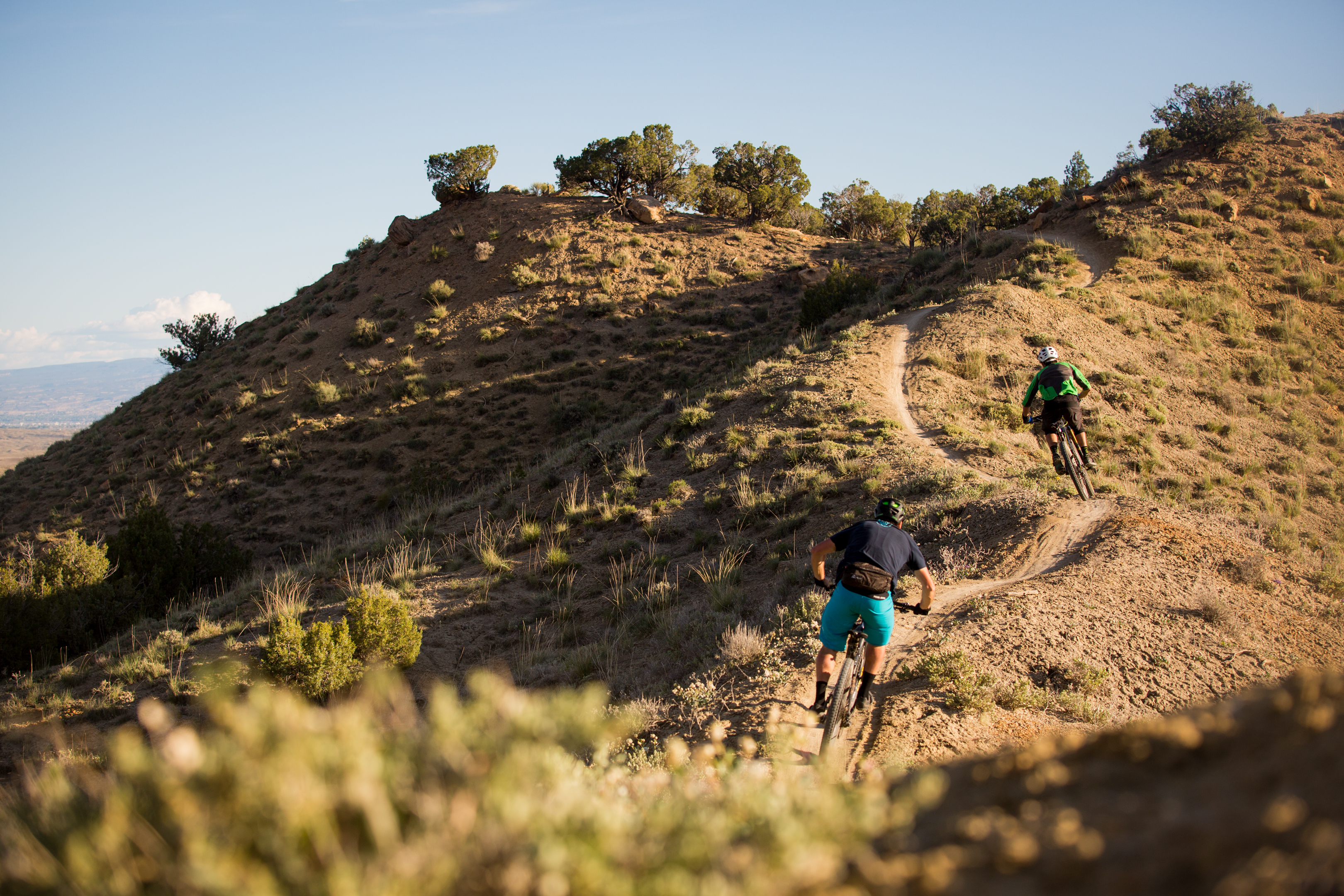
Freeride mountain biking, one of the fastest-growing trends in bicycling, incorporates everything from traditional trail riding to big-air jumps, hair-raising descents and technical maneuvers. In short, freeriders seek out opportunities to test their bike-handling skills. They're not afraid of a few scrapes and bruises, but they're not interested in getting seriously hurt, either.

Bicycle manufacturers say that the number of freeride-oriented bikes - and riders with the skills to handle them - will only increase in upcoming years. "If you look back at Trek's catalogue from the year 2000, you'll see a couple of bikes with fairly minimal suspension," says Joe Vadeboncouer, a product specialist at Trek Bicycles, one of the nation's largest manufacturers. "Next year, we'll offer five full categories - totaling 21 models - of full-suspension bikes. We're confident that our future consumer is going to have an interest in freeride - it's where the soul of the sport is these days."

Freeriding appeals to a generation that is just discovering the healthy, muscle-powered sport of mountain biking. Because it doesn't require as much acreage as traditional mountain bike areas - just a few miles of challenge-oriented trails can provide hours of fun - freeriding parks are often a good option for urban and suburban settings. But managing a freeride facility offers substantial challenges, including the proper design and maintenance of trails, overseeing interactions between riders and other user groups, and liability concerns.

Freeriding's Roots

Freeride bicycling first came to prominence in the mid-1990s, when the X-Games and other televised competitions helped push "gravity sports" (including skateboarding, freestyle skiing and freeriding) into the public consciousness. Advertisers used freeriding images to sell everything from cars to chocolate milk to credit cards. The popular gaming format Playstation 2 even introduced "Downhill Domination," a freeride-themed video game.

The media's fascination with freeriding has helped pull new riders into the sport, but it is the thrill of actually landing jumps and riding demanding trails that keeps participation numbers high.

"Freeride reflects a generation of mountain bikers who have rediscovered the passion that first lured cyclists into the forest in the late 1970s," says Mountain Bike Action's Richard Cunningham. "The dilemma we face, however, is that the modern mountain bike is far more capable than previous bikes, so the present trail systems offer fewer challenges."

Renegade riders have been known to construct trails without seeking land managers' approval. These ill-advised tactics invariably have led to conflicts trail closures. Fortunately, today there are many examples of positive relations between freeriders and land managers. The emergence of well-designed freeride parks demonstrates that it is possible to manage challenge-oriented riding.

What Freeriders Want

"Freeriders look for trails that offer challenge and flow," says Scott Linnenburger, a trail design expert with the International Mountain Bicycling Association (IMBA). "Flow means one turn leads into the next, and every descent leads into the next rise, creating a rhythm that mountain bikers love," he explains. "Good freeride trails start with flow and add technical challenges such as rock gardens and dirt jumps."

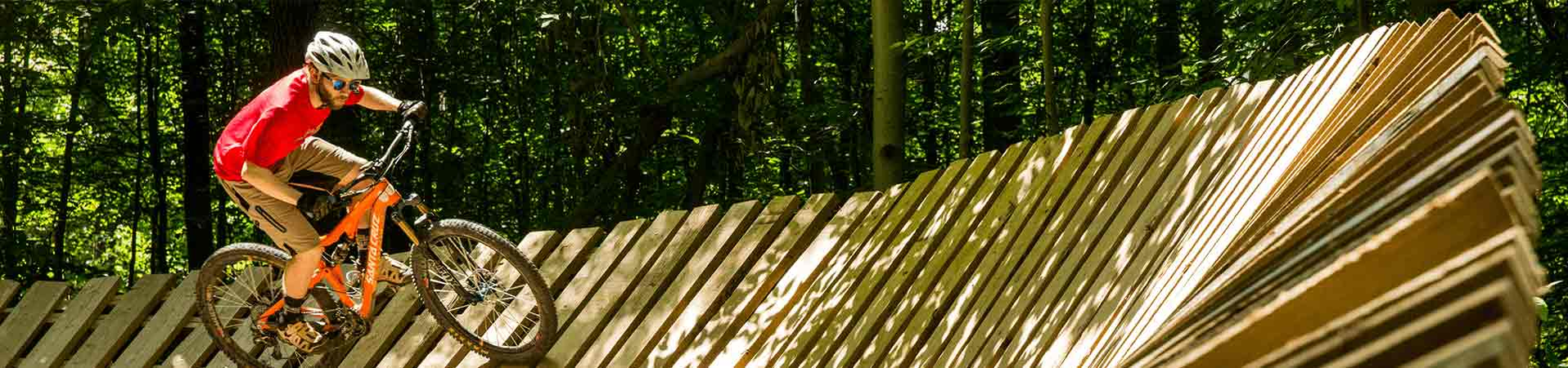
Wooden freeriding features such as ladder bridges or teeter-totters are also popular, especially in the Pacific Northwest, but they are not mandatory for freeriding. "In places like British Columbia, riders have gotten really creative with wooden stunts. But building durable structures with lumber requires expert construction techniques," says Linnenburger. "Rock features are often a better choice, because they withstand decades of trail use, will ride the same day after day and rarely require maintenance."

Linnenburger says that successful freeride areas are generally designed as bike-only (single-use) trails, because the technical trail features freeriders crave are often unsuitable for hikers or equestrians. He strongly advises the use of "gateway" or "qualifier" features to demarcate the boundaries of freeride areas. "Placing a difficult rock garden or a narrow passage at the entrance will prevent unprepared riders from overstepping their abilities."

Linnenburger also recommends signing freeride areas with warnings, and using a rating system that gives riders an idea of a trail's difficulty. "Pay particular attention to signs at the intersections of trails with differing difficulty levels. Also, it's important to place signs before challenging technical trail features like big drop-offs, narrow bridges or other elements of increased risk."

Jumps for Joy

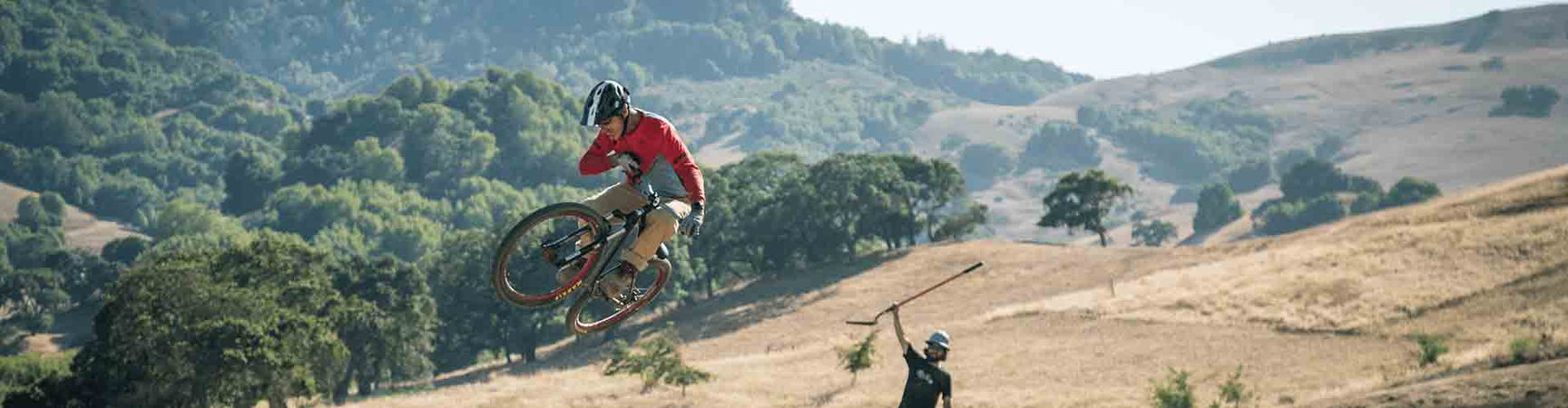
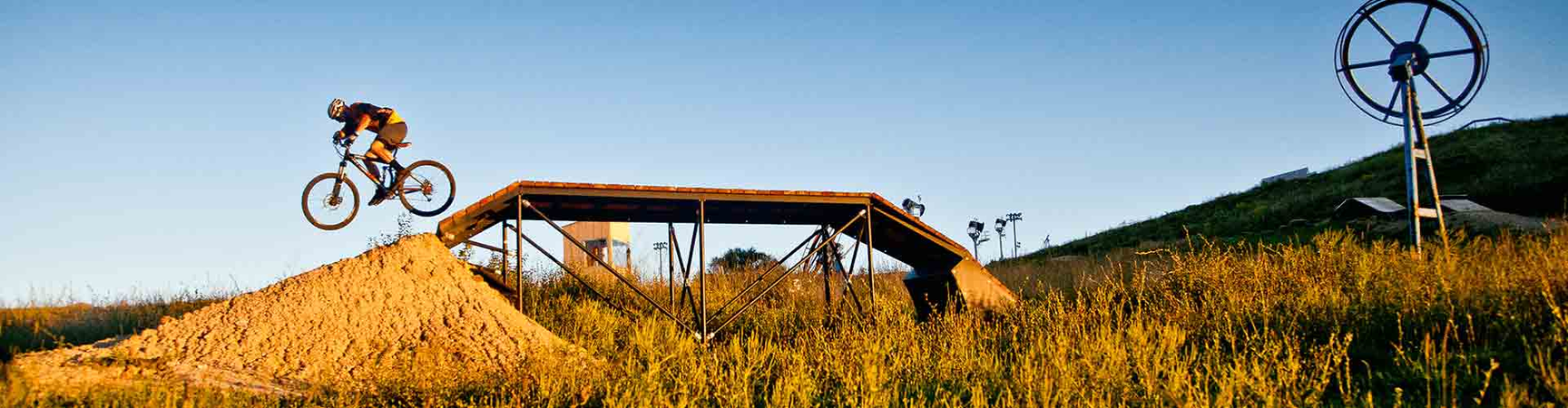
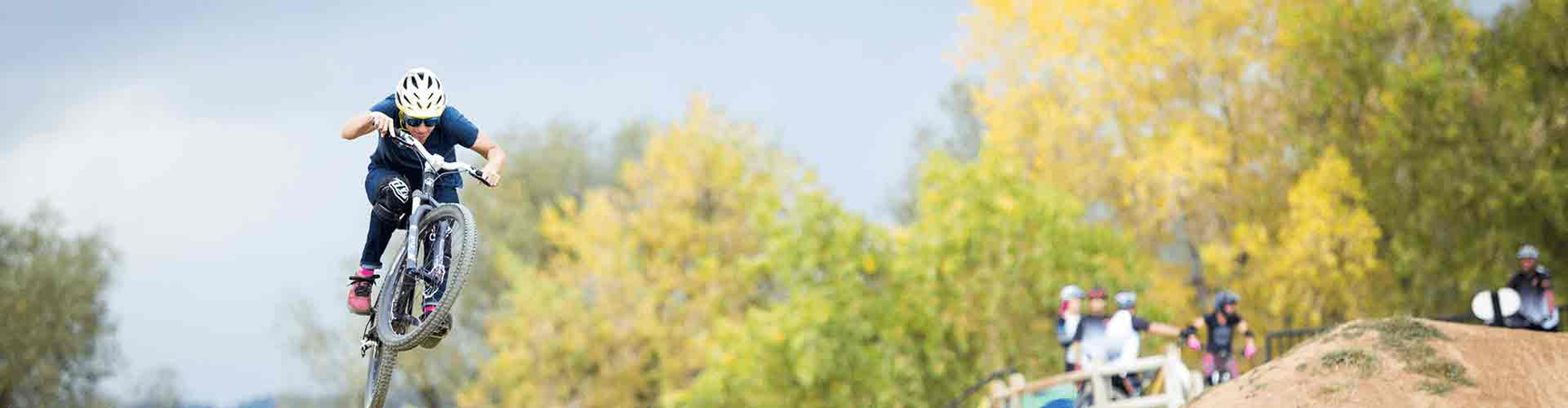
You can count on freeriders to find ways to launch themselves skyward. Riders will find purpose-built jumping areas to be safer and more fun than creating impromptu jumps.

It's a good idea to enlist experienced riders to help plan jumps and other features for an exciting and challenging bike park. Mountain bike clubs are an excellent source for input on designing jumps and other elements of freeriding. They're also great resources for recruiting volunteer labor, and some offer highly trained bike patrol groups. (To find a club, visit http://www.imba.com/contacts/near_you/clubs.html).

Convenient access to water is necessary for jump construction and maintenance. "Water is critical to the quality of the park and to keep volunteers involved," says George Matthews from the Friends of North Saanich dirt jump park in Victoria, British Columbia. "Without water the jumps are too hard to work and people lose interest." The best scenario is pressurized underground plumbing with several strategically located faucets.

It's also important to build jump lines that offer a wide variety of challenge, from easy rollers to big ramps. A diversity of lines will allow riders to build their skills gradually and will create a park that is fun for all abilities. Typically, jump lines are arranged side-by-side in increasing difficulty, all starting at a common roll-in hill and traveling in the same direction.

It's also a good idea to offer regularly scheduled clinics that teach riding techniques and responsible jump use. "Jumping is all about progression," says pro rider and bike-course designer Jay Hoots. "Improving skills and moving up to the next level is what gets riders stoked."

Managing Risk

There's no cure-all for the litigious climate today's land managers face. But well-designed freeride areas need not be viewed as a bigger source of risk than skateparks or soccer fields.

According to Justin Vander Pol, executive director of the Backcountry Bicycle Trails Club (BBTC) in Seattle, Wash., city planners expressed "virtually no concern" about liability attached to a new freeriding park that the BBTC recently helped design and build. "Mountain biking is accepted and well understood in this part of the country, and that probably helped smooth the approval process," says Vander Pol. "Another factor was that the community was behind us all the way - they're really happy to be getting a recreational resource for their kids."

Colonnade Park offers a freeride skills area, along with a one-mile dedicated-use trail, on 2.5 acres of property located under the deck of Interstate 5 between Seattle's Eastlake and Capitol Hill neighborhoods. Rock gardens, log rides and banked turns provide myriad technical challenges on Colonnade trails.

Vander Pol points out that Colonnade's trails are engineered to help manage risk: "We installed gateway obstacles at the trailheads, and built several speed-control features, like twisting curves and short, steep climbs, to keep speeds at an acceptable level."

Is Freeriding Right for Your Park?

Freeriding is basically just advanced-level mountain biking. Viewed that way and managed appropriately, it's an option worth considering for many parks.

You might want to consider building a freeride area or a bicycle skills park in stages. To begin, try adding a few challenge elements. If the demand for greater challenge and more technical trails arises, you can always expand your facilities.


[SIDEBAR 1]

Freeriding In Michigan

According to Todd Scott of the Michigan Mountain Bike Association (MMBA), adding freeriding courses to Michigan's park system was more of a necessity than a choice. "Illegal trails were popping up all over the place. We saw the demand and decided we needed to find partners in the parks system that would help us build approved freeride areas."

The MMBA forged partnerships with Burchfield County Park in Ingham County, and Stony Creek Metropark in Shelby Township. Burchfield's freeride skills area opened in 2005, and Stony Creek expects to open a similar area in 2006.

The new trails at both parks are marked with "black diamond" difficulty signs. Both boast numerous obstacles to challenge riders of all abilities. "These parks are to mountain bikers what skateparks are to skateboarders," says Scott.

The MMBA adopted trail-building guidelines outlined by the International Mountain Bicycling Association (IMBA). Many of the building materials were donated by the MMBA, and costs were kept to a minimum.

"We planed for eight major obstacles within each area, at about $500 per obstacle," says Scott. The MMBA successfully sought grant funding for the freeride projects, and provided a construction team of professional carpenters who created the trails under the park managers' supervision.


[SIDEBAR 2]

Trail Solutions: IMBA's Guide to Building Sweet Singletrack

Need more information about designing and building mountain bike trails? The International Mountain Bicycling Association offers a 272-page book titled Trail Solutions: IMBA's Guide to Building Sweet Singltrack. Featuring more than 130 photos and 50 original illustrations, Trail Solutions is IMBA's premier trailbuilding resource book. "IMBA is really dialed in in terms of putting together an understandable message and helping people figure out what it takes to make a trail that will stand up to years and years of abuse," says the National Park Service's Kevin Keeler. For more information, visit www.imba.com.

The suggestions offered in this and other IMBA trailbuilding articles do not constitute a standard, specification, or regulation. Trailbuilders and landowners are responsible for the safety of their own trails and facilities. Freeriding and dirt jumping are high-risk activities that can result in serious injuries. IMBA's goal is to help land managers and volunteers manage these risks by sharing information.

Email this page Printable Version


Help | Site Map | Copyright
IMBA Homepage Join IMBA Now!