IMBA - International Mountain Bicycling Association
What would we do without trails?

Shared Use Community Trail Systems

Jim Hasenauer, Ph.D.
Associate Professor of Communication Studies
California State University at Northridge
Northridge, CA 91330-8257
818-704-7396 talk
818-704-4827 fax

Presented at the Panel--Trails and Communities: Connecting the American Spirit
National Trails Symposium
Tucson, AZ

November 16, 1998

The increasing popularity of trails for both recreation and transportation creates a number of resource management, recreational planning and social concerns. These are intensified on the urban fringe where decreasing open space, degradation of natural resources, population pressures and social tension is magnified.

This paper lays out a vision of shared use community trail systems that maximize trail benefits while minimizing or mitigating the negative consequences. These views have grown out of my eleven years of working as a volunteer mountain bike advocate but also my profession as a professor of communication studies. My emphasis here is not so much the formal planning process, but on an overall trail vision. Public participation is important, but there should be big picture thinking and an assessment of broad community needs before the planning processes begins.

In my experience, trail users often come to planning processes positioned, angry, motivated by hearsay and empowered by anecdotes. They often resist change of any type and singlemindedly pursue their own interests. I'll leave that problem to the conflict management specialists, but I'll add an insight from my discipline of Communication Studies. A popular textbook in Intercultural Communication argues that a key to understanding relations between culturally different individuals is to appreciate the phenomenon of the "stranger".

Simmel (1950/1908) introduced the concept as a relational term, a way of positioning both the knower and the known. In encountering strangers, there is a sense of difference, of uncertainty, of anxiety, even of danger. Communication with the stranger is inherently problematic. There is a tendency to stereotype strangers since we lack personal knowledge of their diversity. They are frequently subject to prejudice, especially prejudice rooted in ethnocentrism and in-group solidarity.

Intercultural affairs in our cities often swing on relations between strangers. These are played out in social dramas related to immigration, cultural diversity and race. Ultimately, the strength of our communities derives from strangers' and familiars' ability to find common ground, to begin to understand, and to cooperate for a common good. This is the essential problem of communication-- "to share or make common" when we are not the same. We have the same problem in the recreational trails community, especially on the urban fringe.

Members of the recreational trails community, specifically the non-motorized, muscle powered trail community have obvious common interests, but often define themselves by activities that are frequently experienced alone or in small groups. This quest for solitude and the management practice of separate trails for different uses polarize groups, intensify their differences and ultimately preclude the goal of a unified trail community. We sometimes treat each other as strangers.

Values Underlying the Shared Use Community Trail System

  1. The Trails for All Americans vision has been that there will be an interconnected set of trails across the US accessible to anyone within 15 minutes of their homes. Once "on trail", a person could go for an hour, a day or a month. This vision requires the meshing of local neighborhood trails and greenways with long distance trail networks. This vision encourages us to think about how we might connect trails to adjacent trail systems. It implies that in terms of economical use of our resources, we should minimize duplication of trails and maximize trail connections. The identification of missing links is critical.

  2. Maximizing neighborhood access to trails helps make trail opportunities a valued public resource. Theoretically there should be many access points to a trail system and There needs to be a balance between neighborhood trails and railheads and more developed major trail facilities. Dispersed feeder trails to one coherent trail system minimize auto trips and make trails a neighborhood resource. Larger trail heads at major parks with parking lots that can accommodate buses, groups and/or horse trailers allow for more intensive trail use, recreational and educational programs and agency and volunteer monitoring. These major railheads need to be signed and mapped.

  3. How can trail users be organized and motivated to be a constituency for open space. By far, the greatest threat to trails and open space come from the development of private lands. Many people have no idea that much of what they consider to be parkland or "the mountains" is really privately held land likely to be developed. Those who appreciate wild lands for their environmental sustenance, their contribution to quality of life and for recreation need to work together to protect the mountains. This requires a large, focused, unified constituency.

  4. Accommodate a diversity of uses. The use trails by pedestrians, equestrians, bicyclists and wheel chair users is well established. These are various ways of transporting oneself on the trails. All of these users may be motivated by a variety of similar purposes including urban escape, nature observation, exercise, stress release, or Any number of other motives. We want a trail system that meets the needs of these and future users.

  5. Accommodate special needs. Trail systems also offer unique opportunities for many groups that may have special needs. These include interpretive and nature viewing trails for educational programs. In some cases, special obstacle free trails or trails with extraordinary facilities (e.g., rope braille trails) might be provided to accommodate some physically challenged users. It's important that trail signing of existing trails give users the information necessary for them to make choices about using a particular trail

The Question of Bikes

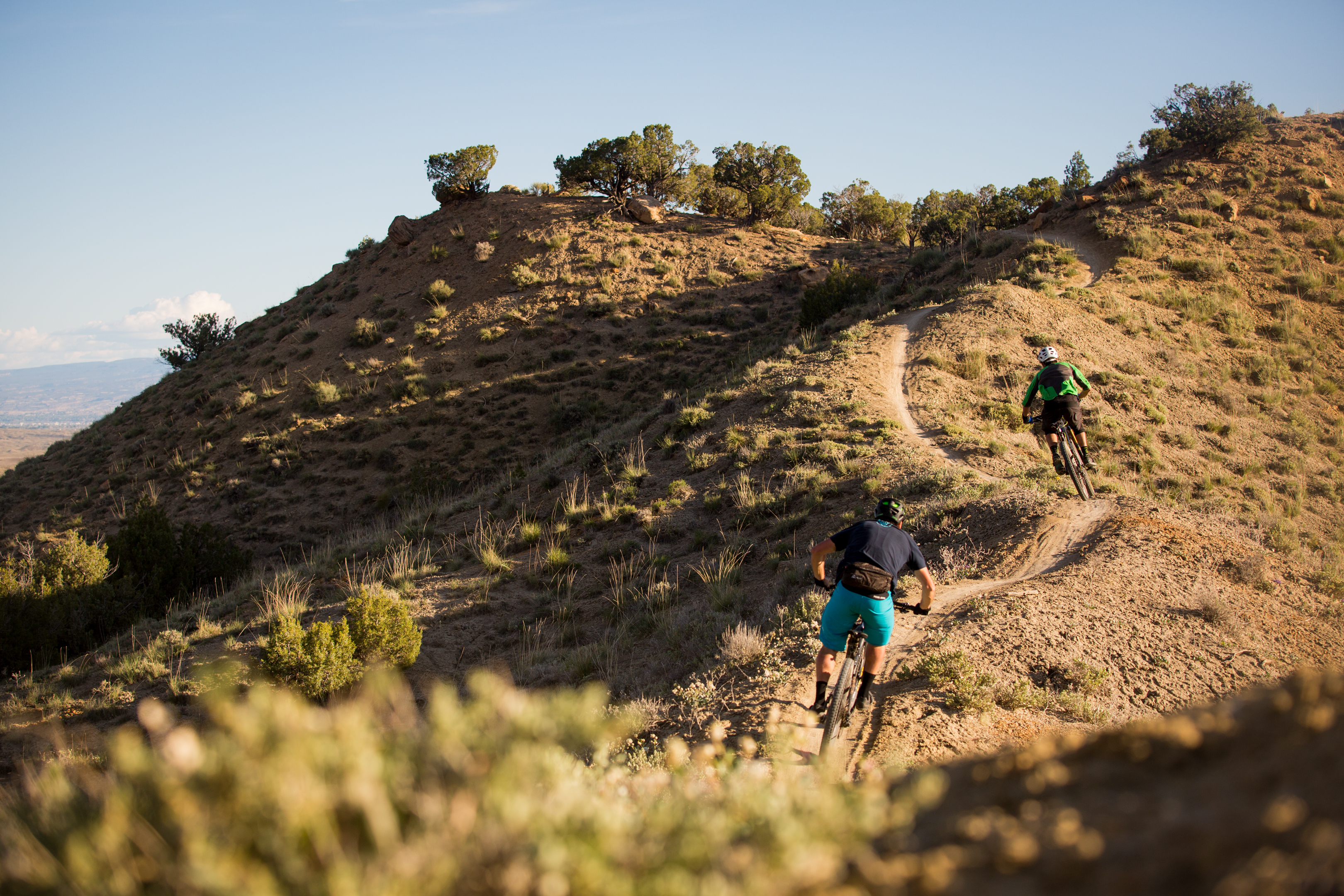
When mountain bicycling became popular, land managers didn't know what to expect from the activity and its participants. Many were justifiably cautious. The issues used then to make decisions are still the issues on the table today: environmental impacts, user safety, and the philosophical appropriateness of machines in the backcountry. Now a great deal of experience from 17 years of activity has provided some empirical guidance. All of these issues continue to require research and dialogue.

Most land managers are charged first with protecting the resource and the primary question regarding mountain bike use was what are its impacts. Most studies (Wilson and Seney, 1994; Cessford, 1995) have concluded that mountain bike impacts are not significantly different than hiker impacts in most cases. Both of these uses tend to have fewer impacts than do equestrians. More research needs to be done on the impacts of all trail users and a number of projects are under way (e.g., Colorado State Parks, 1997 ).

The second concern has been one of safety. Is bicycling safe for the bicyclist and do bicyclists pose a threat to other trail users? Bike advocates would point out that while there is the potential danger inherent in all outdoor recreation, the number of mountain bike fatalities and serious accidents is minuscule given the number of riders. In both recreation and competition, most mountain bike accidents are minor and predictable (Chow, Bracker and Patrick, 1993; Kronisch, Pfeifer and Chow, 1996). Accidents involving bicyclists and other users are rare.

Closely related is the question of liability for both public and private land managers. Bike advocates like rock climbers and other backcountry recreationalists urge cyclists to take personal responsibility for themselves and their equipment. IMBA distributes a booklet of recreational trail liability laws in all 50 states to reassure public and private land managers.

Finally, there is the question of aesthetic or philosophical appropriateness. The bike is a machine. It is manufactured. It has wheels and gears. Does it belong on backcountry trails? This is not a question of fact and will probably not be resolved by data. The 1964 Wilderness Act was interpreted in 1984 to specifically ban bicycles from designated Wilderness. Many national and state parks, forests and conservation lands specifically identify bicycling as a legitimate use. Ultimately, it's a case by case decision. There's no question that there are a lot of mountain bicyclists out there.

In 1981, Specialized Bicycle Company introduced the Stumpjumper, the first mass produced mountain bicycle. The bike was modeled on a small number of custom made mountain bikes built in Marin County, California in the 70's. It's worth noting that there have always been bicycles on dirt roads and trails since the bicycle came to the United States in the 1800's. These new mountain bikes though had greater flexibility. They were relatively light, multi-geared and strong enough to endure long off-road rides on rough, rocky, primitive trails. The introduction of the mountain bicycle revived a stagnant bicycle industry. It boomed. Advances in technology in materials, suspension and mechanical advantage continue. Now there are some 10-15 million mountain bicyclists, more than 300 local mountain bike clubs, and an International organization of more than 12,000 individuals. The sport is diverse, encompassing a range of riding interests and styles from the occasional bikepath rider to world class, competitive athletes. (Mountain biking appeared as an Olympic Sport in Atlanta in 1996). Recreational riders make up the bulk of the sport's numbers. They are served by six national, monthly magazines specifically aimed at mountain bike riders. This is my constituency, and although I hiked and ran on backcountry trails, it was mountain bike advocacy that made me a trail activist.

A Vision for Shared Use Community Trail Systems

Trails are a precious community resource. They provide opportunities for nature observation and study, health and fitness, urban escape and a variety of other purposes. As a community we should strive to keep the trails open and in good condition for everyone.

This vision of the trail system features mostly shared use trails rather than restricting access to major trail user groups. Shared use trails provide the most recreational opportunities for the most users, disperse trail users most effectively, minimize disturbance from new or redundant trail construction, minimize signage, monitoring and enforcement and foster a sense of community around this important shared resource.

The Vision for Shared Use Community Trail Systems has the following elements:

  1. Most trails should be open to the shared use of muscle powered trail users including bicyclists, pedestrians and equestrians.

  2. Some trails should be closed to bicycles and some trails should be closed to horses to achieve certain management goals. Five management goals that might lead us to close trails are:
      A. Nature interpretation, educational trails where users may stop frequently.
      B. Trails for users with special needs (e.g., the disabled, children, the elderly). Every trail system, should have a number of whole access trails.
      C. Separating use at crowded railheads (e.g., the trail system near stables may benefit from having parallel feeder trails to the main system.)
      D. Providing a "no bikes" alternative in major parks (In deference to the folks who are unwilling to share trails, there should be one major backcountry trail "no bikes" in every major park.)
      E. Designated Wilderness or Nature Preserves where bikes are prohibited and pedestrian and equestrian visits should be minimized.

  3. Temporary closures of trails because of fire danger, mud or resource protection should be equally applied to all users.

  4. There should be several major long distance trails accessed by various feeder trails from many different neighborhoods and adjacent parks.

  5. There should be good off road trail connections for all users to major regional and national trail systems.

  6. There should be maps, educational and interpretive signing at major trail heads and directional signing at trail junctions.

  7. Monitoring of trail conditions, socialization of trail users and safety needs of trail users should be met through a variety of educational events, peer group programs, volunteer efforts and professional outreach.

  8. Trail planning, alignment, construction and monitoring should invite participation from all involved parties.

Achieving a Shared Use Community Trail System might require:

  1. New trail construction--New trails should generally be built to accommodate shared use. Good trail construction techniques pre-empt or mitigate potential problems.

  2. Old trails--To be shared use trails, old trails should be assessed and rehabilitated as necessary. In many cases, some old trails should probably be abandoned completely and revegetated. Assessment and improvement of old trails for multiple use should begin with those trails that provide important missing trail linkages for users. The most important criterion to be considered is to make sure there are safe areas for trail users to pass. It is not possible or desirable to completely rebuild old trails to new standards to accommodate multiple use. Improvements such as pull out areas, stair removal, minimizing blind corners and appropriate signing might be employed.

  3. Old roads--It may be possible to convert some existing fire, utility and ranch roads to trails. The existing road system should be assessed and roads should be converted to trails where appropriate.

  4. Educational programs--Educational efforts can go along way to protecting park resources, enhancing user enjoyment and building a trail community. Programs such as volunteer patrols, youth programs, outreach to retailers, educational events and materials, etc. should be employed.

Shared use trails bring us together in ways that separate trails do not. While no one enjoys crowds, it is a good thing for us to meet each other on the trails. We come to appreciate our common stake and we become a community with a common interest. We begin to look out for each other and we become committed to meeting each other's needs. We begin to work together and this working together is significant. A classic study of inter-group conflict by Sherif (1966) found that cooperating on a superordinate goal alleviated intergroup tension better than other techniques.

This may be especially true if while cooperating on these goals members of different groups discover their commonality. A great deal of social research on trail user conflict points to the shared values held by muscle powered trail users (Watson, Williams and Daigle, 1991; Moore, 1994; Bjorkman, 1996; Hollenhurst, Schuett and Olson, in press).

Since a shared use trail system has mostly shared use trails, many goals are served. There is a minimum of duplication and therefore less disruption to the environment. Trail users are dispersed across the entire trail system, minimizing congestion. Shared use trails enable experienced users to socialize newcomers and they are cost effective for land managers since, external monitoring and enforcement is minimized. But, most importantly, shared use trails build community. They enable trail users to come to know one another and to establish mutual respect and courtesy. The shared use community trail system connects places, but it also connects people.

References

Bjorkman, A.W. (1996). Off-road bicycle and hiking trail user interactions. a report to the wisconsin natural resources bureau of research. Eagle, WI.

Cessford, G.R. (1995). Off-road mountain biking: a profile of participants and their recreation setting and experience preferences. Department of conservation science and research series no. 93. Wellington, New Zealand: Department of Conservation.

Chow, T.L., Bracker, M.D. and Patrick, K. (1993). Acute injuries from mountain biking. Western journal of medicine. 159, 145-148.

Colorado State Parks. (1997). Draft preliminary version of the trails and wildlife bibliography. Available by request from Colorado State Parks Trails Program, 1313 Sherman Street, Room 618, Denver, CO 80203.

Gudykunst, W.B. and Kim, Y.Y. (1992). Communicating with strangers: an approach to intercultural communication, 2nd ed. New York: McGraw Hill.

Hendricks, W.W. (Ed) (1997) Mountain bike management and research. A special issue of Trends, 34, 1-56.

Hollenhurst, S.J., Schuett, M.A. and Olson, M.S. (In press) A national study of mountain biking opinion leaders: characteristics, preferences, attitudes and conflicts. Available from Michael A Schuett, Southwest Texas State University, Department of Health, Physical Education and Recreation, San Marcos, TX 78666-4616.

Keller, K. (Ed.). (1990). Mountain bikes on public lands: a managers guide to the state of the practice. Washington, D.C.: Bicycle Federation of America.

Kronisch, R.L., Pfeiffer, R.L. and Chow, T.K. (1996). Acute injuries in cross-country and downhill off-road bicycle racing. Medicine and science in sports and exercise. 28, 1351-1355.

Moore, R. L. (1994). Conflicts on multiple-use trails: synthesis of the literature and state of the practice. Report # FHWA-PD-94-013. Washington, DC: Federal Highway Administration.

Sherif, M. (1966). In common predicament: social psychology of intergroup conflict and cooperation. Boston: Houghton Mifflin.

Simmel, G. (1950/1908) The stranger. In K. Wolff (Ed. And Trans.), The sociology of georg simmel. New York: Free Press.

Watson, A.E., Williams, D.R. and Daigle, J.J. (1991) Sources of conflict between hikers and mountain bike riders in the rattlesnake nra. Journal of parks and recreation administration, 9, 59-71.

Wilson, J.P., and Seney, J.P. (1994). Erosional impact of hikers, horses, motorcycles and off-road bicycles on mountain trails in montana. Mountain research and development, 14, 77-88.

Email this page Printable Version


Help | Site Map | Copyright
IMBA Homepage Join IMBA Now!